
Last updated October 30, 2026
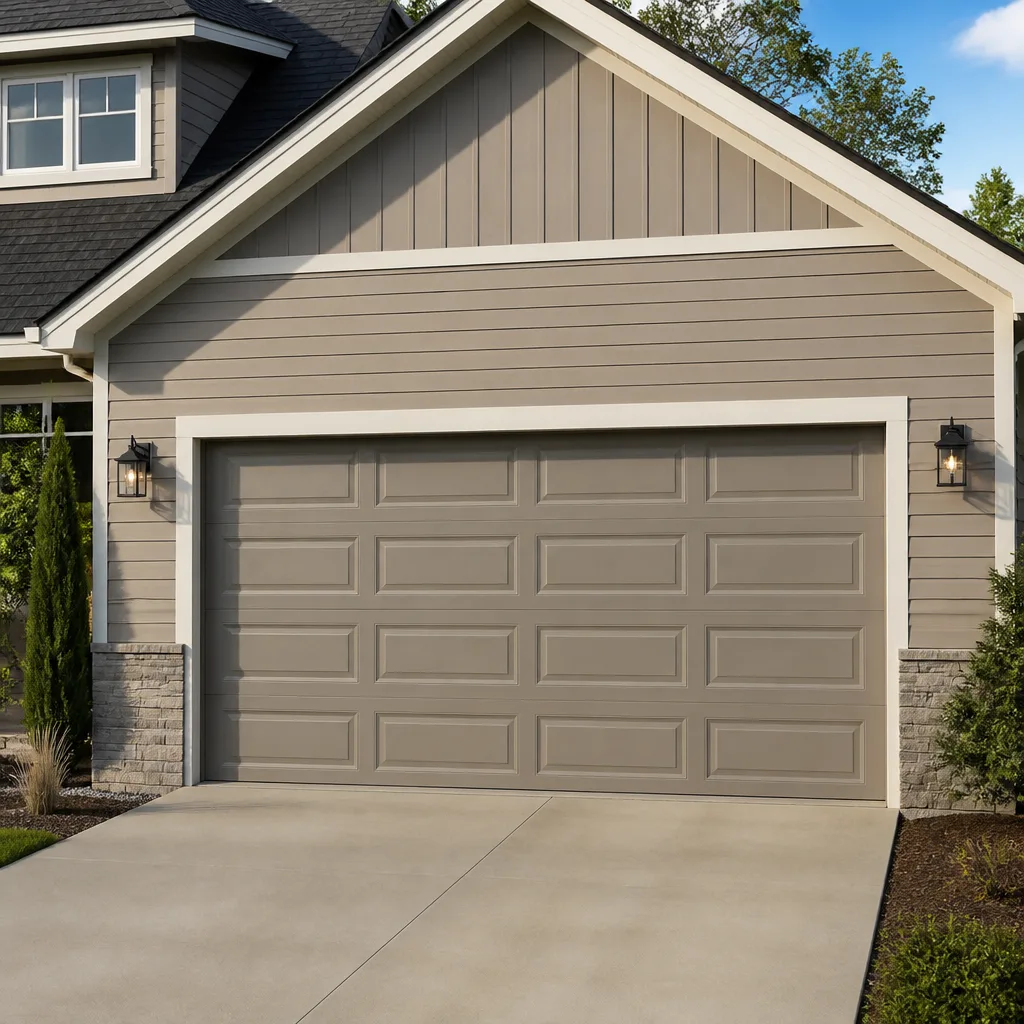 Raised-panel steel
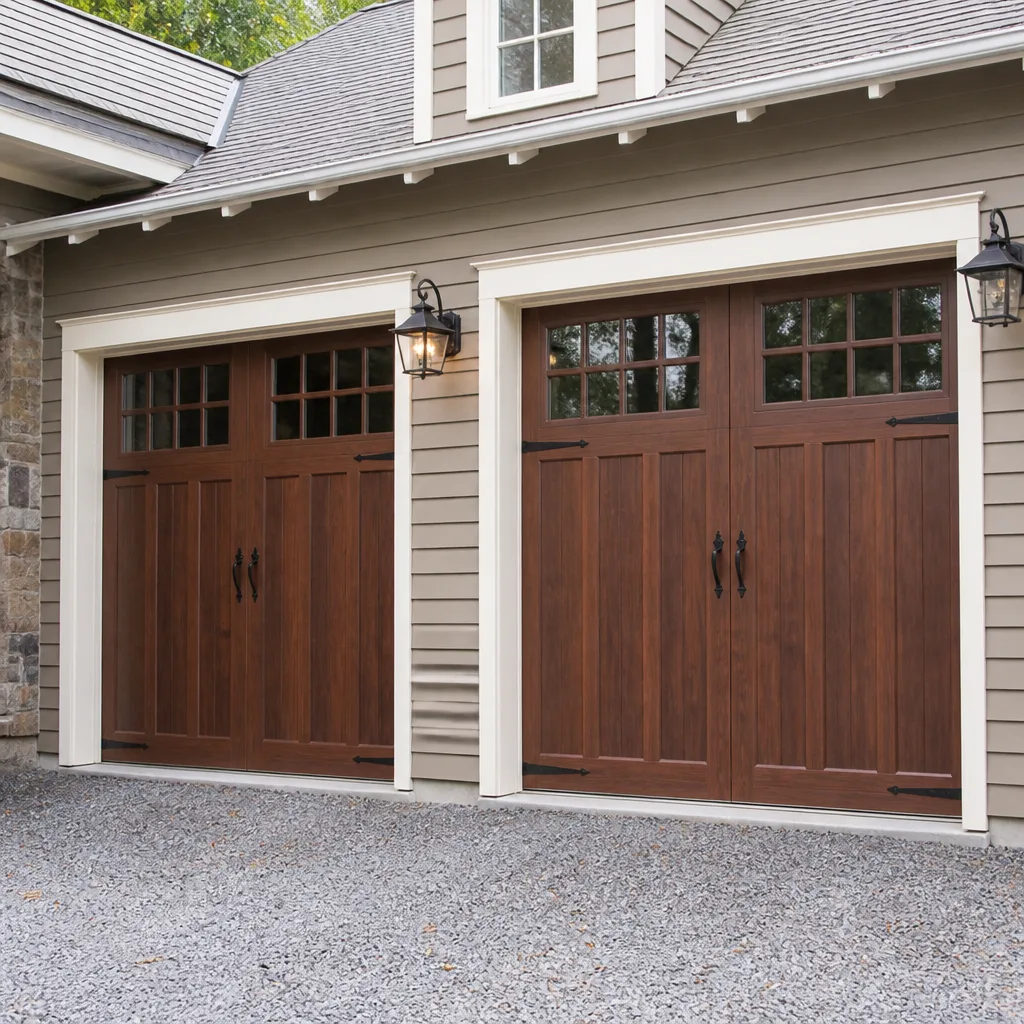 Carriage house
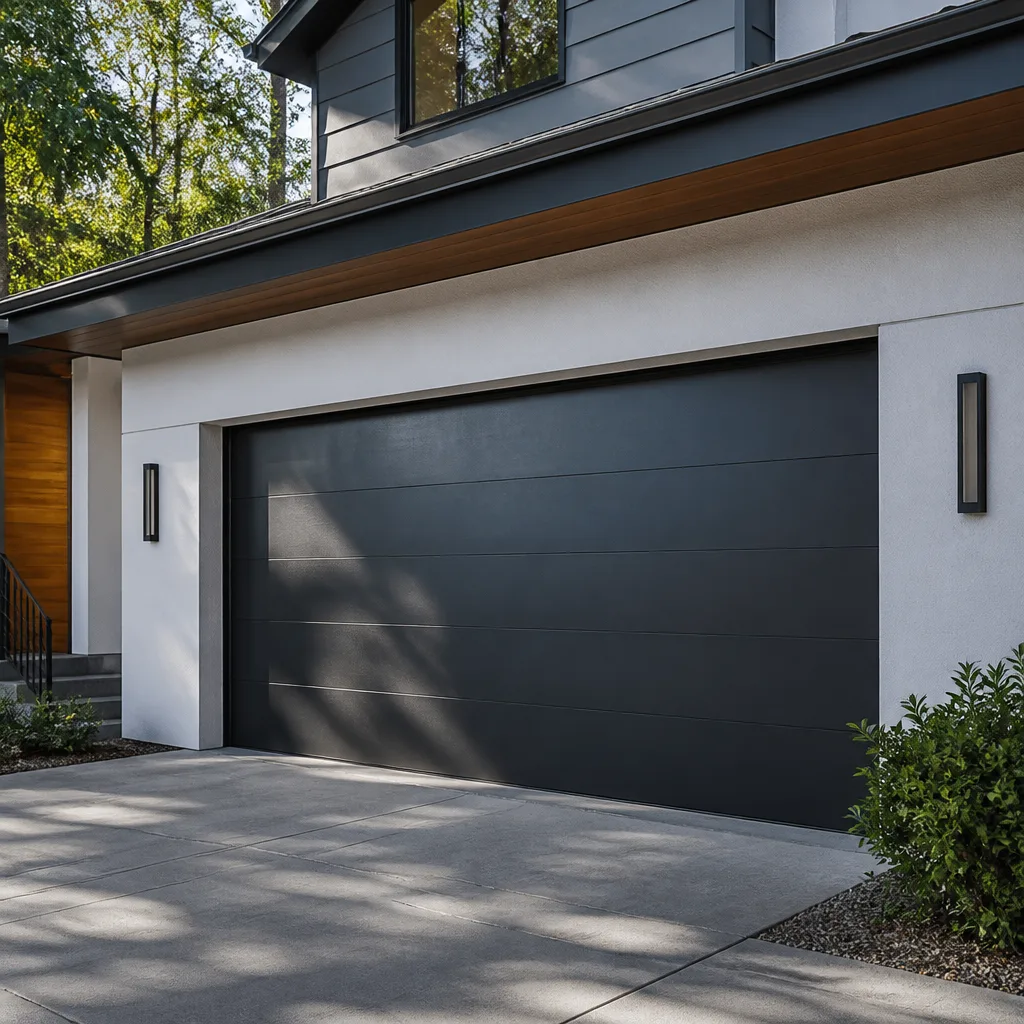 Modern flush
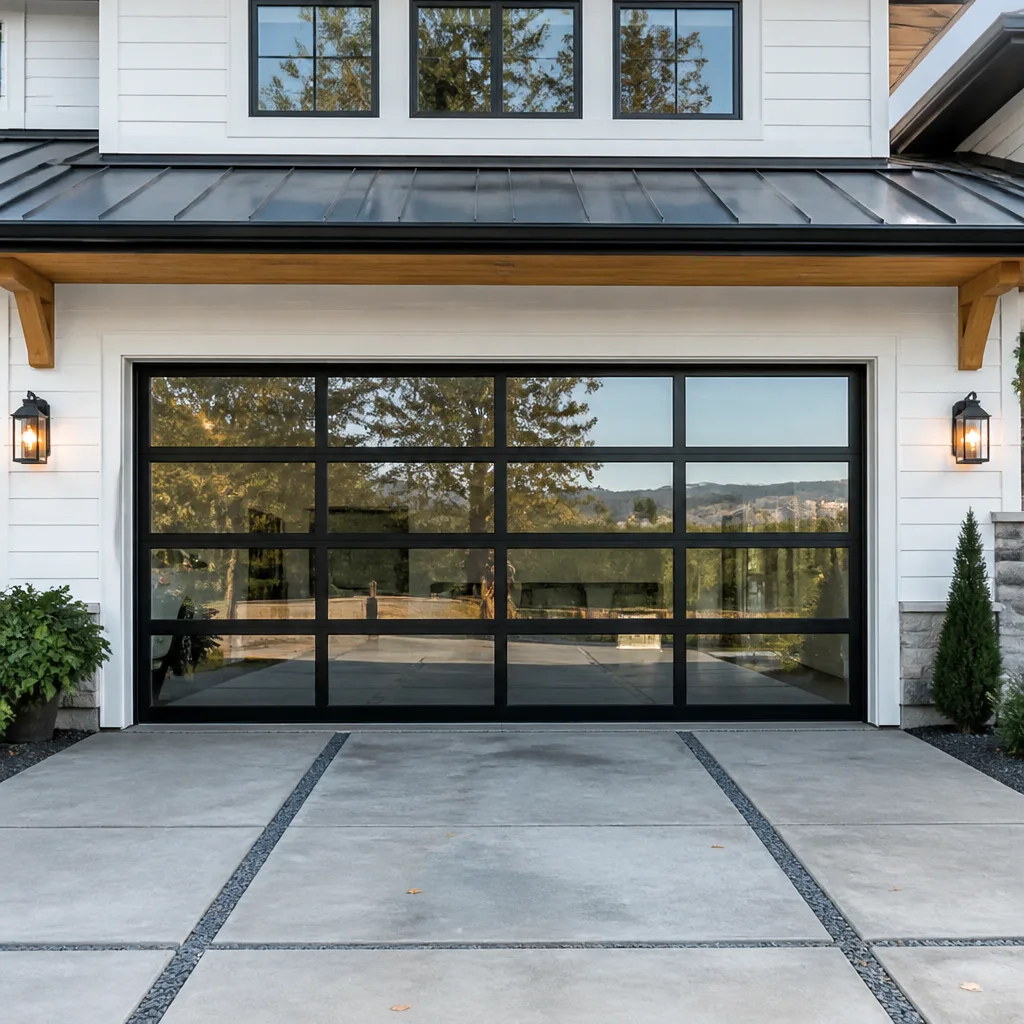 Full-view glass
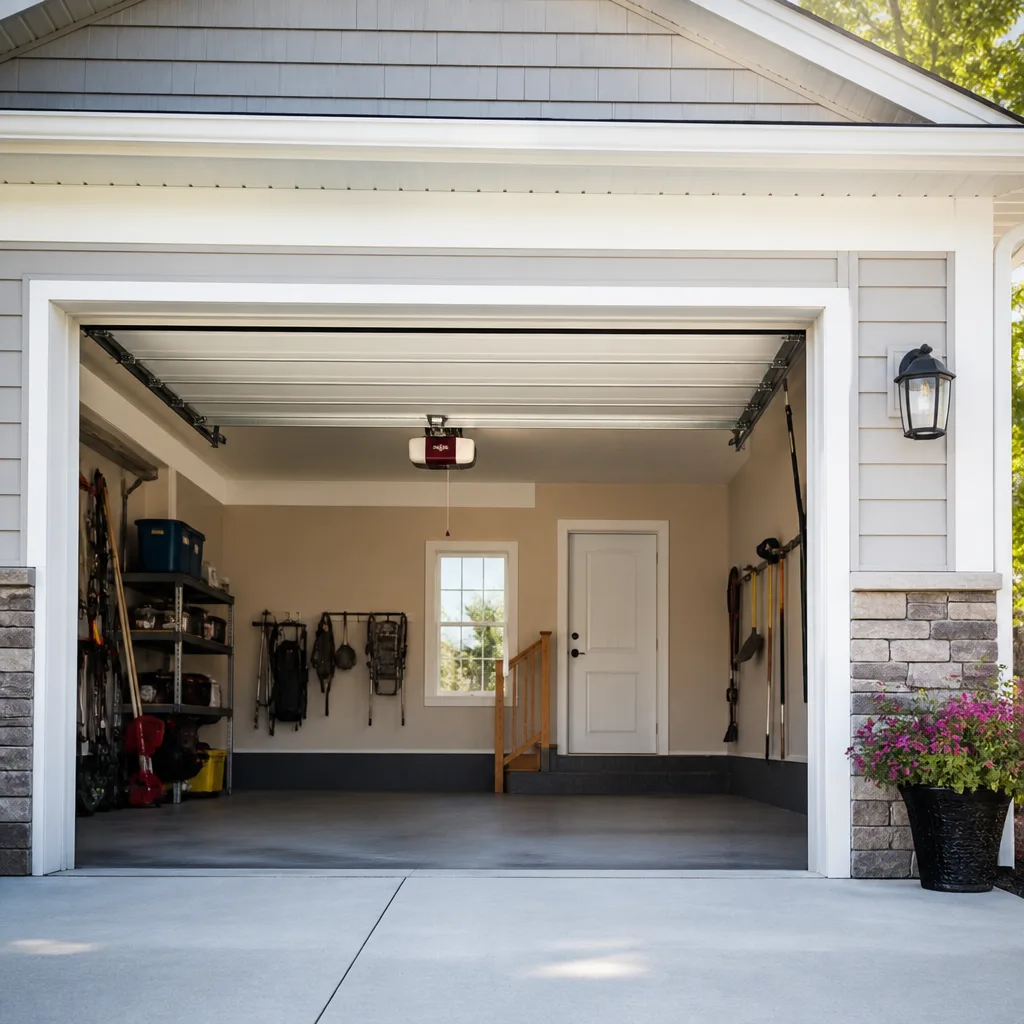 LiftMaster openers
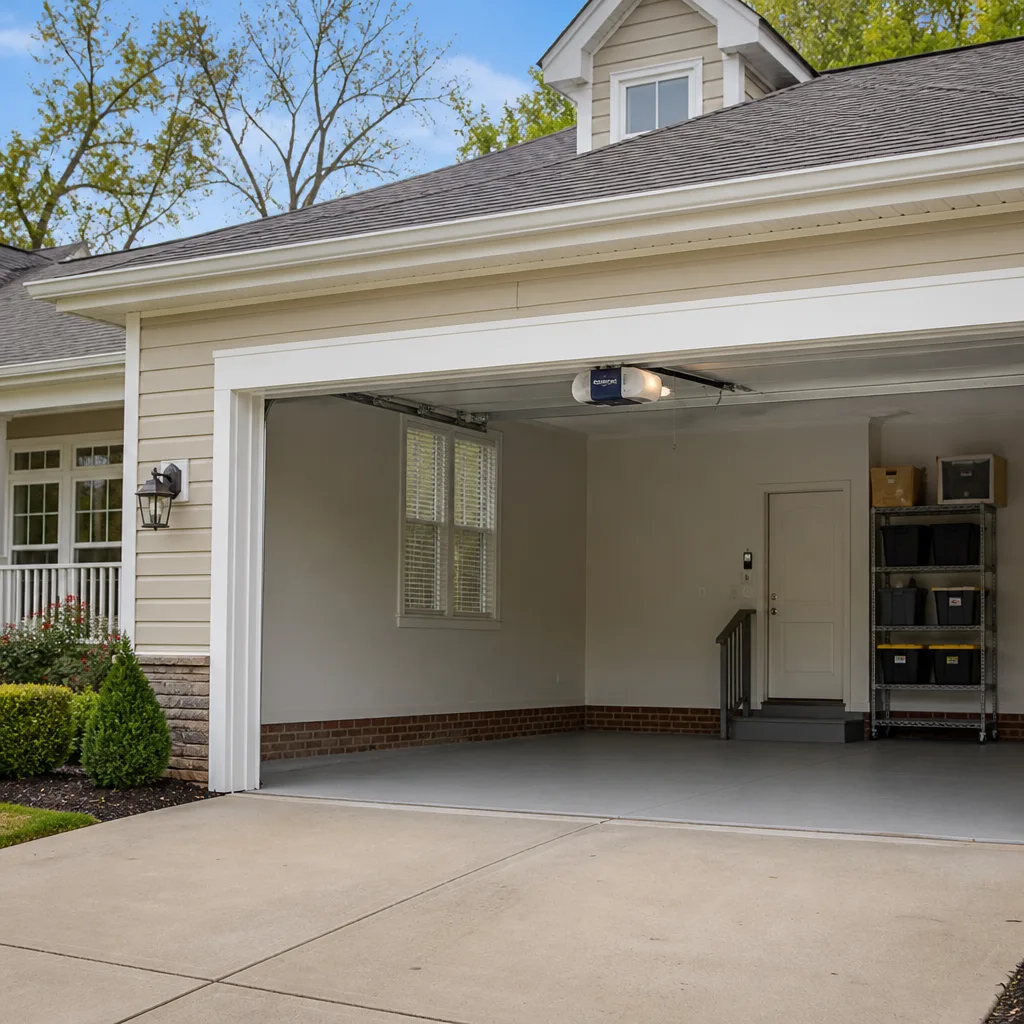 Chamberlain openers
Full 25-point door and opener safety check with every visit - springs, cables, rollers, tracks, and your LiftMaster or Chamberlain opener included
You get a price before we start. It does not change when the truck arrives.
Get your free estimateDIY vs Professional Garage Door: The Sarasota Homeowner’s Decision Guide
A garage door is the largest moving object in your home. It weighs between 130 and 400 pounds, cycles open and closed roughly 1,500 times a year, and depends on a handful of components working in exact tension with one another. When one part fails, the natural instinct is to grab a wrench and save a service call. Sometimes that’s the right call. Other times it’s how Sarasota homeowners end up with a hospital bill that dwarfs what a repair would have cost. This guide draws the line clearly, task by task, with the mechanical reasoning behind each call.
Styles & brands we work with
Quick Answer
Most Sarasota homeowners should handle only three DIY garage door tasks: visual inspection, sensor realignment, and lubrication. Anything involving torsion springs, lift cables, or door panel replacement carries mechanical risk high enough that a mistake causes serious injury, not just a botched repair. The honest cost comparison, when you factor in tools and failed attempts, usually favors calling a professional for anything beyond those three tasks.
Table of Contents
- The Energy Problem: Why Garage Doors Are Different
- Safe DIY Tasks: What You Can Own
- Never DIY: The Hard Line, With Reasoning
- The Real Cost Comparison: DIY vs Professional
- Florida-Specific Considerations: Warranties and Hurricane Ratings
- Opener Diagnostics: Which Brands Welcome DIY
- The Three-Question Decision Script
- Common Mistakes to Avoid
- When to Call a Professional
- Frequently Asked Questions
- The Bottom Line
The Energy Problem: Why Garage Doors Are Different
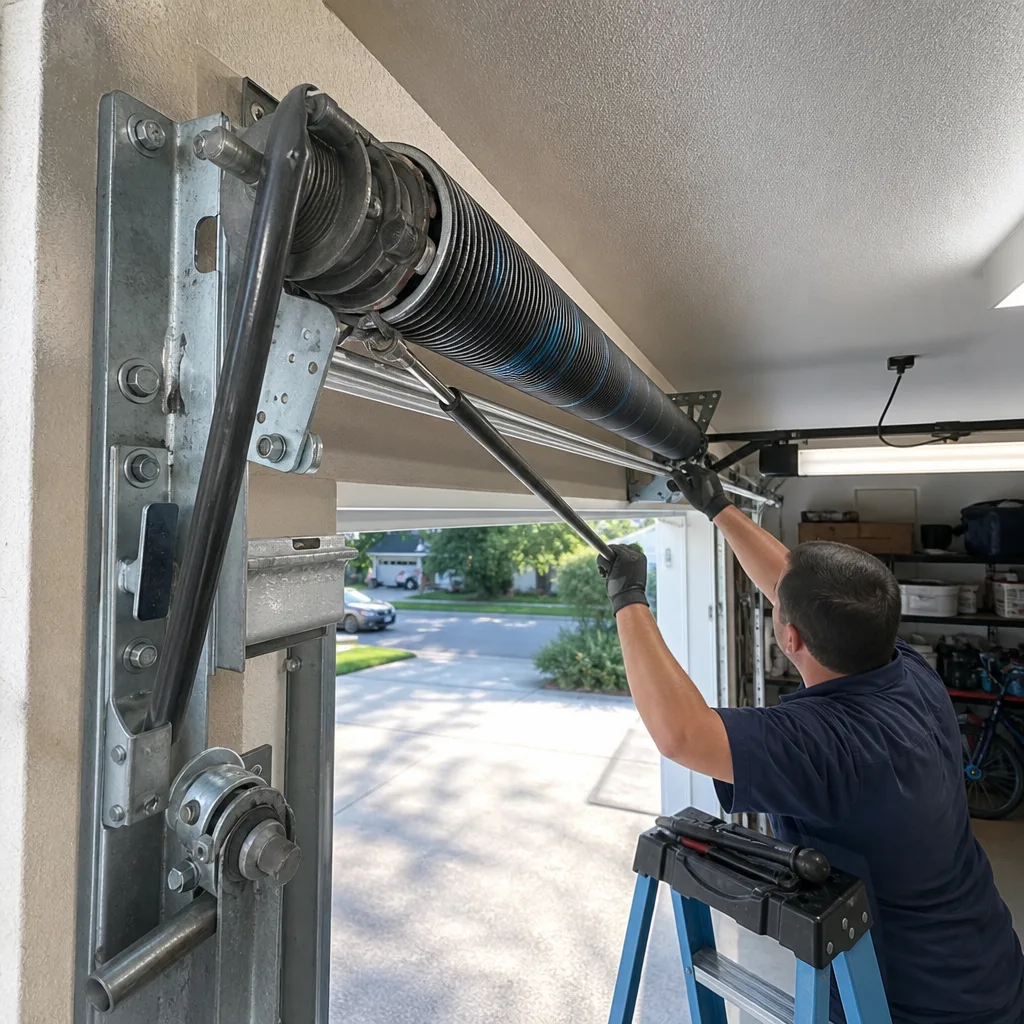
A torsion spring on a standard two-car garage door is wound to hold about 90 pounds of torque per turn, and a typical spring takes 7 to 8 full turns. That’s roughly 700 pounds of stored mechanical energy sitting above your head every time the door is closed. When a spring snaps, that energy releases instantly. When a homeowner unwinds a spring incorrectly with a makeshift tool, the release is just as sudden, except now it’s happening a foot from your face.
In Sarasota, where humidity accelerates spring corrosion and salt air from the Gulf eats at cable hardware, failures happen more often than they do inland. We’ve seen springs on waterfront properties in Siesta Key and Longboat Key fail two to three years earlier than identical springs installed in Lakewood Ranch. That environmental factor means Sarasota homeowners face this repair decision more frequently than most.
The DIY vs professional question isn’t about whether you’re capable. It’s about whether the task you’re considering carries energy you can’t control once events start moving. A wrench slips on a bolt and you strip a thread. A winding bar slips on a torsion spring and the kinetic energy doesn’t ask permission.
Most people who get hurt working on garage doors aren’t first-timers making an obvious mistake. They’re competent, experienced handymen who worked on torsion springs successfully a dozen times before the day a fatigue crack gave way mid-wind. That’s the uncomfortable truth behind the thousands of DIY tutorials online: they’re filmed by people who survived the attempt once. The person who didn’t survive doesn’t upload the video.
This guide isn’t a lecture. It’s a task-level breakdown of what you can safely own and what you should outsource, with the mechanical reasoning spelled out so you can make the call yourself.
Safe DIY Tasks: What You Can Own
Three garage door maintenance tasks are genuinely safe for a competent homeowner using basic tools:
- Visual inspection. Once a month, open your garage door halfway and walk the track line. Look at the rollers, hinges, cables, and spring mounting brackets. Check for rust streaks, frayed cable strands, and gaps between the track and the wall brackets. This is zero-risk and catches failures before they become emergencies.
- Photo-eye sensor realignment. If your opener reverses immediately or the lights blink when you try to close, the photo-eye sensors near the floor are out of alignment or dirty. Wipe them, loosen the wing nut, adjust the angle, and tighten. This takes ten minutes and requires nothing but a screwdriver and a level.
- Lubrication. Every six months, apply a lithium-based spray grease to the rollers, hinges, and the torsion spring itself. Do not use WD-40 as a long-term lubricant; it cleans but doesn’t lubricate. In Sarasota’s humid climate, a silicone or lithium spray holds up far better. Never touch the lift cables with lubricant; a slick cable is a slipping cable.
These tasks account for maybe 10% of the repairs a Sarasota garage door will need across its life. They’re worth doing yourself, because they extend component life and help you spot problems early. Everything else on the door involves either high-tension mechanical energy or a failure mode where the cost of a mistake exceeds the cost of the call.
Never DIY: The Hard Line, With Reasoning
We’re deliberately blunt here. These tasks should not be done by a homeowner, regardless of skill level or prior experience:
- Torsion spring replacement. The spring is under constant load even when the door is open. The correct procedure requires two precisely sized winding bars and a specific number of quarter-turns. One degree of complacency is all it takes. We don’t even recommend experienced homeowners touch this one.
- Extension spring replacement (if your older door still has them). These springs run along the horizontal tracks on each side. When one snaps, the released end becomes a projectile. Safety cables must run through the center of the spring at all times during service. If your door lacks safety cables, the risk doubles.
- Lift cable replacement. The cables carry the door’s full weight when the spring is unwound for service. If a cable lets go under load, the door drops. A falling 250-pound door section moves faster than you can react. This is not a strength issue; it’s a physics issue.
- Bottom bracket replacement. The bottom brackets are where the lift cables attach to the door’s lower section. They’re under full spring tension at all times. Removing one without first safely unwinding the spring turns the bracket into a missile.
- Track realignment and major panel work. Bent tracks require precise adjustment across the full door run. Multi-panel repair means the weight distribution changes, which changes the spring load calculation. Get either wrong and the door binds, jumps, or crashes.
If you take one thing from this guide, let it be the spring. The spring isn’t like other household components. It doesn’t fail gradually and it doesn’t forgive mistakes. Sarasota’s heat and humidity already make these components work harder than they do in drier climates, which means the margin for error is thinner.
The Real Cost Comparison: DIY vs Professional
Every DIY calculation starts with the part price and stops there. That’s the error. Let’s run the honest numbers for the two most common Sarasota garage door repairs, or see our full Garage Door Cost Breakdown: The Sarasota Homeowner’s Reference for 2026 for deeper pricing context.
Torsion spring replacement:
- Pair of springs from a big-box store or online retailer: $60 to $90
- Two proper winding bars (if you don’t have them): $35 to $50
- Time invested for someone who has never done it: 3 to 5 hours, including YouTube research and trial and error
- Risk-adjusted cost if the attempt goes wrong: emergency room visit for a hand or eye injury, or a door that comes off its track and requires a full reset
- Professional replacement in Sarasota: $180 to $340, including the springs, labor, and balancing
Look at the spread. The DIY savings is maybe $110 to $180 at the optimistic end. That’s the amount you’re paying yourself for 3 to 5 hours of work on a component that can permanently alter your hand’s function if you get it wrong. When we frame it that way, most Sarasota homeowners stop debating.
Lift cable replacement:
- Pair of cables: $25 to $40
- Spring unwinding procedure (required before cable replacement): requires the same winding bars and carries the same risk
- Professional replacement in Sarasota: $160 to $260, including cables and full door balance check
The pattern holds. The lion’s share of the professional price isn’t the part; it’s the controlled procedure for safely de-energizing and re-energizing the system. You’re not paying for a cable. You’re paying for the sequence that keeps a 300-pound door from hitting the floor while you work.
For tasks on the safe list earlier in this guide, DIY saves real money: a tube of lithium grease costs $8 and a sensor realignment costs nothing but time. That’s where the savings actually live.
Florida-Specific Considerations: Warranties and Hurricane Ratings
Sarasota sits inside a high-velocity hurricane zone. Many newer garage doors carry a wind-load rating that certifies them to withstand specific pressures, and insurance companies in Florida regularly inspect garage door ratings after storm events. Here’s what that means for DIY work:
Warranty voidance. Most garage door manufacturers, including Amarr and Clopay, include language stating that spring or cable work must be performed by a qualified professional or the door warranty is voided in full. That’s not a scare tactic; it’s because improper spring installation alters how the door balances, which causes premature roller, hinge, and track failure. When the manufacturer won’t stand behind a door because a homeowner installed the wrong spring, the cost savings evaporates.
Hurricane-rated door implications. If your Sarasota home has a wind-rated garage door, the installation and repair of that door involves specific reinforcement components: heavier hinges, structural struts, and in some cases specific jamb brackets. Replacing a panel with a non-rated panel from a supply house breaks the certification. When the next storm comes and a door fails, the insurance claim gets complicated. We’ve seen homeowners in Palmer Ranch and east Sarasota discover this after the fact.
Code inspections. Sarasota County enforces the Florida Building Code, and any significant structural modification to a garage door opening requires a permit. If you swap a full door or alter the opening, you need to pull permits. Professional installers manage this; DIY versions rarely do, and unpermitted work can become a title issue when you sell the home. For details, read our guide to Garage Door Permits, Codes & Inspections in FL: What You Need to Know.
The practical takeaway: if your door is newer than about 2015 and carries a wind-load sticker, almost any repair beyond lubrication should go through a professional just to keep your warranty and certification intact. The peace of mind isn’t about the current repair; it’s about the claims process after the next named storm.
Opener Diagnostics: Which Brands Welcome DIY
Not all opener work is the same. Some brands build homeowner-level diagnostic access into the opener itself; others lock you out by design. Here’s how the major lines break down for Sarasota homeowners:
LiftMaster and Chamberlain. These two brands, which share the same parent company, put a diagnostic LED on the opener unit itself. When something fails, the LED blinks a code that maps to a specific fault: sensor issue, logic board failure, travel limit error. You can look up the code in the manual and often fix the simple items yourself. Reprogramming remotes and keypads is straightforward and documented. For motor replacement or logic board work, though, you still want a pro.
Genie. Older Genie openers use a similar LED diagnostic system, but the newer models rely more on smartphone-connected apps for fault reporting. The app is functional for basic troubleshooting, but the deeper programming requires a specific sequence of button presses that’s easy to fumble. We’ve had Sarasota customers accidentally wipe their travel limits while trying to clear a simple error code.
Raynor. Raynor’s opener lineup is solid but less common in Sarasota than the big three. Parts availability is thinner at local supply houses, and the diagnostic tools are generally professional-grade rather than homeowner-grade. If a Raynor opener has a logic board issue, sourcing the part yourself is hard enough that most people call us anyway.
The honest summary: simple troubleshooting and remote programming on LiftMaster, Chamberlain, and Genie openers is DIY-accessible. Anything involving the drive motor, the logic board, or the travel limit module is not, because those components require either specialty tools or a sequence of calibration steps where an error means the door doesn’t open at all the next morning.
If you want to keep your opener healthy between service visits, the single best habit is testing the auto-reverse function monthly. Place a 2×4 flat on the ground under the door’s path and close the door. It should reverse within two seconds of contact. That test takes 30 seconds and catches the failure mode that hurts people.
The Three-Question Decision Script
Before you start any garage door task in your Sarasota home, answer three questions:
- Is this task on the safe list? If it’s visual inspection, sensor realignment, or lubrication, proceed. If it involves springs, cables, or bottom brackets, stop. The answer is already made.
- Can I complete this without touching any component under tension? If the answer requires you to loosen, remove, or adjust anything connected to a spring or cable, you’ve crossed the line. Springs and cables are never “mostly safe” to touch. They’re safe or they’re not, and when the door is in place, they’re not.
- If I make this worse, what’s the worst-case outcome? If the worst case is “the door is crooked and I call a pro,” the risk is acceptable. If the worst case involves the door falling, a spring under tension releasing near your body, or a warranty void, the math says call someone.
That’s the entire decision framework. It’s not about how handy you are. It’s about the energy stored in the system and what happens when it’s released incorrectly. Sarasota’s humidity makes components fail more frequently, which means you’ll face this decision more often than a homeowner in Phoenix or Denver. Having a script makes it fast.
Common Mistakes to Avoid
- Skipping the safety cable on an extension spring. If your older Sarasota home still has an extension spring door, the safety cable running through the spring is what keeps a snapped spring from flying across your garage. Removing it during any work and forgetting to reinstall it is how people get hurt. It’s a five-dollar part that saves a face.
- Using the wrong winding bar size. Torsion spring cones are machined for specific bar diameters. Using a screwdriver, a long bolt, or a piece of rebar “close enough” in size means the bar can slip out under load. The bar becomes a projectile. This is the single most common cause of serious spring-related injuries.
- Replacing one spring on a two-spring door. Garage doors with two springs cycle both springs evenly. When one breaks and you replace only that one, the new spring carries a disproportionate load and works against the fatigued spring. You’ll replace the second spring within a year, and you’ll pay for the service call twice. Always replace springs in pairs.
- Assuming the opener is the problem when the door is heavy. If you disconnect the opener and the door feels heavy or drops, the springs are failing. Many Sarasota homeowners buy a new opener thinking the motor is weak, when the real issue is a spring that’s lost tension. The opener isn’t designed to lift the door’s full weight; the springs are. Replacing the opener while the spring fails means a dead opener inside a year.
- Ignoring a door that’s slightly crooked. A door that sits uneven by half an inch is telling you something: a cable is frayed, a spring is losing tension, or a bracket is loosening. Ignoring it turns a $200 cable replacement into a $900 track and panel repair when the door finally comes off its track.
- Using WD-40 on everything. WD-40 is a solvent with light lubricating properties. On Sarasota’s high-humidity components, it dries out fast and leaves a sticky film that attracts grit. Use a lithium or silicone spray for rollers and hinges, and leave the cables dry entirely.
- Doing hurricane prep half-way. If you’re reinforcing a rated door before a storm and you remove any structural component, you need to reinstall it exactly as it was. A half-installed strut or a missing bolt on a wind-rated door is worse than no brace at all, because it changes how the load distributes across the panel.
When to Call a Professional
Call a professional the moment you identify a spring, cable, or bottom bracket issue. Call if the door is off its track, if it’s crooked by more than a quarter inch, or if it makes a sound you haven’t heard before while cycling. Call if the auto-reverse test fails. Call if you’ve already attempted a repair and the door is now worse than when you started, which happens more often than anyone likes to admit. For guidance on urgent situations, see our Garage Door Emergency Preparedness Guide for Sarasota Homes.
Copper Garage Door Repair offers free estimates in Sarasota. Our technicians carry the right tools for the job and the brand-specific knowledge to service whatever door and opener you have installed, whether it’s a Chamberlain, Genie, LiftMaster, or Raynor unit. Call (866) 282-4861 and we’ll tell you exactly what’s wrong and why before any work begins.
Frequently Asked Questions
Spring replacement in Sarasota typically costs between $180 and $340 for a standard two-car door, including both springs and labor. The exact price depends on your door weight, spring size, and whether you have one spring or two. Call (866) 282-4861 for an exact quote. Estimates are free, and the price is agreed before any work begins.
You can, but you shouldn’t. Torsion springs hold hundreds of pounds of stored energy even when the door is open, and the tooling and procedure required to release that energy safely is not something a video tutorial can reliably teach. The risk of serious hand, wrist, or eye injury outweighs the $150 to $200 in savings by a wide margin.
Basic opener work like sensor realignment, remote reprogramming, and lubrication is safe and DIY-appropriate on most LiftMaster, Chamberlain, and Genie units. Anything involving the drive motor, logic board, or travel limit calibration should go to a professional, because a miscalibrated travel limit means the door doesn’t close correctly and becomes a safety hazard.
Yes, in most cases. If your door is under manufacturer warranty and you perform spring or cable work yourself, the warranty is typically voided under the “unauthorized service” clause. This matters in Sarasota because many newer doors carry wind-load ratings, and a voided warranty affects both replacement coverage and potential insurance claims after a storm.
If your door feels noticeably heavy when you operate it manually, if the opener struggles to lift it, or if the door drops when you release the manual disconnect, your springs are losing tension. A visible gap in the spring coil is the definitive sign of a broken spring. Address it immediately, because a failing spring puts excess load on every other component including the opener.
Sarasota’s humidity and salt air mean you should lubricate your door every six months rather than annually, and you should inspect cables, rollers, and brackets monthly during hurricane season. Between the humidity accelerating rust on metal components and the salt air from the Gulf corroding hardware faster than inland locations, coastal Sarasota homes need roughly double the maintenance attention of inland homes. Call (866) 282-4861 if your inspection turns up anything concerning.
The Bottom Line
The DIY vs professional decision isn’t a referendum on your competence. It’s a simple energy calculation. Three tasks are safe to own: inspect, align, lubricate. Everything else on a garage door involves either stored mechanical energy, falling weight, or manufacturer warranty language that punishes self-service. The savings from doing the dangerous work yourself, even when it goes well, rarely matches what you’d pay yourself for the time and risk involved. Sarasota’s climate means you’ll face this decision more often than most, and having a clear line makes the call fast When the repair is beyond the safe list, have someone qualified do the work.
If you’re dealing with a garage door issue in Sarasota and you’ve already decided the job belongs with a professional, call Copper Garage Door Repair at (866) 282-4861. We work on your brand, whatever it is. Estimates are free, the price is quoted and agreed before any work starts, and we’ll tell you exactly what’s wrong and why.
For more information, visit our pages on Garage Door Repair in Sarasota, Garage Door Opener Repair in Sarasota, and Garage Door Installation in Sarasota. You can also learn more about us at the Copper Garage Door Repair home page.
Written by the team at Copper Garage Door Repair, serving Sarasota since 2013. Explore more guides & resources on our blog.
See the difference
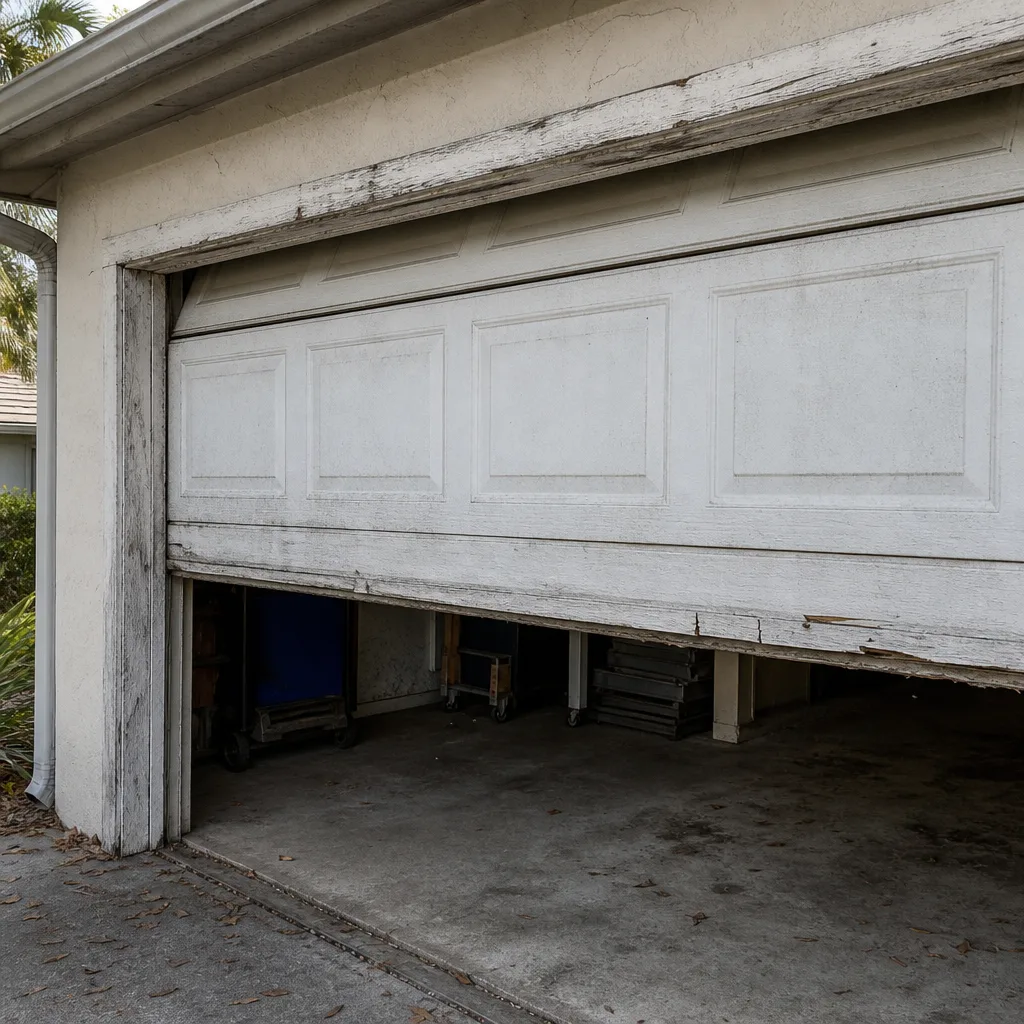 Before
 After
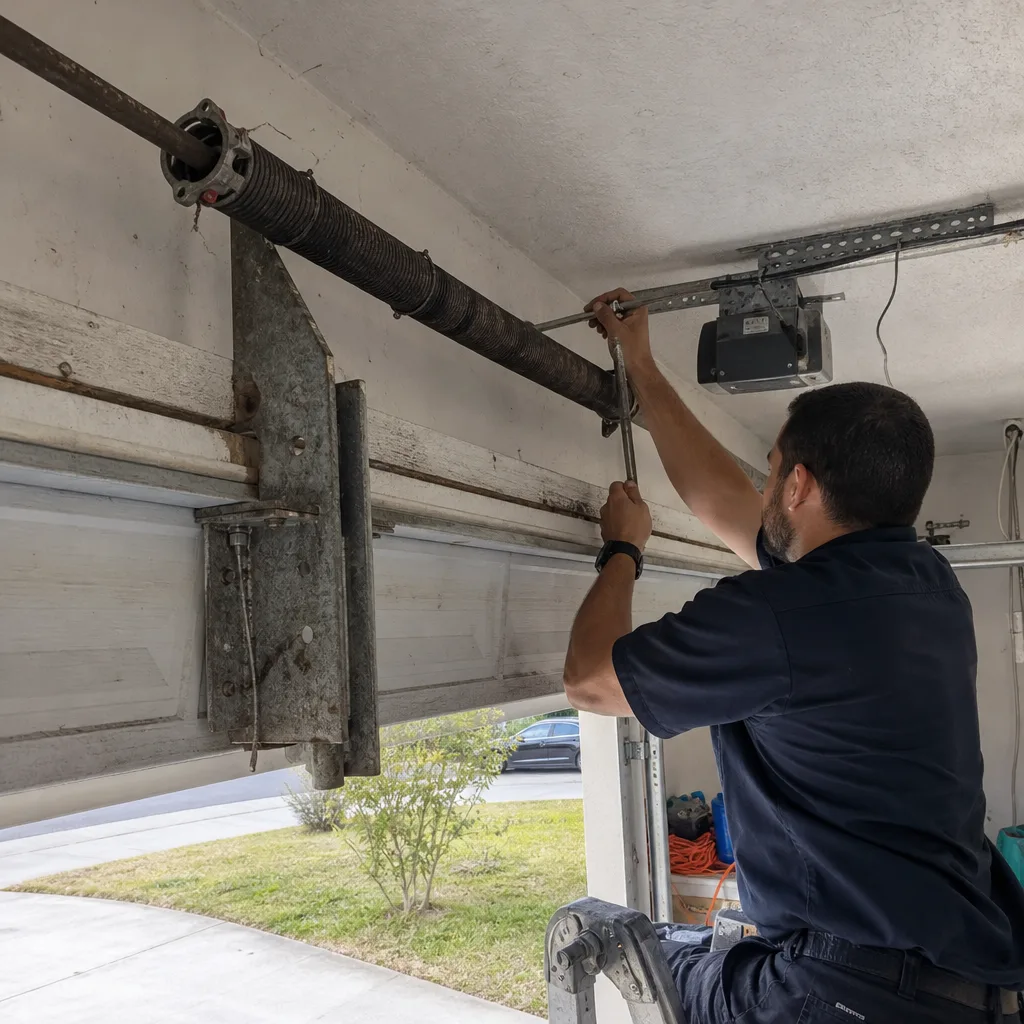 Before
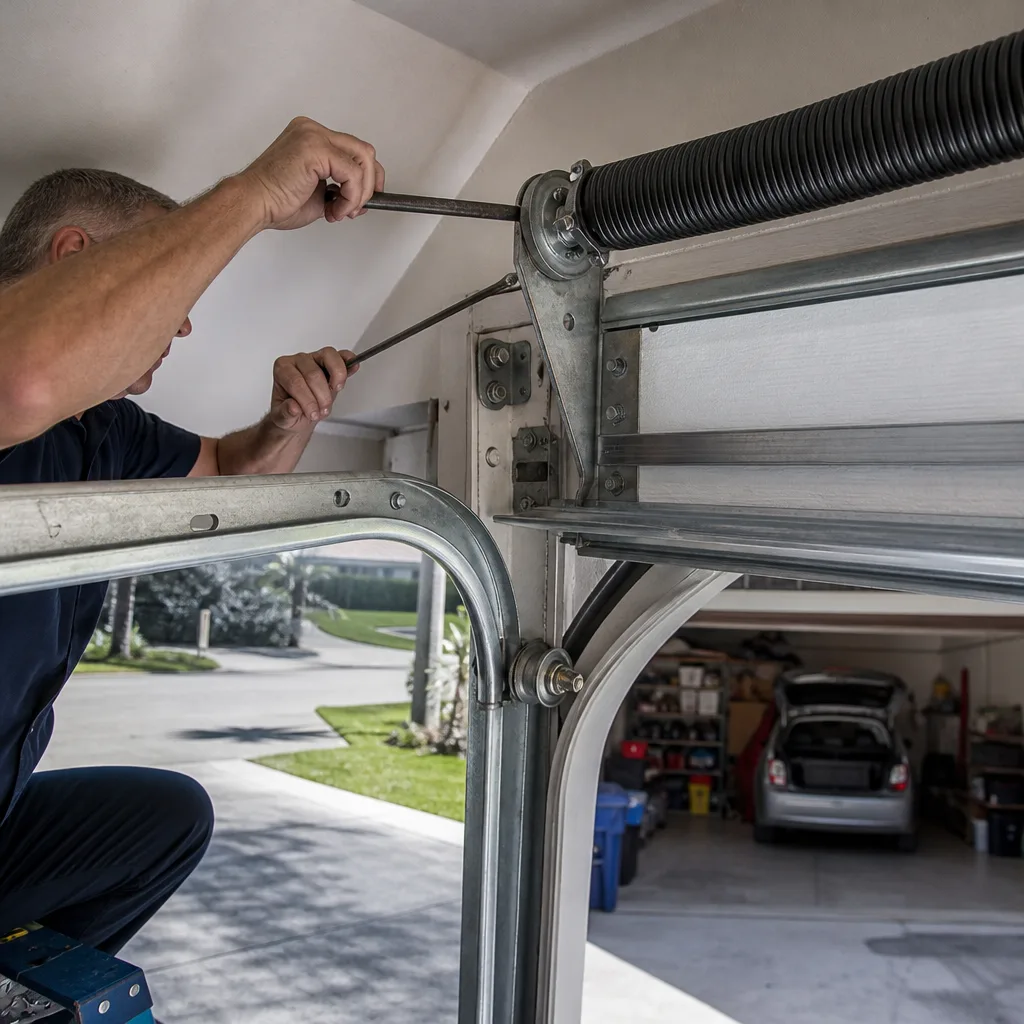 After
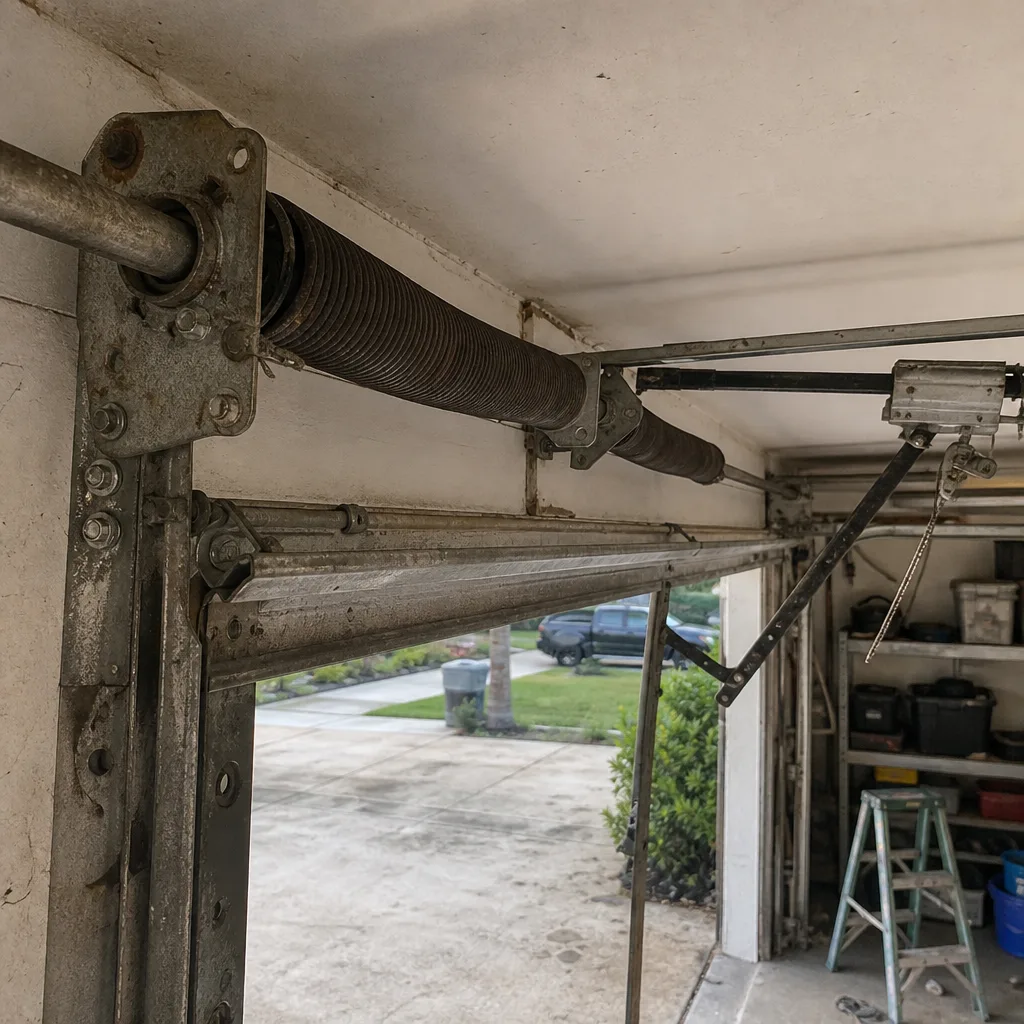 Before
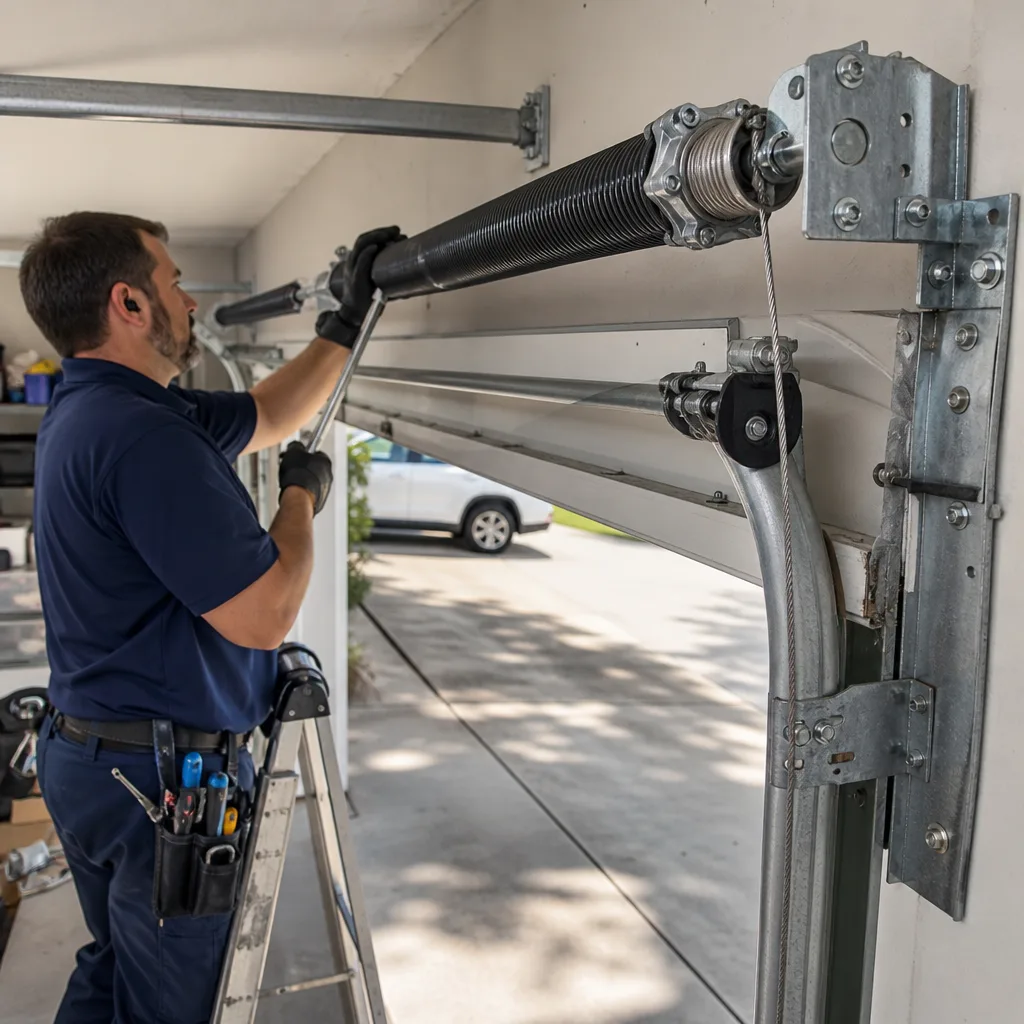 After