Last updated October 30, 2026
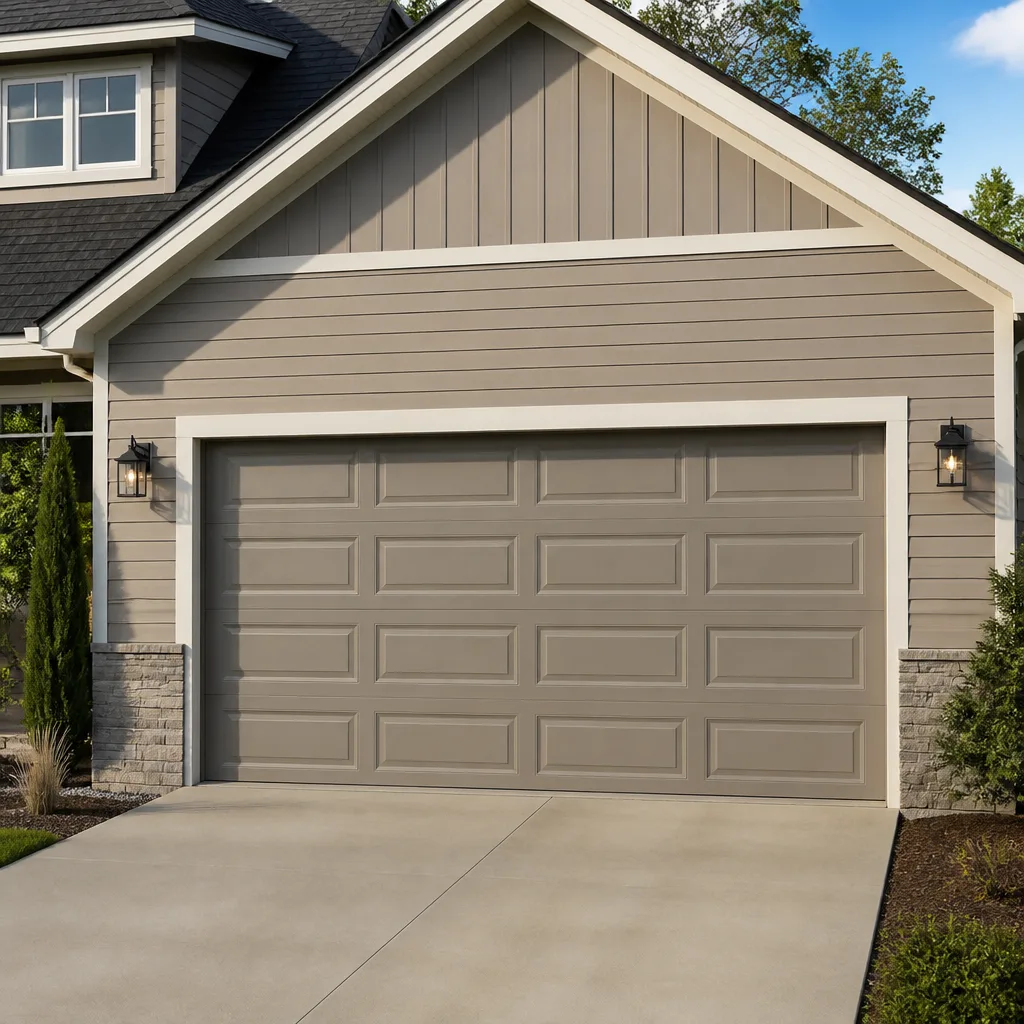 Raised-panel steel
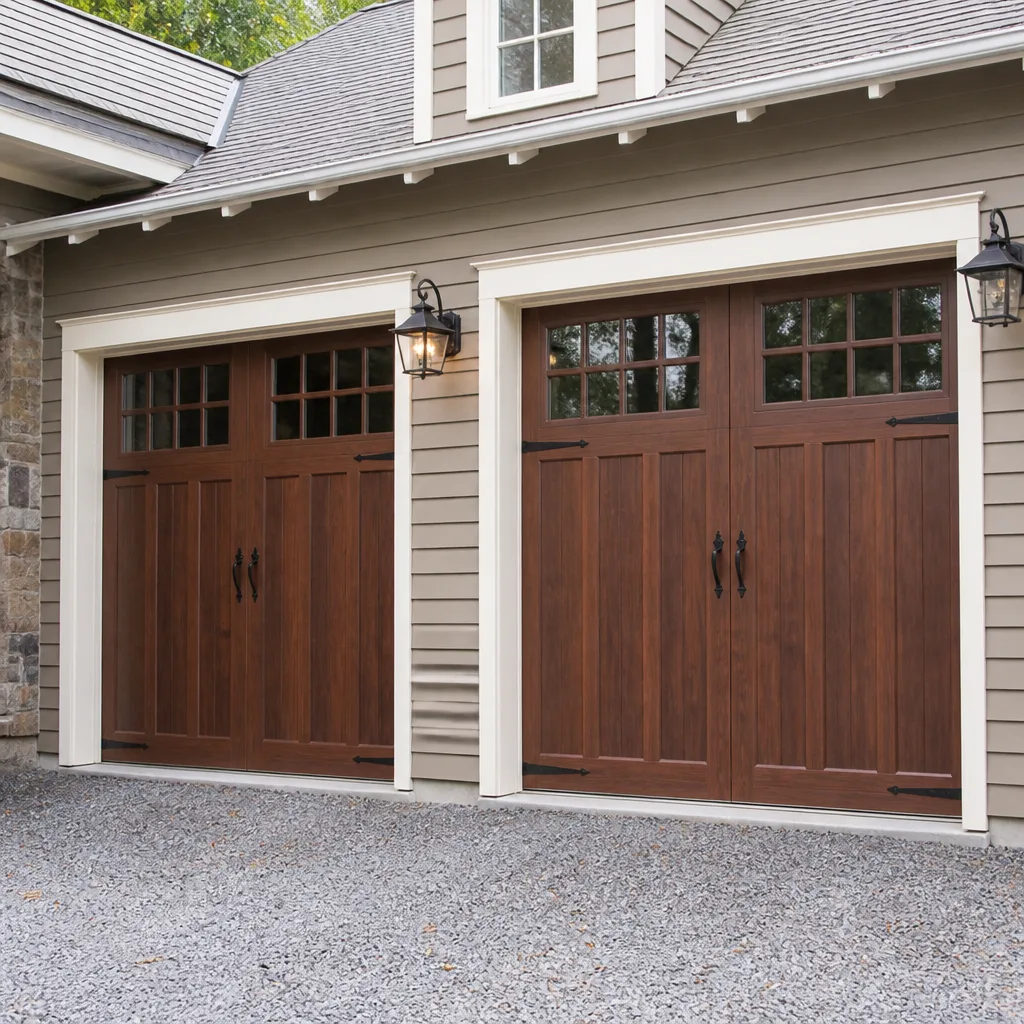 Carriage house
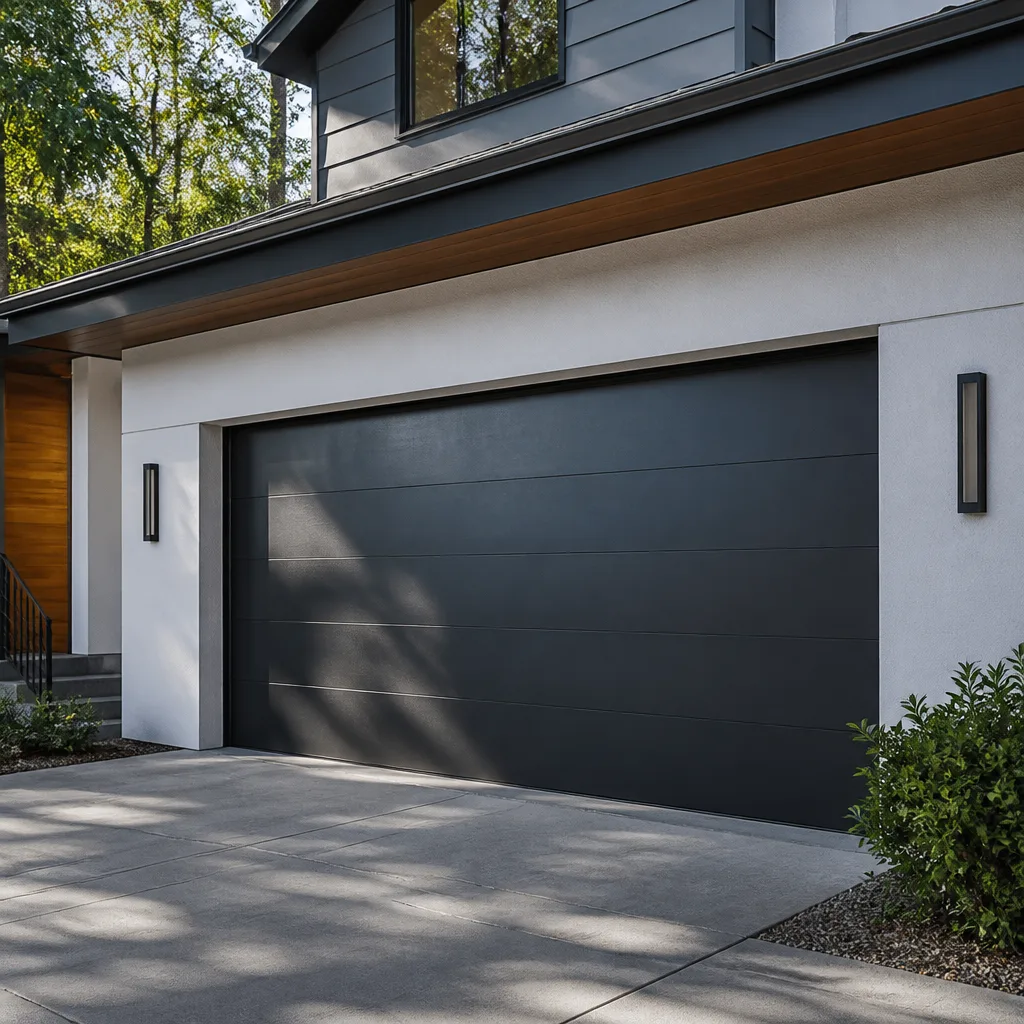 Modern flush
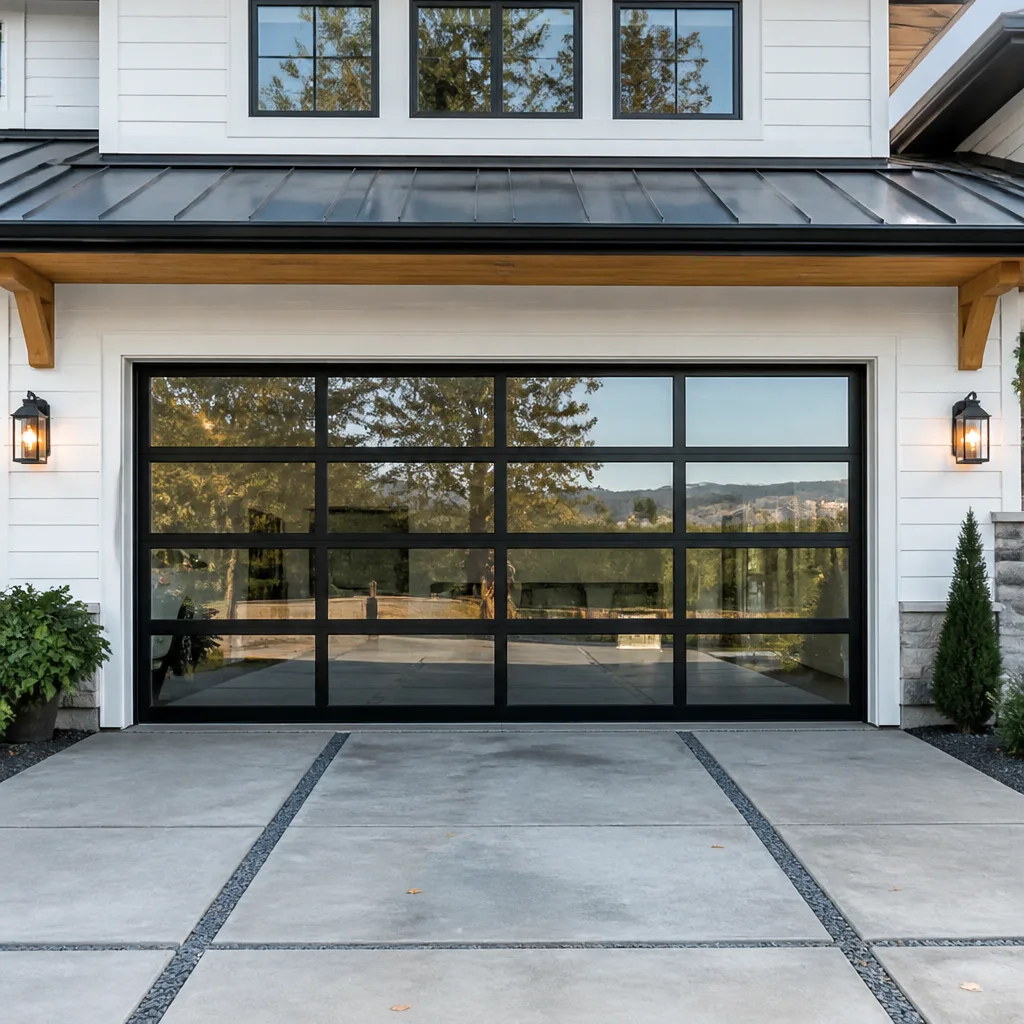 Full-view glass
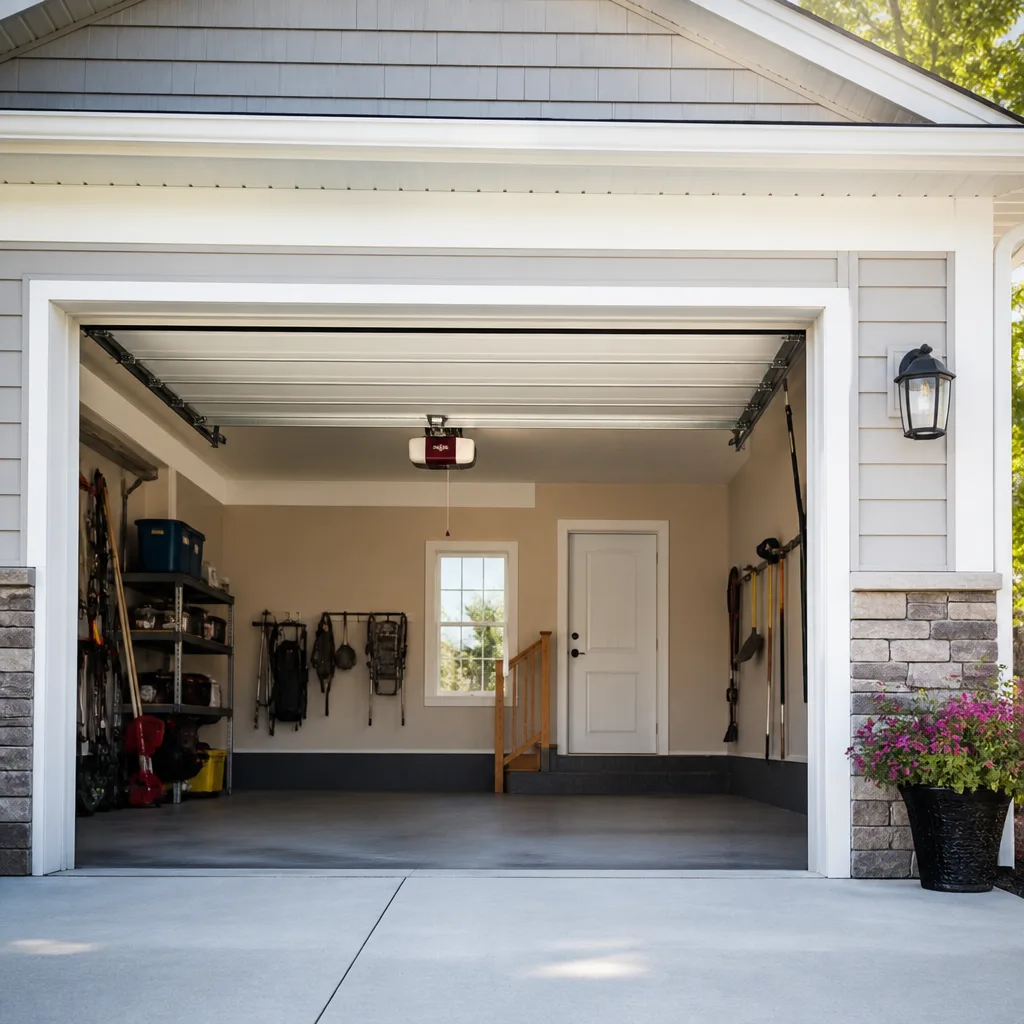 LiftMaster openers
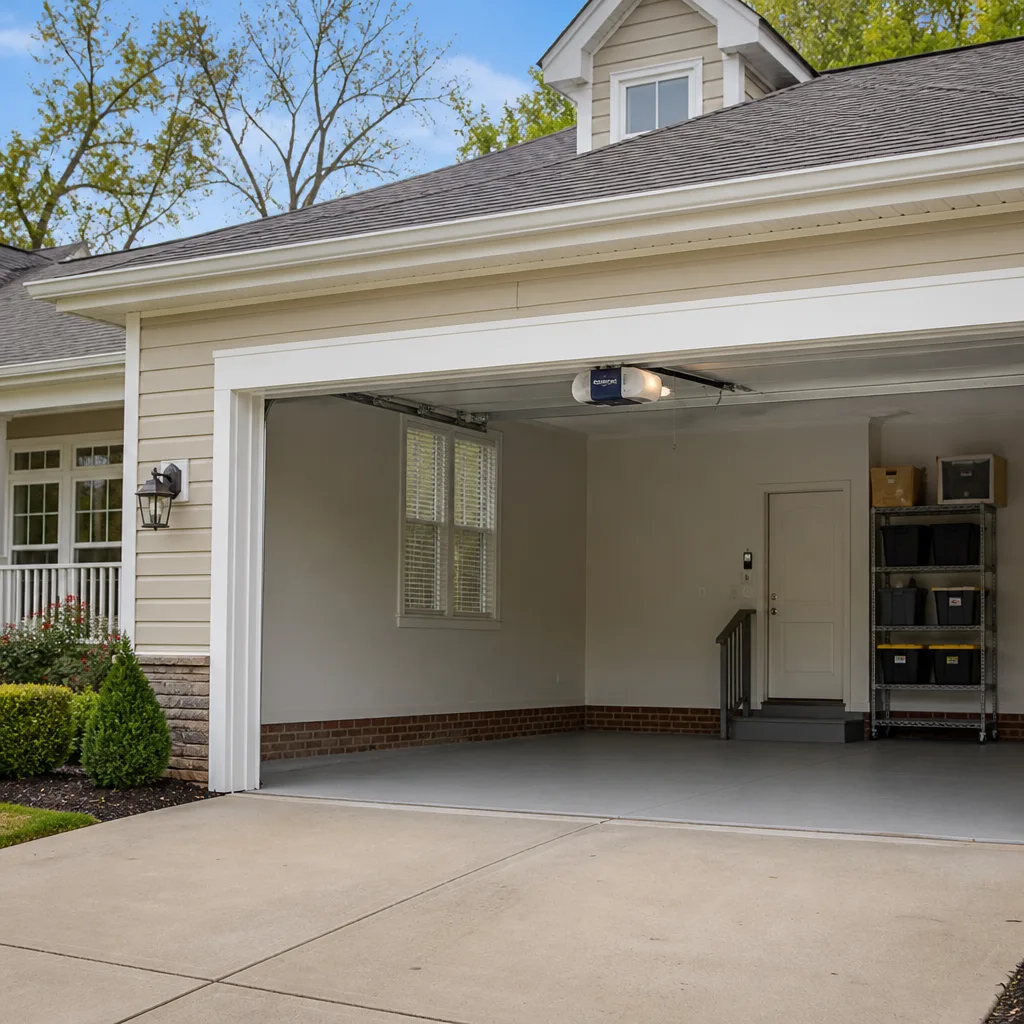 Chamberlain openers
Full 25-point door and opener safety check with every visit - springs, cables, rollers, tracks, and your LiftMaster or Chamberlain opener included
You get a price before we start. It does not change when the truck arrives.
Get your free estimateThe Complete Guide to Garage Door in Sarasota
Most Sarasota homeowners can name two parts of their garage door: the door itself and the opener. That’s it. Yet the average garage door cycles roughly 1,500 times a year, more mechanical repetition than your washing machine, dishwasher, and HVAC blower combined. Each cycle stresses seven interdependent components, and when one fails, it rarely fails alone. This guide maps every component, explains how Sarasota’s salt air and humidity accelerate wear differently than inland Florida, and gives you a realistic timeline for what breaks when. For related reading, see our Garage Door Cost Breakdown: The Sarasota Homeowner’s Reference for 2026. By the end, you’ll know whether you’re looking at a $200 repair or a $2,000 replacement, and why the distinction matters.
Quick Answer
A garage door in Sarasota is a seven-component system: panels, springs, cables, tracks, rollers, opener, and weatherstripping. Understanding how each part wears, especially in coastal humidity and salt air, helps you anticipate repairs before they become replacements. Most component failures cost between $150 and $400 to fix when caught early, while full door replacement in Sarasota typically runs $1,200 to $3,500 depending on material and size.
Styles & brands we work with
Table of Contents
- Component One: The Panels
- Component Two: The Springs
- Component Three: The Cables
- Component Four: The Tracks and Rollers
- Component Five: The Opener
- Component Six: Weatherstripping and Seals
- Repair or Replace: The Decision Tree
- Component Lifecycle Timeline in Sarasota
- Which Brands Are Most Common in Sarasota
- Common Mistakes to Avoid
- When to Call a Professional
- Frequently Asked Questions
Component One: The Panels
Panels are the most visible part of the door, and in Sarasota, they’re also the most vulnerable to environmental damage. Most Sarasota homes have steel or aluminum doors, and both materials interact with coastal air in specific ways. Steel panels with a factory-applied finish resist rust well until the finish gets scratched, chipped, or worn thin at the edges. Once bare steel is exposed, salt air accelerates oxidation. We regularly see steel doors in waterfront neighborhoods like Siesta Key and Bird Key showing rust blooms along the bottom panel within 8 to 10 years, while the same door in Lakewood Ranch might go 15 years without visible corrosion.
Aluminum doors resist rust entirely but dent more easily. In neighborhoods with active HOAs and frequent hurricane-season activity, flying debris and fallen branches take a toll. A dented panel isn’t just cosmetic. Dents compromise the structural rigidity of the panel, which changes how the door distributes weight across the hinges. Over time, that uneven load wears out rollers and stresses the springs.
Panel damage falls into three categories: cosmetic dents, structural cracks, and section separation. Cosmetic dents are usually repairable without replacing the panel. Structural cracks, especially on load-bearing bottom panels, nearly always warrant panel replacement. Section separation, where the joints between panels loosen or the weather seal between sections degrades, lets Sarasota humidity into the garage and accelerates rust on interior hardware.
What to watch for: rust streaks below the bottom panel, dents that deform the panel edge where hinges attach, and daylight visible through gaps between panels when the door is closed.
Component Two: The Springs
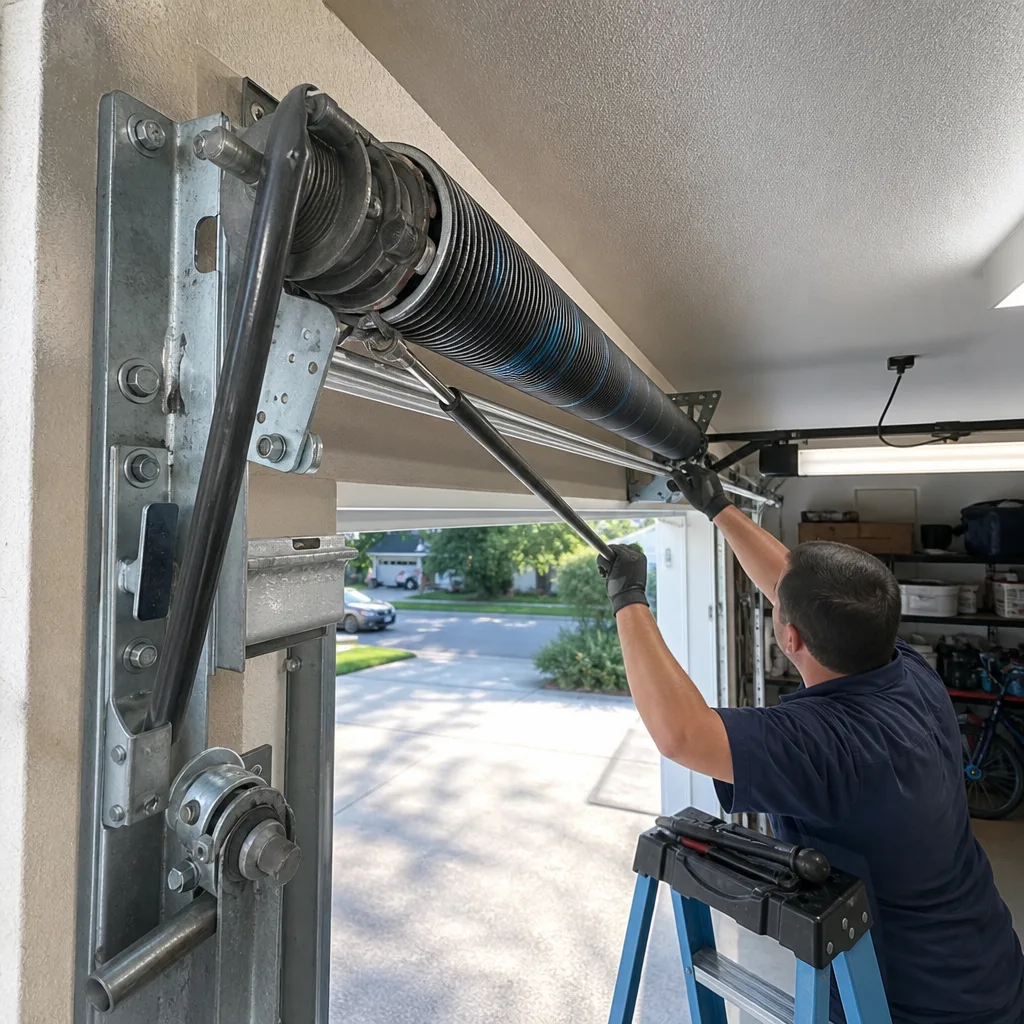
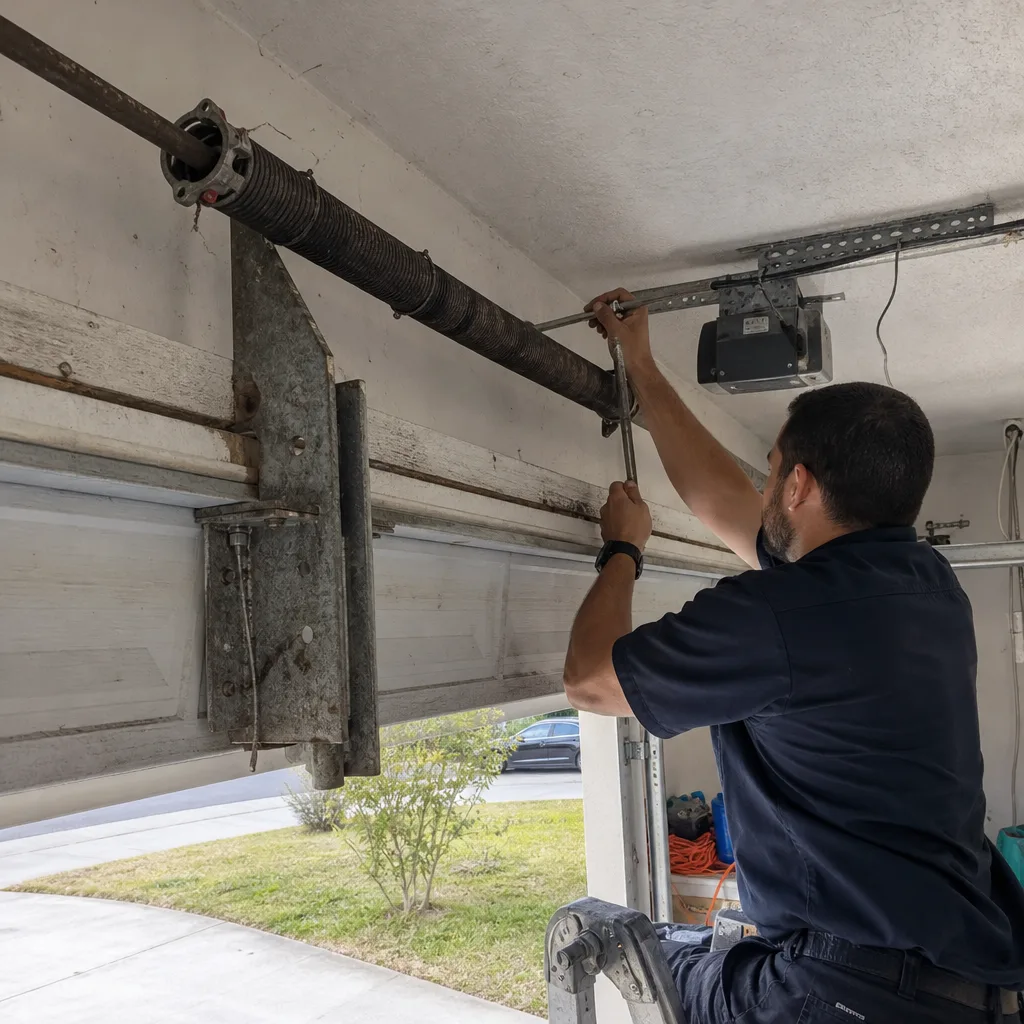
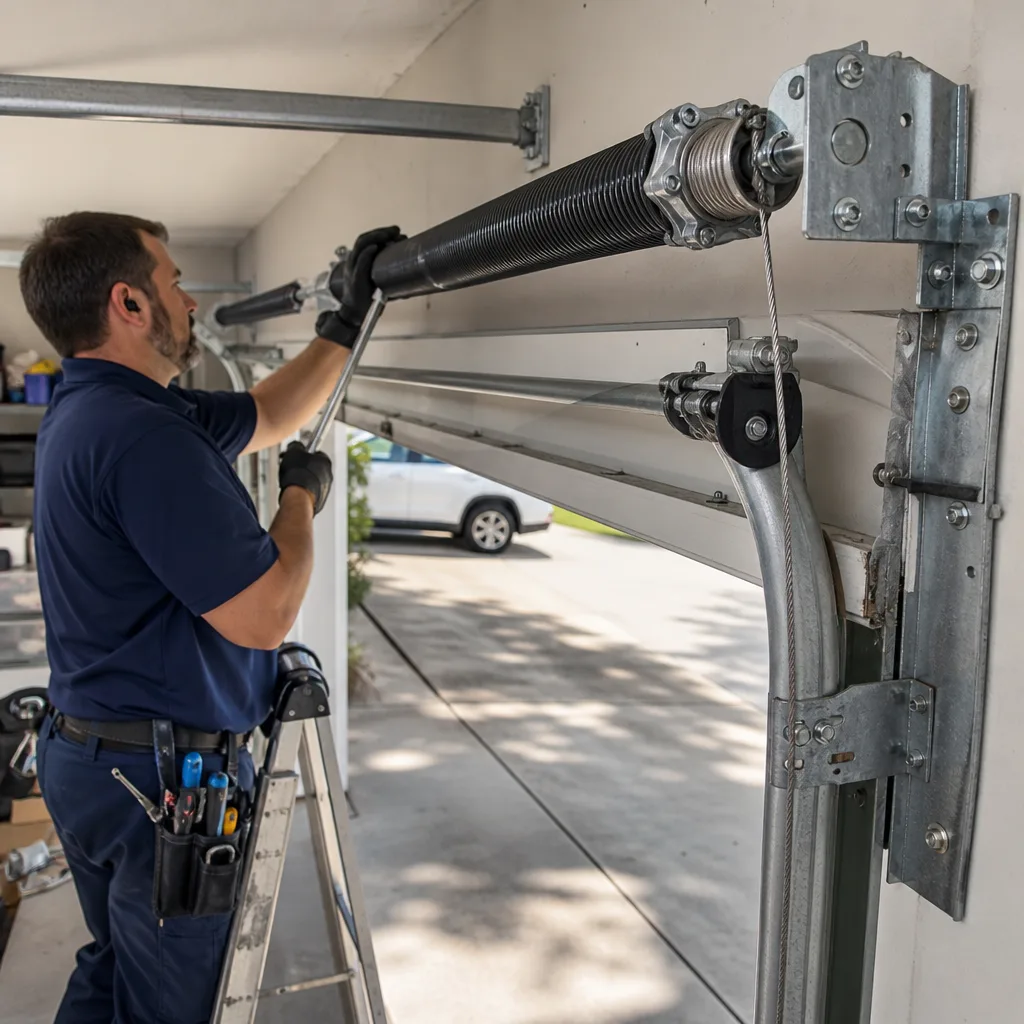
Springs do the heavy lifting, literally. Your garage door opener doesn’t lift the door’s full weight. The springs counterbalance it. A typical double garage door weighs 150 to 250 pounds, and the springs offset that weight so the opener only has to move the remaining 20 to 30 pounds.
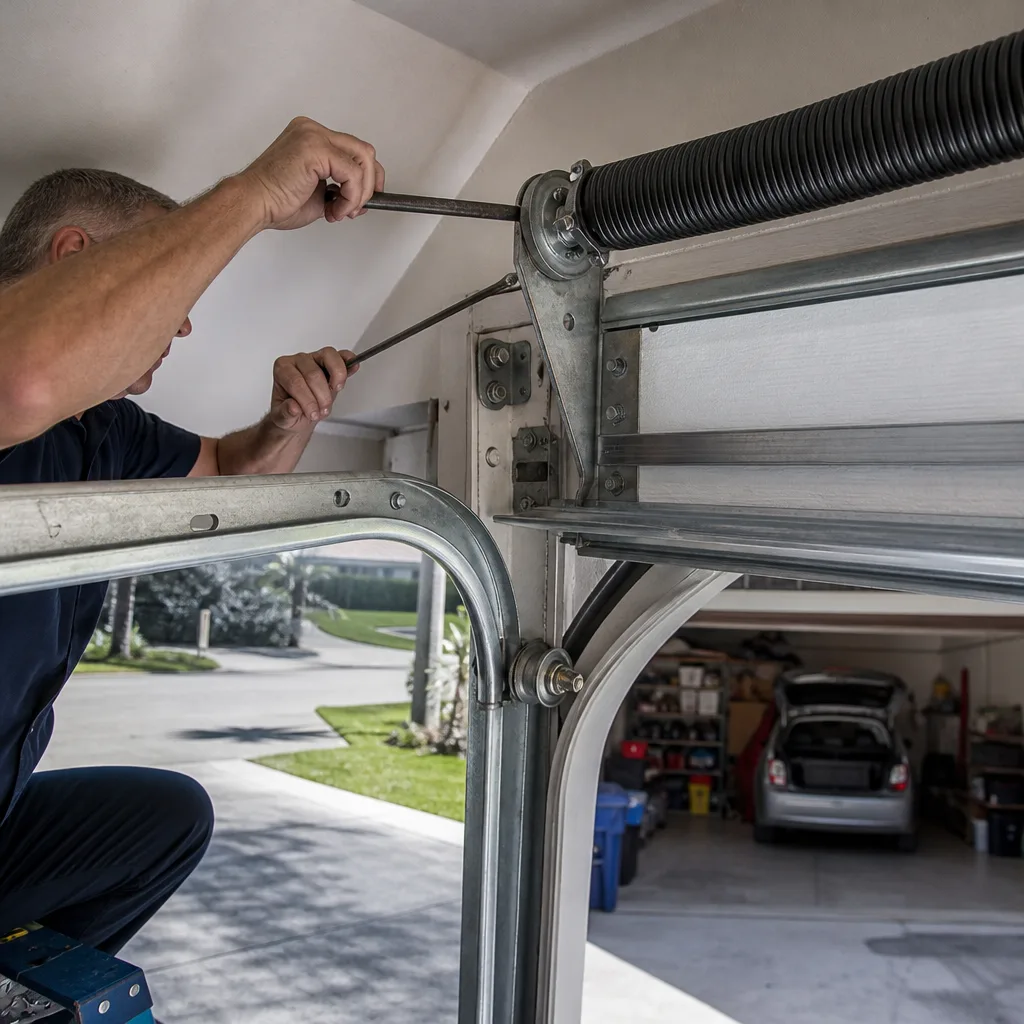
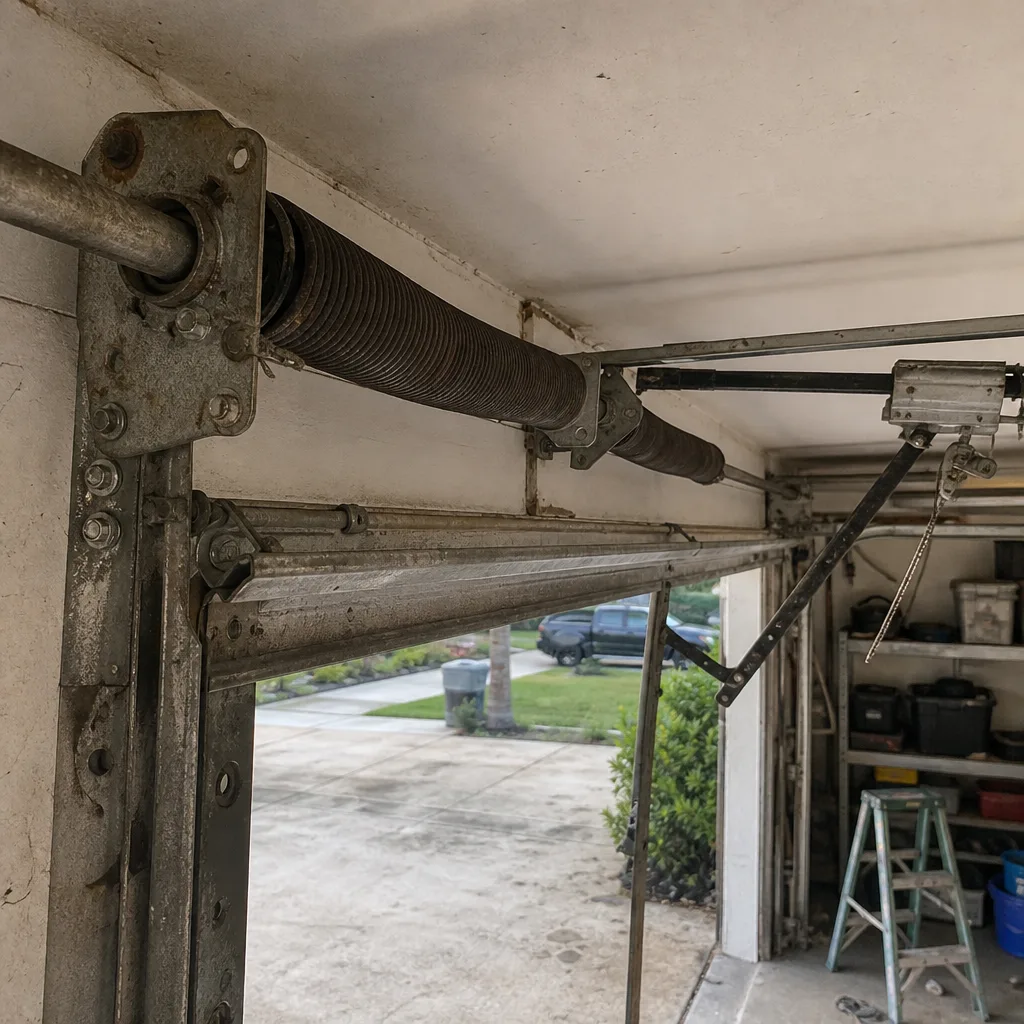
There are two types: torsion springs, mounted on a horizontal bar above the door opening, and extension springs, mounted on either side of the track. Torsion springs dominate in newer Sarasota homes because they’re safer when they break and last longer. Most torsion springs are rated for 10,000 cycles, which translates to roughly 7 to 10 years of normal use.
Spring failure in Sarasota doesn’t follow a gentle decline. It’s sudden. One day the door opens fine. The next, you hear a bang like a firecracker in the garage and the door won’t lift more than six inches. That’s the spring snapping, and it’s the single most common service call we handle for Garage Door Repair in Sarasota.
Here’s what makes Sarasota spring wear different from inland Florida: humidity doesn’t directly affect the spring, but it affects what the spring is attached to. Rust on the spring anchor brackets and torsion tube creates friction points. The spring coils don’t slide smoothly across corroded surfaces, so stress concentrates unevenly. When the spring finally fails, it often damages the bearing plates too, which means a $280 spring replacement can become a $420 job if the bearing plates need replacement at the same time.
Safety note: torsion springs are under enormous tension. Attempting to remove or adjust one without proper winding bars is how serious injuries happen in garages. This is one component where watching a video tutorial is not preparation. Leave spring work to someone who does it weekly.
Component Three: The Cables
Cables work with the springs, not independently. They’re the steel wires that route the lifting force from the spring assembly down to the bottom corners of the door. When a spring breaks, the cables often go slack or snap simultaneously. But cables also fail on their own, and in Sarasota, they fail in a predictable pattern.
Cable failure usually starts with fraying. The cable is a bundle of thin steel wires twisted together, and as individual strands break under repeated stress, the cable diameter thins. In coastal areas, salt air corrodes the cable surface, which accelerates strand separation. We inspect cables on nearly every repair call in Sarasota because frayed cables are a warning sign that’s invisible to most homeowners until the cable snaps.
When a cable snaps, the door becomes unbalanced. One side of the door carries more weight than the other, which means the door rises crookedly, binds in the tracks, and could fall if the other cable fails. A snapped cable is a stop-using-the-door situation, not a keep-using-it-until-the-weekend situation.
Replacement cost for both cables on a standard residential door in Sarasota runs $170 to $260 including labor. It’s one of the more affordable fixes in the system, and it’s also one that should always include a track alignment check, because a door that’s been running crooked even briefly often knocks the tracks out of alignment.
Component Four: The Tracks and Rollers
Tracks are the steel rails that guide the door from vertical to horizontal as it opens. Rollers are the wheels that ride inside those tracks. Together they’re the steering system, and when they’re compromised, every other component works harder.
In Sarasota, track problems cluster around two causes: corrosion and hurricane-related impact. Galvanized steel tracks resist rust well until the galvanized coating gets scratched during installation or from debris. Once the coating is breached, the track rusts from the inside out. Rust inside the track channel creates a rough surface that grinds down roller bearings faster than anything else in the system.
Rollers come in three grades: plastic, steel, and nylon. Plastic rollers wear out in 2 to 3 years in Sarasota’s heat. Steel rollers last longer but are noisy and rust-prone in coastal air. Nylon rollers with sealed ball bearings last 10 to 12 years and run quiet, which is why we recommend them for almost every Sarasota home. They cost a bit more, usually $15 to $25 per roller versus $5 for plastic, but replacing ten plastic rollers every 3 years costs more in labor over a decade than installing nylon rollers once.
The sign of a track or roller problem is often noise: grinding, squeaking, or a rumble that wasn’t there before. Other signs include the door hesitating at the same spot every cycle, or visible gaps between the roller wheel and the track wall.
Quick tip: if you hear grinding, stop using the door. A roller that’s seized can jump the track, and a door off its track is a safety hazard and a more expensive repair than a roller replacement.
Component Five: The Opener
The opener is the motorized unit that moves the door, and it’s the component homeowners think about most because it’s the one with buttons. But the opener is also the most misunderstood part of the system. A properly balanced door with healthy springs requires very little effort from the opener. A door with failing springs or misaligned tracks forces the opener to work against resistance it was never designed for.
Most opener failures in Sarasota start as motor strain. The opener motor has a thermal overload protector that shuts it down when it overheats. If your opener runs for a few seconds and stops, then works again after a cool-down period, that’s the motor protecting itself from excess load. The cause is rarely the motor itself. It’s almost always a spring or track problem downstream.
Drive type matters in Sarasota’s climate more than most people realize. Chain drives are durable but noisy and prone to surface rust in salt air. Belt drives are quieter and don’t rust, but belts stretch over time in garage heat. Screw drives, common in older homes, wear faster in humid environments because the screw threads collect moisture and the grease breaks down. We service all three types, plus the major opener brands: Garage Door Opener Repair in Sarasota covers LiftMaster, Chamberlain, Genie, and Craftsman units, which represent the vast majority of openers installed in Sarasota homes.
Opener replacement cost in Sarasota averages $350 to $600 installed for a quality belt-drive unit. If the opener is more than 12 years old and the door system has been repaired multiple times, replacing the opener at the same time often makes more sense than paying for repair labor on an aging unit.
Component Six: Weatherstripping and Seals
Weatherstripping is the least glamorous component and the most underrated. It’s the rubber or vinyl strip along the bottom of the door, plus the seals along the sides and top of the frame. Its job is to keep Sarasota’s elements outside: rain, humidity, salt air, insects, and the occasional storm surge that pushes water up the driveway.
Bottom seals in Sarasota fail faster than inland. The combination of intense UV exposure and salt air breaks down the rubber compound. A bottom seal that’s cracked, flattened, or pulling away from the door lets water in during every summer thunderstorm. That water pools on the garage floor, raises humidity levels, and accelerates rust on the door’s bottom panel and interior hardware.
Replacing a bottom seal is one of the cheapest fixes in the system, usually $80 to $150 installed. Side and top seals run similar. The payoff is substantial: a tight seal keeps the garage 8 to 12 degrees cooler in summer, reduces moisture-related rust, and keeps out the palmetto bugs and anoles that find their way in through gaps.
Here’s the connection most homeowners miss: a garage door that’s properly sealed reduces the cooling load on the rest of the house. Attached garages share wall space with living areas. When the garage stays hot and humid, that heat transfers through the shared wall. A $150 weatherstripping job pays for itself in HVAC savings within a year or two.
Repair or Replace: The Decision Tree
Knowing whether to repair a component or replace the whole door comes down to three questions: how old is the door, how many components are compromised, and what’s the cumulative repair cost. For more guides & resources on maintaining and extending your door’s life, visit our blog. Here’s the systematic approach our team uses when we evaluate doors across Sarasota neighborhoods from Gulf Gate to Palmer Ranch.
- Age of the door. A steel or aluminum door installed in Sarasota has a realistic service life of 15 to 20 years with good maintenance. If your door is under 10 years old, repair usually makes sense. If it’s over 15 years old and showing multiple failing components, replacement is often the smarter financial move.
- Number of compromised components. One failing component is a repair. Three failing components is a pattern. If springs, cables, and rollers all need attention within the same year, the door is telling you it’s in systemic decline. Repairing pieces one at a time costs more than a replacement that resets the lifecycle.
- Panel condition. If the bottom panel is structurally rusted or cracked, panel-only replacement is possible but rarely matches the rest of the door in color and finish. In Sarasota’s climate, a 12-year-old door will show visible UV fade. The new panel won’t match, and the aesthetic mismatch annoys homeowners indefinitely.
- Cumulative cost. Add up the repair quotes for all current issues. If that total exceeds 50% of a full door replacement cost, replacement is the better value. A $450 repair on a door that would cost $900 to replace entirely is a coin flip. A $700 repair on that same door is a clear replacement signal.
- Future plans. Planning to sell the house in the next 2 to 3 years? A new door in Sarasota’s market returns a meaningful portion of its cost in curb appeal and buyer confidence. Planning to stay 10 years? A full replacement now means a decade without major component surprises.
For homeowners weighing the jump from repair to replacement, Garage Door Installation in Sarasota starts with a free measure and written estimate, so the financial comparison is concrete, not speculative.
Component Lifecycle Timeline in Sarasota
Every component has a predictable service window. Here’s what we tell Sarasota homeowners to expect, adjusted for coastal conditions that accelerate wear compared to inland communities like Myakka City or eastern Manatee County.
- Springs (torsion): 7 to 10 years, or 10,000 cycles. In a household that uses the door 6 to 8 times daily, that’s roughly 8 years. Coastal properties may see a year or two less due to corrosion on anchor points.
- Cables: 8 to 12 years under normal conditions. Salt air and unsealed garage environments can shorten this to 6 to 8 years in waterfront homes.
- Rollers (nylon): 10 to 12 years. Plastic rollers: 2 to 3 years. Steel rollers: 5 to 7 years, louder throughout.
- Tracks: 20-plus years if properly maintained and not physically damaged. Corrosion accelerates if the galvanized coating is compromised.
- Opener: 10 to 15 years for quality belt-drive units. Chain-drive units last longer mechanically but often get replaced earlier for noise and smart-home compatibility.
- Panels (steel): 15 to 20 years with regular maintenance. Aluminum: 20-plus years, though dents accumulate. Wood: variable, but Sarasota’s humidity makes wood doors high-maintenance and increasingly rare.
- Weatherstripping: 3 to 5 years at the bottom seal. Side and top seals last 5 to 8 years. UV and salt air are the primary degradation drivers.
These are planning numbers, not guarantees. A door that’s serviced annually and kept clean outperforms every number above. A door that’s ignored until something breaks will underperform all of them.
Which Brands Are Most Common in Sarasota
Sarasota’s housing stock spans decades, and the garage door brands reflect that history. Homes built in the 1980s and 1990s often still have Wayne Dalton doors, many of which are now approaching the end of their service life. Builders in the 2000s favored Clopay and Amarr for entry-level and mid-range doors. In newer developments east of I-75, you’re more likely to see Clopay on custom builds and Amarr on production homes.
On the opener side, LiftMaster and Chamberlain dominate, which makes sense because they’re the same parent company and represent the majority of the opener market nationwide. Genie is common in homes where the builder spec’ed it originally, and Craftsman openers are everywhere in older homes where the previous owner bought whatever Sears sold that week.
Here’s the practical implication: a homeowner calling a company that only services one brand gets told to replace parts that could be repaired. A homeowner calling a company that works across all the major brands gets an accurate diagnosis. We’re certified on eight major brands, including Clopay for doors and LiftMaster and Genie for openers. When we tell a Sarasota homeowner their Genie opener needs a new logic board, it’s because the logic board failed, not because we only know how to sell LiftMaster.
Multi-brand service also matters for mixed systems. We see plenty of Sarasota garages with a Clopay door paired to a Genie opener, or an Amarr door running on a Chamberlain opener. When a technician only knows doors or only knows openers, the diagnosis stops at the component they understand. When the technician knows both sides, the diagnosis covers the whole system.
Common Mistakes to Avoid
- Ignoring noise and vibration. A door that gets louder each month is communicating. Grinding means a roller is failing. Squealing means a spring needs lubrication. Banging means a panel section is loose. Every sound is diagnostic, and waiting until the sound stops usually means the component broke.
- Lubricating the wrong parts. Spraying WD-40 on the tracks is the most common DIY mistake in Sarasota garages. Tracks should stay dry. Lubrication belongs on rollers, hinges, and springs, and it should be a garage-door-specific lubricant, not a general-purpose penetrant that strips existing grease.
- Replacing an opener before checking the springs. When a door moves slowly or the opener struggles, homeowners often assume the opener is failing. More often, the springs are weak and the opener is working against excess weight. Replacing the opener without addressing the springs just burns money.
- Ignoring the bottom seal. It’s a $50 part. It’s also the difference between a dry garage and a humid one. In Sarasota’s rainy season, a failing bottom seal means water ingress during every afternoon downpour, which feeds rust on the bottom panel and interior components.
- Skipping annual inspection. Components don’t fail without warning. Springs show corrosion before they snap. Cables fray before they break. Rollers wear visibly before they seize. An annual inspection catches these signals when the fix is $150 instead of $400.
- Trying to DIY torsion spring replacement. This bears repeating because it’s dangerous. The winding bars, the spring tension, the sudden release of stored energy, these are not things to learn from a video. This is the one repair where the cost of a professional is the cost of your safety.
When to Call a Professional
Some garage door issues are safe to evaluate on your own: a noisy roller, a cracked bottom seal, a panel that’s visibly rusted but not structurally compromised. Other issues demand a trained eye and immediate attention. Call a professional if your door won’t open or close fully, if you hear a loud bang from the garage, if cables appear frayed or loose, if the door is off its tracks, or if the opener runs but the door doesn’t move. These are signs of spring, cable, or track failure, and continued use risks property damage and personal injury. Copper Garage Door Repair offers free estimates in Sarasota, call (866) 282-4861 and we’ll tell you what’s wrong and what it costs before any work begins.
Frequently Asked Questions
Spring replacement in Sarasota typically costs $180 to $340 for a standard torsion spring pair on a residential door, including labor. The range depends on spring size, door weight, and whether bearing plates or cables need replacement at the same time. Call (866) 282-4861 for a specific quote on your door, estimates are free.
A well-maintained steel garage door in Sarasota lasts 15 to 20 years. Coastal properties in areas like Siesta Key may see 12 to 15 years due to salt air corrosion, while inland homes in neighborhoods east of I-75 often exceed 18 years. Regular maintenance and prompt component replacement extend the service life meaningfully.
Yes, a single panel can be replaced, but it’s rarely the right move unless the door is very new. In Sarasota’s UV exposure, panels fade to match a door’s installation date, not a color code from the factory. A replacement panel on a door older than a few years will be visibly different, which is why we typically recommend full door replacement once a panel is structurally compromised on an older door.
If the opener motor runs but the door stays put, the disconnect is usually in the drive system: a broken spring, a snapped cable, or a stripped gear inside the opener. In Sarasota homes, broken torsion springs are the most common cause. The garage door becomes too heavy for the opener to move without the spring counterbalance.
It depends on the extent of the repair. For a single component like a roller or cable, yes. For multiple components that total more than half the cost of a new door, replacement makes more financial sense. At 15 years, a Sarasota door has already absorbed over two decades of UV, humidity, and salt air exposure, and component failures will accelerate.
We service and install LiftMaster, Chamberlain, Genie, Clopay, and select models from other major brands. Our team is trained across manufacturer lines, which means we diagnose the actual problem rather than defaulting to a single brand’s product ecosystem. For a specific question about your door or opener, call (866) 282-4861.
The Bottom Line
Your garage door is seven components working together, each with its own service life and each vulnerable to Sarasota’s specific environment. Springs last 7 to 10 years, cables 8 to 12, rollers 10 to 12, weatherstripping 3 to 5, and the door itself 15 to 20. Understanding these cycles means you can plan for maintenance instead of reacting to breakdowns. When components fail, the question isn’t just what broke, it’s what else is about to. A multi-brand, full-system approach answers that question accurately. The team at Copper Garage Door Repair home works on your brand, whatever it is, and covers the whole door system, not just the part that broke. We’ll tell you exactly what’s wrong and why, and you’ll know the price before any work starts. Call (866) 282-4861 for a free estimate in Sarasota.
Written by the team at Copper Garage Door Repair, serving Sarasota since 2013.
See the difference
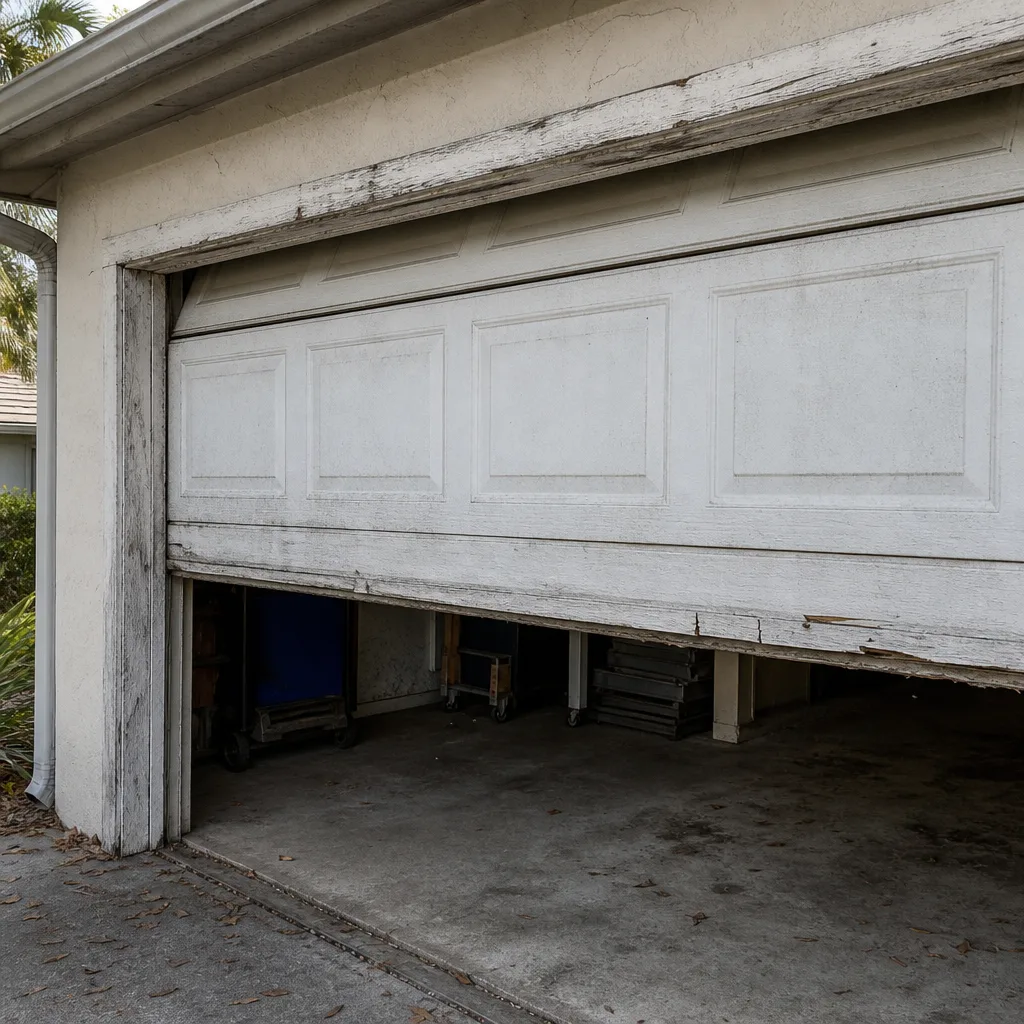 Before
 After
 Before
 After
 Before
 After