
Last updated October 30, 2026
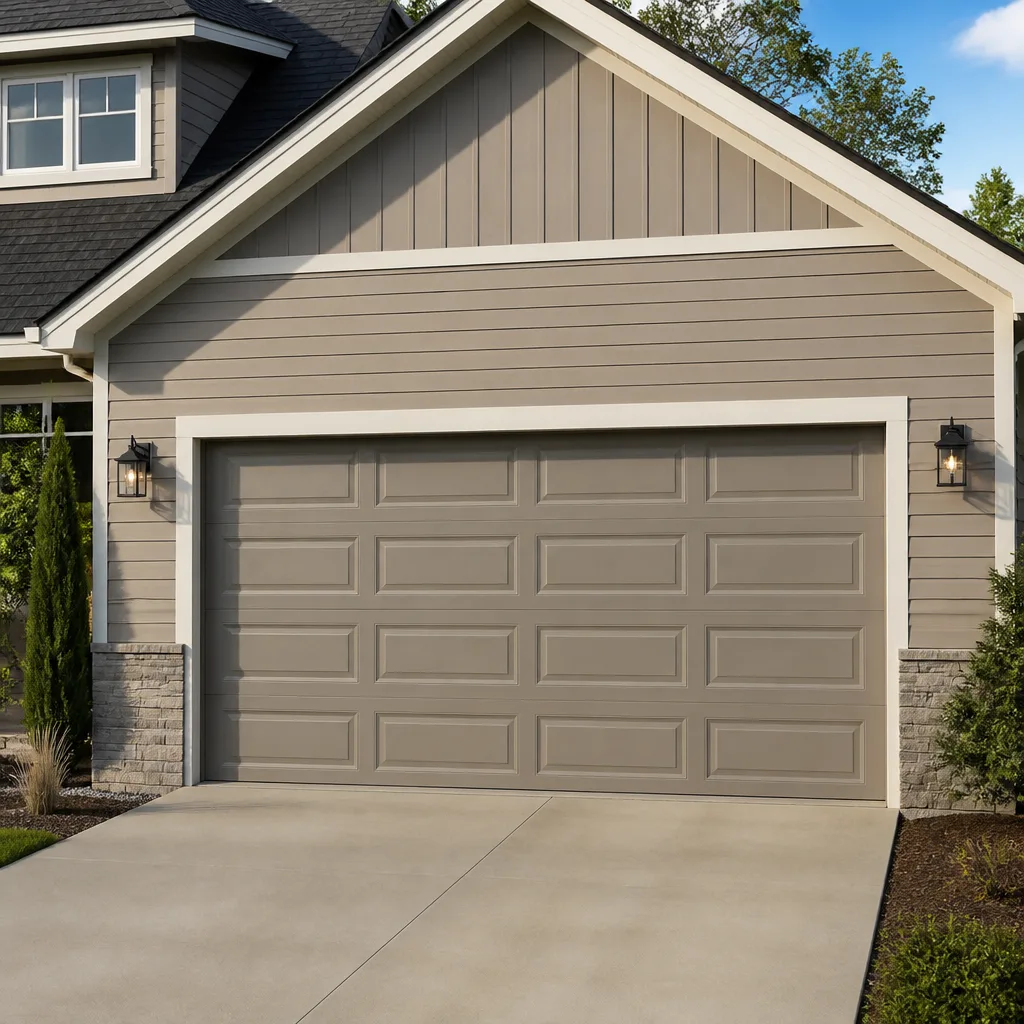 Raised-panel steel
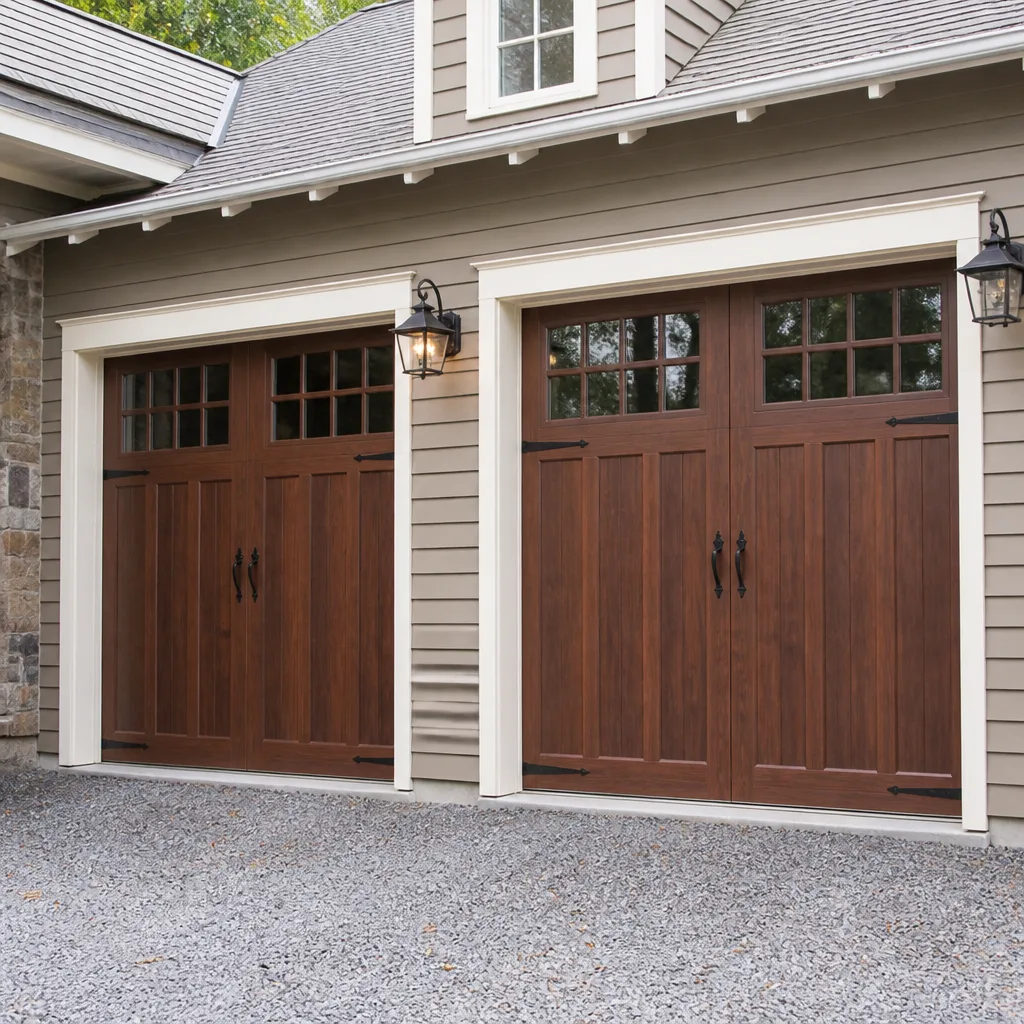 Carriage house
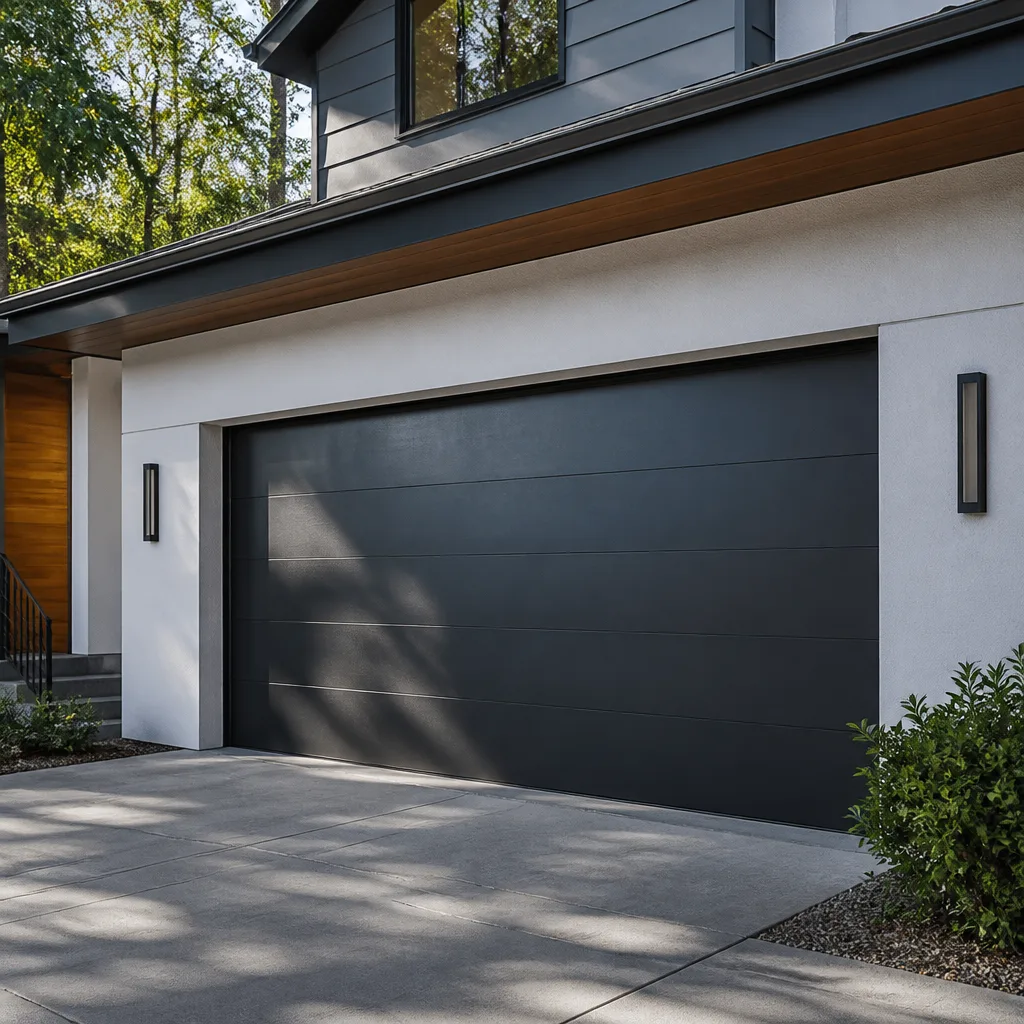 Modern flush
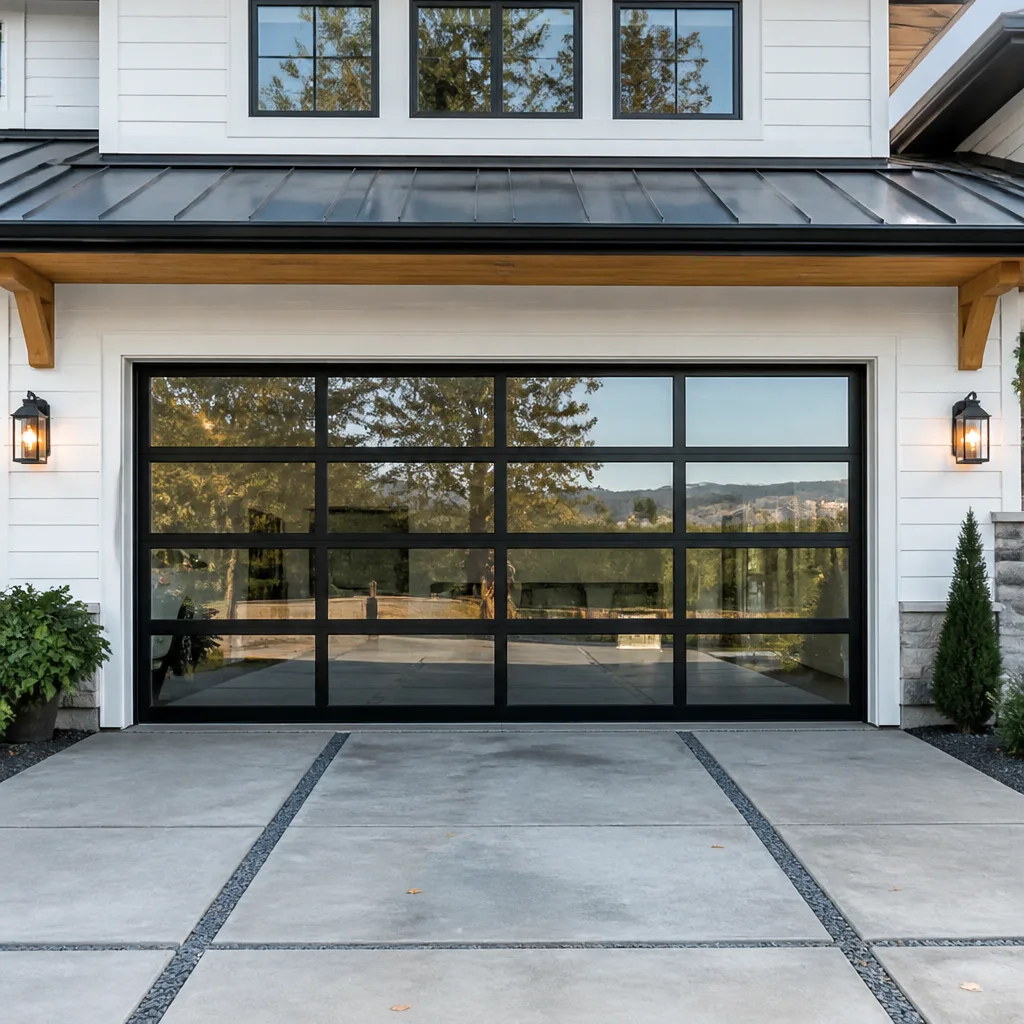 Full-view glass
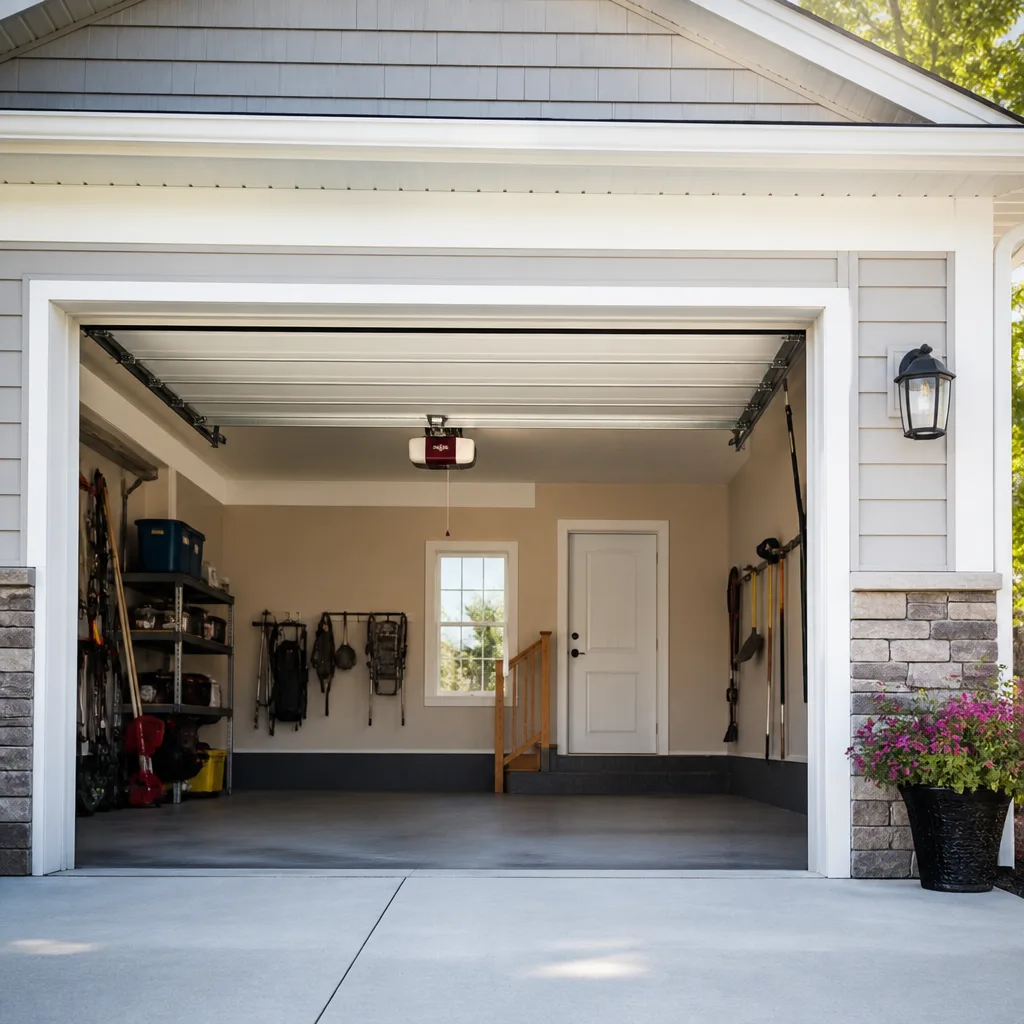 LiftMaster openers
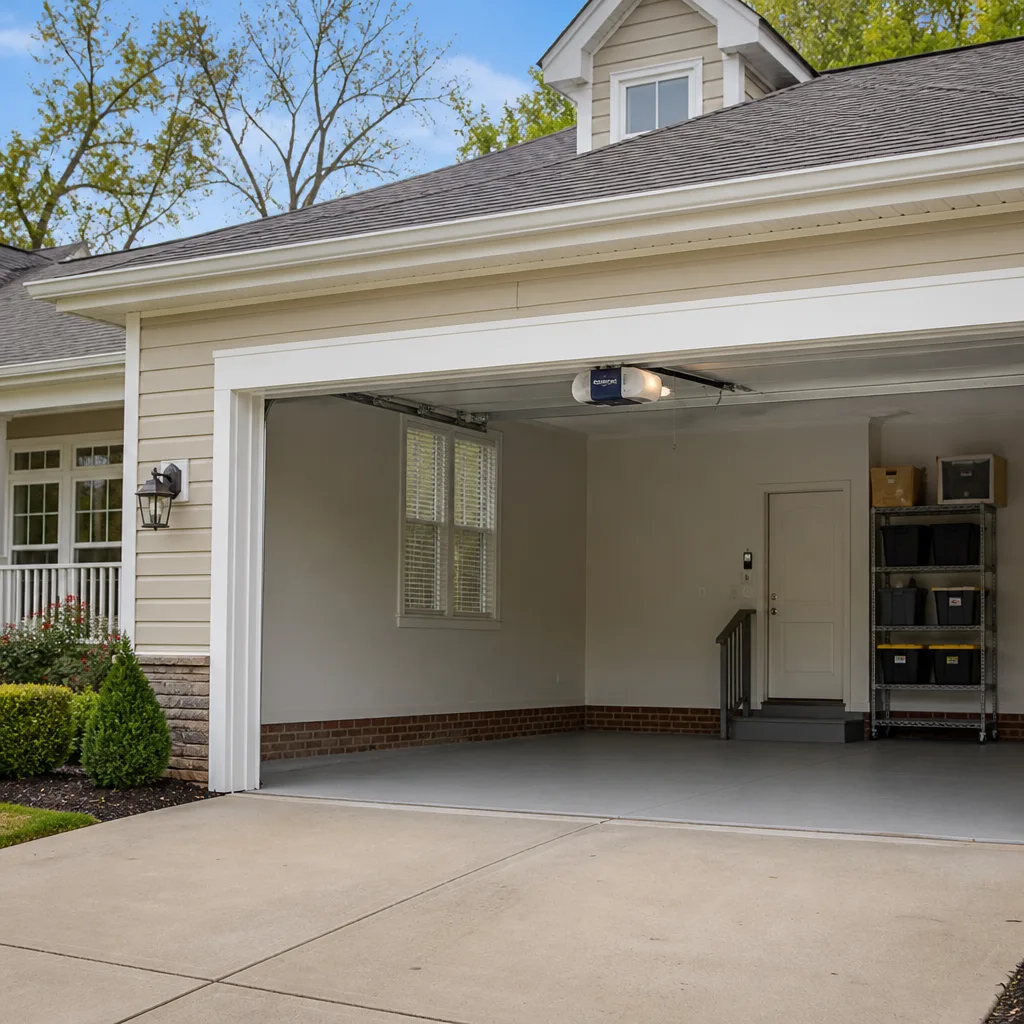 Chamberlain openers
Full 25-point door and opener safety check with every visit - springs, cables, rollers, tracks, and your LiftMaster or Chamberlain opener included
You get a price before we start. It does not change when the truck arrives.
Get your free estimateGarage Door Repair Maintenance Checklist for Sarasota Homeowners
Most garage door failures aren’t sudden. They’re the predictable result of three or four small maintenance skips compounding over 18 months. A technician can usually trace a snapped spring or seized roller back to a missed step that cost less than $10 to prevent. This guide is different from the generic checklists you’ll find elsewhere. It tells you exactly which lubricant to use on which part, at what interval, and why Sarasota’s coastal air makes those specifics non-negotiable. The difference between following this and following a vague “lubricate moving parts” list is whether your door lasts 8 years or 18. If you’re a Sarasota homeowner, this is the maintenance plan that actually matches the environment you live in.
Styles & brands we work with
Quick Answer
A proper garage door maintenance routine for Sarasota homes has two tracks: a quarterly DIY inspection and lubrication pass (30 minutes, about $15 in supplies), plus an annual professional tune-up covering spring tension, cable wear, and opener force settings. The non-negotiables in this coastal climate are using a lithium-based grease on the opener rail, a dry silicone spray on rollers and hinges, and cleaning salt residue off all metal parts every 90 days. Homes within five miles of the Gulf should double that cleaning frequency.
Table of Contents
- The Sarasota Factor: Why Coastal Air Changes Everything
- The DIY Quarterly Checklist: What You Can Safely Do Yourself
- The Annual Professional Checklist: What a Technician Should Handle
- Lubrication Specifications: Exact Products for Each Component
- First Signs of Failure: What to Watch For Between Checks
- Coastal Corrosion Zone: Extra Steps for Homes Near the Water
- Your Printable Quarterly vs. Annual Schedule
- Common Mistakes to Avoid
- When to Call a Professional
- Frequently Asked Questions
- The Bottom Line
The Sarasota Factor: Why Coastal Air Changes Everything
Sarasota sits on the Gulf of Mexico, and that single fact dictates every maintenance decision you make about your garage door. The salt-laden air that drifts in from the Gulf accelerates corrosion on metal components at roughly twice the rate seen in inland Florida cities like Lakeland or Ocala. We see it constantly in neighborhoods like Siesta Key, Bird Key, and along the bay side of downtown: garage door hardware that would last 15 years in Gainesville shows visible pitting and rust within 5 to 7 years here, which is why our Garage Door Repair services stay busy year-round.
Humidity compounds the problem. Sarasota’s average relative humidity hovers around 74% year-round, peaking during the summer monsoon season from June through September. That moisture works its way into roller bearings, hinge pins, and spring coils. When combined with salt, it creates a perfect environment for galvanic corrosion, particularly where dissimilar metals meet. Steel springs on aluminum brackets, for example, will corrode faster at the contact point.
The practical consequence: your maintenance schedule cannot be borrowed from a national template. A quarterly lubrication pass is the minimum for coastal Sarasota homes, not a luxury. And the products you use matter more than the frequency. More on that below.
If you’re new to the area or your garage door has never been assessed by someone who understands this climate specifically, start with our Garage Door Repair in Sarasota guide to understand the full scope of what your system needs here.
The DIY Quarterly Checklist: What You Can Safely Do Yourself
Four times a year, set aside 30 minutes to walk through this list. You don’t need mechanical experience. You need a step stool, a flashlight, a rag, and the right products (detailed in the lubrication section below). Do this in March, June, September, and December.
Here’s the step-by-step pass, in order:
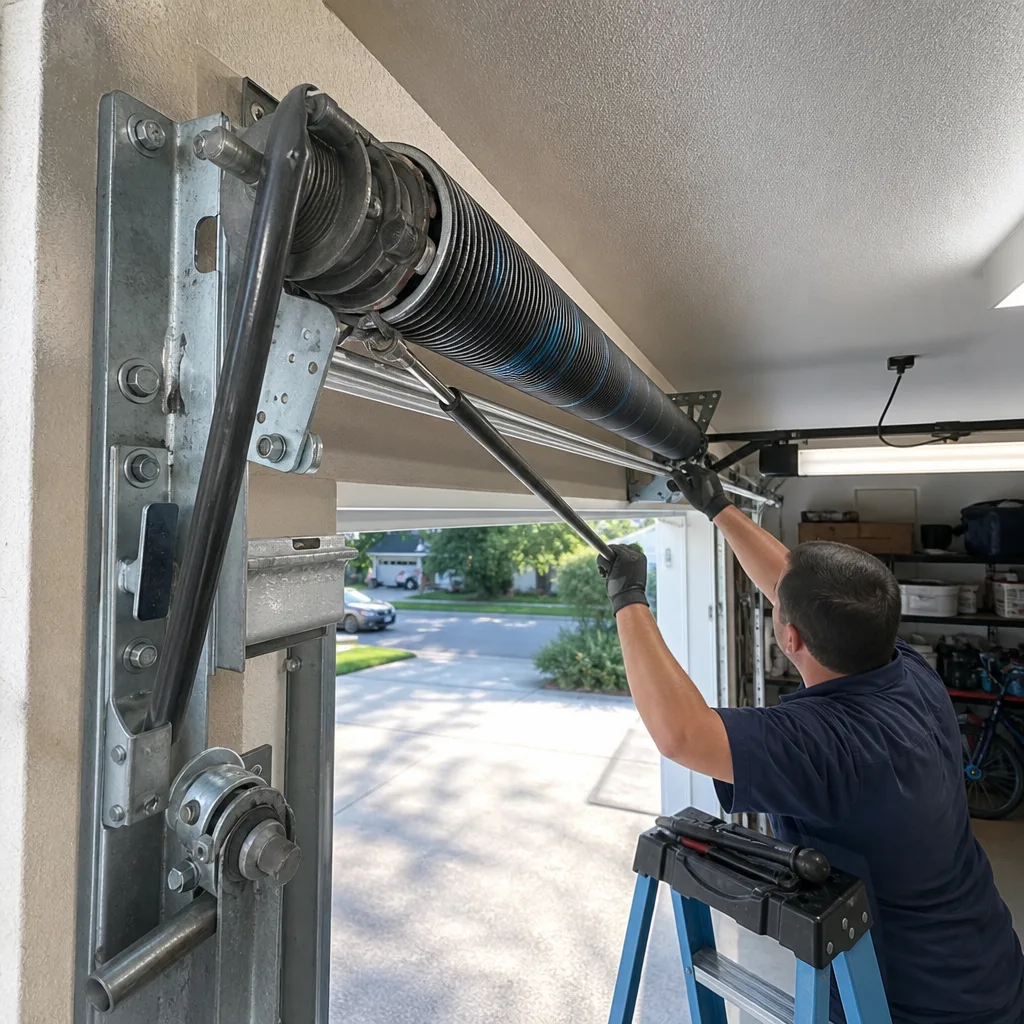
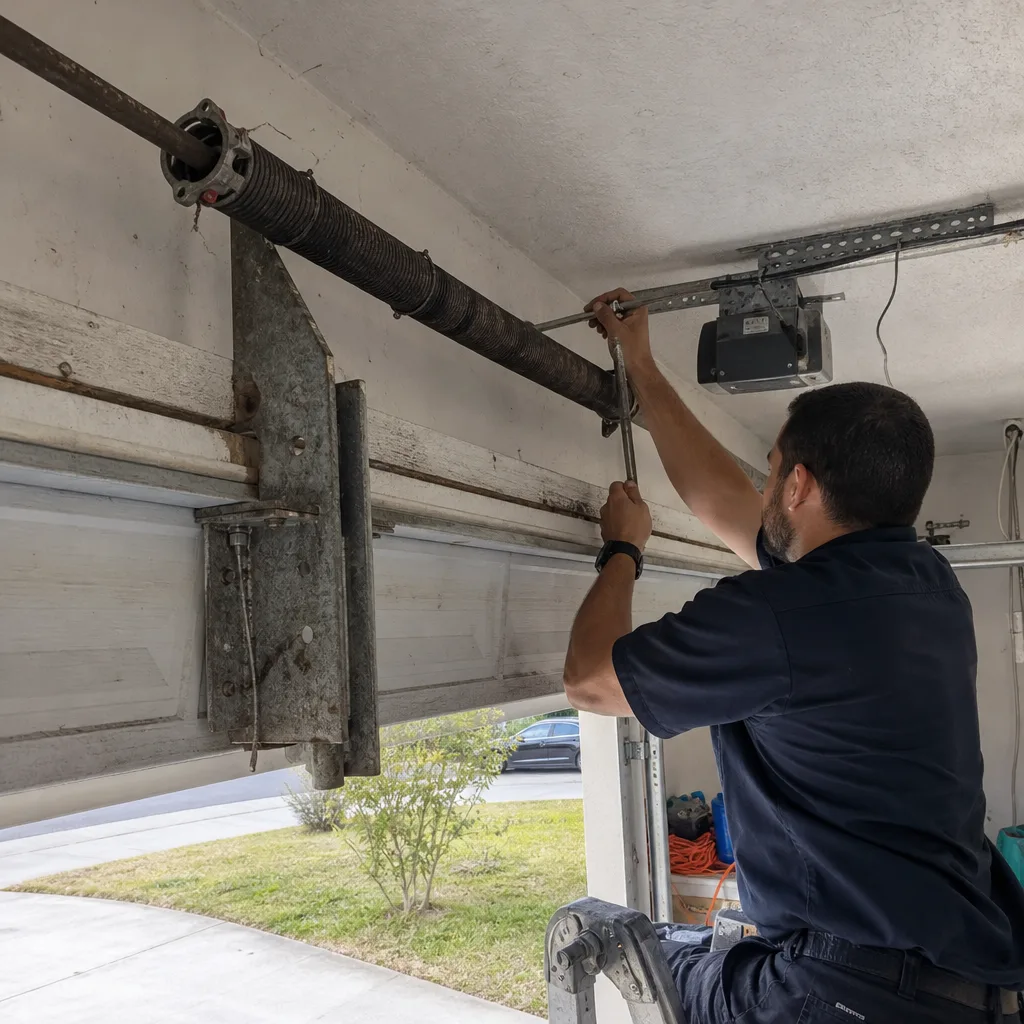
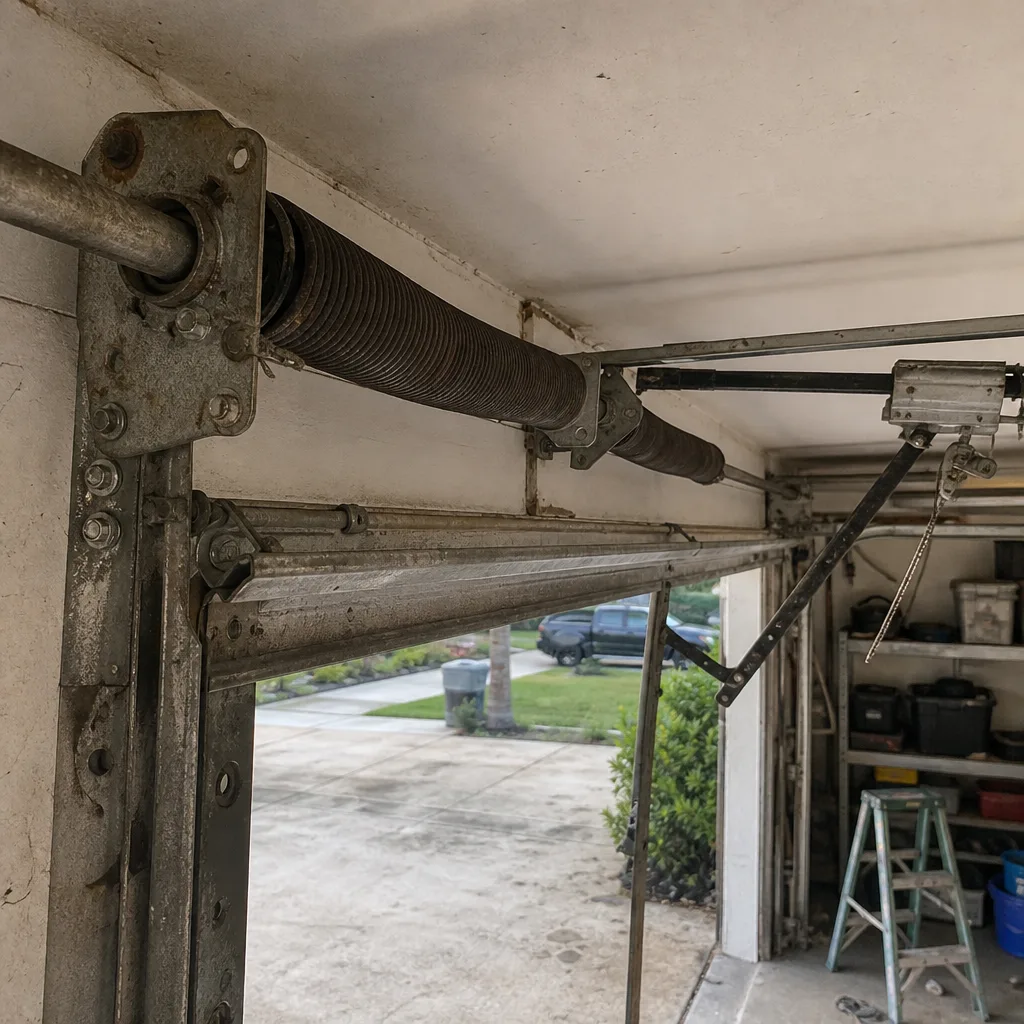
- Visual inspection of springs. Stand inside the garage and look up. Torsion springs sit on a bar above the closed door; extension springs run along the horizontal tracks on either side. Look for rust, gaps in the coil spacing, or a spring that appears stretched. If you see any of these, stop and call us. Do not touch the springs. They hold hundreds of pounds of tension, and a failure under load is dangerous.
- Clean salt residue off tracks and hardware. Wipe down the vertical and horizontal tracks with a dry rag. If you notice a white, chalky film, that’s salt. Dampen the rag with fresh water, wring it out thoroughly, wipe again, and dry immediately. Do not use household cleaners on tracks.
- Check roller condition. Look at each roller where the wheel meets the track. Nylon rollers should show no cracks or flat spots. Steel rollers should not wobble. If a roller has visible play when you push it sideways, it’s wearing out.
- Test the balance. Close the door. Pull the red emergency release handle. Lift the door manually to waist height and let go. It should hold position. If it drops or rises on its own, the springs need attention. Re-engage the opener afterward.
- Lubricate moving parts. Use the exact products listed in the lubrication section below. Never spray anything into the track itself.
- Check weatherstripping. The rubber seal along the bottom of the door and the vinyl strips along the sides degrade faster in Sarasota’s UV exposure. Look for cracks, gaps, or spots where the seal has pulled away from the door.
- Run the auto-reverse test. Place a roll of paper towels flat on the floor where the door closes. Close the door. It should reverse within a second of contacting the roll. If it doesn’t, that’s an immediate safety issue.
That entire pass takes about 30 minutes once you know the routine. The balance test and the auto-reverse test are the two most important items on the list. They catch spring fatigue and opener malfunction before either becomes a dangerous failure.
The Annual Professional Checklist: What a Technician Should Handle
Once a year, a professional should inspect the components that are dangerous to work on or impossible to assess without training. If you’re in Sarasota, that annual visit should happen in late fall, before the mild winter months when doors get their heaviest use. We work on doors from every major brand including LiftMaster, Wayne Dalton, and Craftsman, and the annual pass is similar regardless of what’s installed.
Here’s what a professional inspection covers:
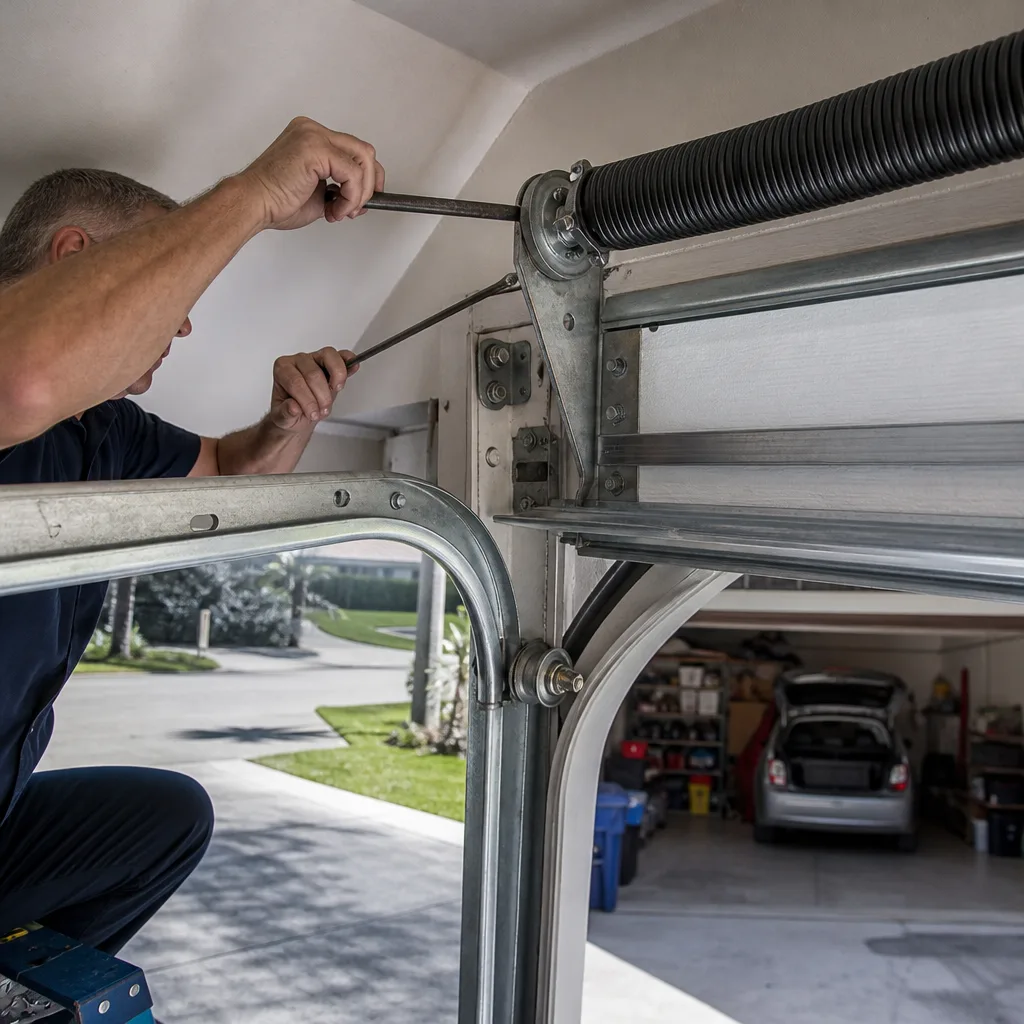
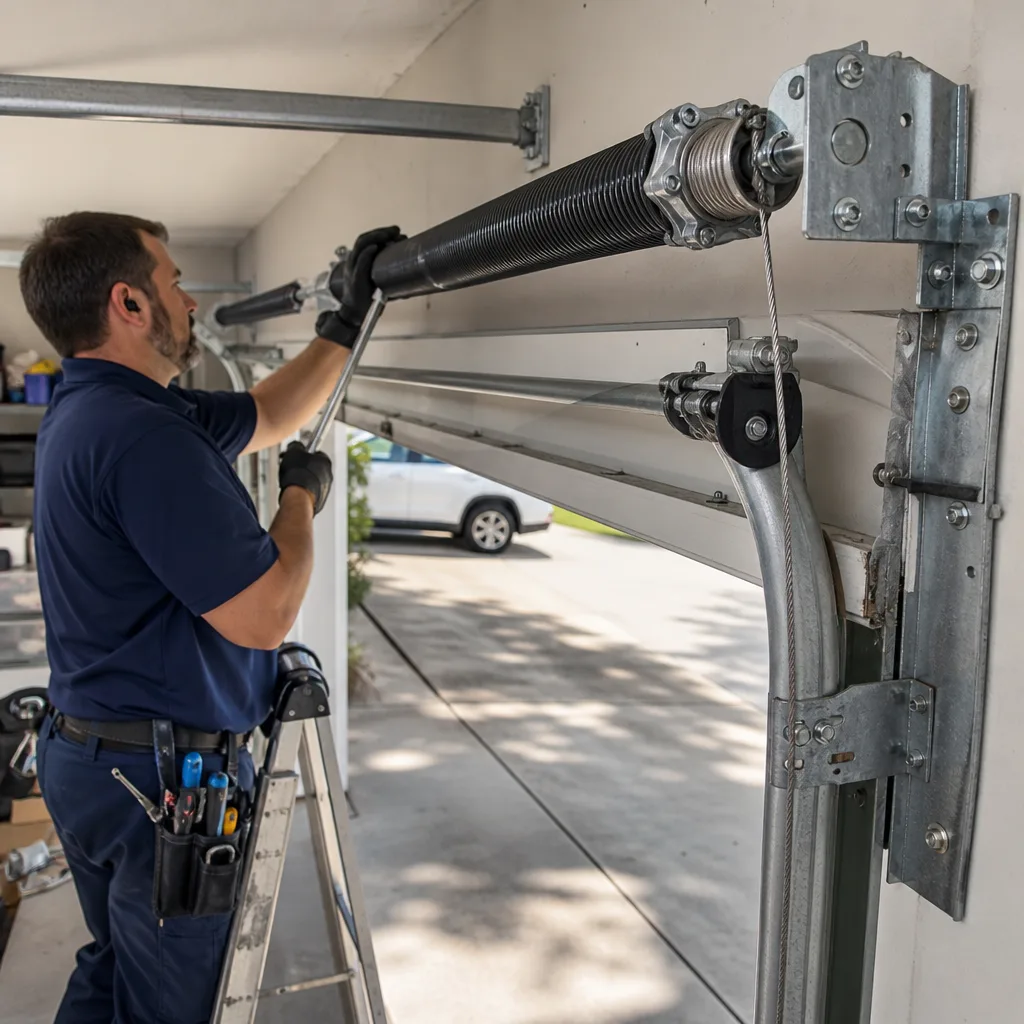
- Spring tension and balance tuning. A technician measures the actual torque on torsion springs and adjusts for any settling. This is not a DIY task under any circumstances. A spring under full tension stores enough energy to cause serious injury if it releases unexpectedly.
- Cable inspection and lubrication. The cables that run alongside the door and wrap around the bottom brackets are checked for fraying, kinking, or corrosion at the crimp points. In coastal Sarasota homes, cables are one of the most common failure points we replace. A frayed cable can snap without warning, and a door with one broken cable often jams diagonally in the opening.
- Opener force and travel limit calibration. Openers from brands like LiftMaster and Genie have adjustable force settings. Over time, as springs lose tension, the opener compensates and can exert more force than necessary. A technician recalibrates this so the opener isn’t masking a spring issue.
- Track alignment check. Thermal expansion and the constant humidity shifts in Sarasota cause brackets to loosen. A pro checks that both tracks are parallel and properly spaced for your specific door.
- Hinge and bracket torque. Every hinge bolt and bracket lag screw is checked for tightness. The vibration from daily open-close cycles loosens these over time. Because most Sarasota garage doors cycle 2 to 4 times per day, bolts need checking annually at minimum.
- Full safety system test. Beyond the auto-reverse test you do quarterly, a pro tests the electronic safety eye alignment, the force sensitivity settings, and the manual release operation under load.
This is the smart division of labor. You handle the visual checks and lubrication that keep problems from developing. We handle the high-tension, high-risk, and calibration-critical work that requires training and specialized tools. If you want to understand the difference between what a homeowner should and shouldn’t attempt, read our breakdown of Garage Door Opener Repair in Sarasota for the opener-specific details.
Lubrication Specifications: Exact Products for Each Component
Here’s the thing most generic checklists get wrong: not every part of your garage door takes the same lubricant. Using the wrong product on the wrong part is worse than skipping lubrication entirely, because the wrong product attracts dirt, creates a grinding paste, or breaks down in humidity and leaves a sticky residue. In Sarasota’s salt air, that residue then traps corrosive particles directly against the metal. Here’s the exact breakdown.
What to use on each component
- Springs (both torsion and extension): Use a spray-on white lithium grease or a dedicated garage door spring lubricant. It should soak into the coil gaps and coat the surface. The goal is to prevent the micro-movement between coils from wearing through the protective finish and exposing raw steel to humid air.
- Rollers (nylon wheels): Use a dry silicone spray. Nylon rollers have sealed bearings on newer models; if the bearings are sealed, the silicone goes on the stem and at the roller-track contact point only. If the bearing is unsealed, a light needle-application of silicone works into the bearing.
- Rollers (steel wheels): Use a thin machine oil or light silicone. Apply at the bearing point only. Steel rollers in coastal Sarasota homes are often already showing rust; if the bearing is pitted, replacement is the correct fix, not more lubricant.
- Hinges: Use a dry silicone spray or a lithium grease applied with a precision straw. One drop at each pivot point is sufficient. Over-application is what causes black grease streaks down your door.
- Opener rail (chain-drive): Use a white lithium grease formulated for garage door opener chains. Apply to the chain itself, not the rail. Chain-drive openers from LiftMaster and Chamberlain ship with a small tube of this from the factory, and most homeowners lose it within a year.
- Opener rail (belt-drive): Do not lubricate belt-drive rails. The belt rides on a reinforced rubber or polyurethane track that requires no lubrication. Lubricant here attracts dirt and accelerates belt wear.
- Tracks (vertical and horizontal): Do not lubricate the tracks. Ever. Rollers are designed to roll, not slide. Lubricant in the track creates a film that collects sand and salt, and then the roller grinds that abrasive mixture every cycle. If you see lubricant in your tracks from a previous owner or technician, clean it out with a dry rag and a degreaser designed for metal.
- Locks and handle mechanisms: Use a graphite powder or a dry PTFE spray. Wet lubricants in lock cylinders attract dust and salt, eventually jamming the mechanism.
Products that fail in Sarasota’s salt air
WD-40 is not a garage door lubricant. It’s a water displacer and solvent. It strips existing lubrication and leaves a thin film that evaporates quickly. If you’ve been using WD-40 on your garage door because someone told you to, your metal parts are now running drier than if you had used nothing. We’ve traced many seized roller failures in Sarasota back to a well-intentioned WD-40 habit.
Any penetrating oil (PB Blaster, Liquid Wrench, Kroil) is wrong for maintenance lubrication. Penetrating oils are for freeing rusted fasteners. They’re designed to wick in and break down corrosion, not to provide a durable lubricating film. Using them as a maintenance spray leaves your parts unprotected within days.
Generic household 3-in-1 oil is too thin for spring applications. It runs off the spring coils quickly and doesn’t provide the long-duration film a torsion spring needs. It’s acceptable for steel roller bearings in a pinch but not for springs or hinges.
If you have a Raynor or Clopay door and the manufacturer included a specific product recommendation in the manual, follow that over anything listed here. But for the vast majority of Sarasota homes with standard residential doors, the lithium-and-silicone combination above is the correct regimen.
First Signs of Failure: What to Watch For Between Checks
Maintenance is also your early-warning system. As you do your quarterly pass, each check doubles as a diagnostic. Here’s what each symptom indicates and how urgent it is. We’ve organized this by the checklist item so you can use it as a reference while you work.
| Checklist Item | First Sign of a Problem | What It Means | Urgency |
|---|---|---|---|
| Visual spring inspection | Gap between coils, rust orange streaks, or a spring that looks “twisted” unevenly | The spring is approaching end of life or already partially failed | Immediate. Stop using the door and call. A spring failure under load is the most common cause of serious garage door injuries. |
| Salt residue cleaning | White film returns within days, or metal feels pitted under the rag | Your home is in the heavy salt zone; cleaning alone isn’t keeping up | Moderate. Increase cleaning frequency and consider a corrosion-protection application on exposed metal. |
| Roller inspection | Wobble, squeal, or visible flat spot on wheel | Bearing wear or flat-spotting from track misalignment | Soon. Worn rollers cascade into track wear and increased opener strain. |
| Balance test | Door drops or rises when released at waist height, or feels heavy | Spring fatigue. Your springs are losing tension and the opener is picking up the slack | Soon to immediate. A door that drops more than a foot is a sign of significant spring wear. Continued use strains the opener and risks sudden failure. |
| Lubrication pass | Squeaking or grinding persists after lubrication | The noise is not a lubrication issue. It’s bearing wear, a misaligned track, or a fraying cable rubbing | Diagnose. Don’t keep adding lubricant to a part that’s mechanically failing. |
| Weatherstripping check | Light visible under door, or water stains on garage floor after rain | Sarasota’s summer storms are finding a path in. Bottom seal is cracked, compressed, or torn | Soon. Water and debris intrusion accelerates rust and invites pests. |
| Auto-reverse test | Door continues closing after contacting obstruction, or reverses with extra delay | Opener force setting too high, or safety sensor misaligned | Immediate. This is a safety-critical defect, not just a maintenance item. |
That table is worth printing and keeping in the garage. Early detection of spring wear alone can save you from the scenario where a spring snaps at 7 a.m. on a Monday with your car inside the garage and nowhere to go.
Coastal Corrosion Zone: Extra Steps for Homes Near the Water
If your Sarasota home is within roughly five miles of the Gulf or any saltwater bay, you’re in what we call the coastal corrosion zone. This includes most of Siesta Key, Lido Key, Longboat Key, Bird Key, St. Armands, and the neighborhoods directly along Sarasota Bay. Homes east of I-75 near Lakewood Ranch or the Fruitville corridor still deal with humidity but see measurably less salt exposure.
For homes in the corrosion zone, add these steps to your routine:
- Double your cleaning frequency on exposed metal. Instead of quarterly salt removal, do it every six weeks during the summer salt-spray months. A 90-second wipe-down of the springs, cables, hinges, and bottom brackets prevents the pitting that becomes irreversible.
- Wash the exterior door face quarterly. Steel doors from manufacturers like Clopay and Wayne Dalton have a factory primer and paint layer, but salt spray attacks any micro-scratch or edge. A quarterly rinse with plain water and a soft brush removes salt before it has time to work under the paint.
- Inspect the bottom bracket area specifically. This is the lowest point on the door, and it’s the most common place we see severe rust on Sarasota coastal homes. Salt-water splash from the driveway after storms concentrates here. If you see bubbling paint or rust streaks on the bottom panel, address it early.
- Consider stainless steel cables and hardware if you’re replacing. When the time comes to replace cables or hinges, ask about stainless options. They cost more upfront, but in a Bird Key or Siesta Key home, the math works out over the life of the component.
- Use a marine-grade lubricant for spring applications. Some lithium greases include anti-corrosion additives designed for marine environments. If your home is in the corrosion zone, it’s worth the slight premium.
The common thread: in coastal Sarasota, you’re not maintaining against mechanical wear alone. You’re maintaining against a slow chemical attack that happens 365 days a year, even when the door isn’t moving. The maintenance frequency matters as much as the technique.
Your Printable Quarterly vs. Annual Schedule
Here’s the consolidated schedule. Print this, tape it to the inside of your garage door, and check the box each time you complete a pass. Or screenshot it on your phone and set calendar reminders for each quarter.
Quarterly (March, June, September, December)
- Spring visual inspection (rust, gaps, distortion)
- Salt residue cleaning on all metal hardware
- Roller condition check (cracks, wobble, flat spots)
- Balance test (disconnect, lift to waist height, release)
- Lubrication pass (lithium on springs, silicone on rollers and hinges, opener chain if applicable)
- Weatherstripping inspection (bottom seal and side strips)
- Auto-reverse test with paper towel roll
Annually (schedule before hurricane season, ideally April or May)
- Professional spring tension measurement and adjustment
- Cable inspection (fraying, kinking, corrosion at crimps)
- Opener force and travel limit calibration (works for LiftMaster, Genie, Chamberlain, and Craftsman openers)
- Track alignment verification
- All hinge and bracket bolt torque check
- Full safety system test (eye alignment, force settings, manual release)
If annual professional service reveals a door that’s nearing end of life, it’s worth understanding the full replacement picture before you’re in an emergency. Our guide to Garage Door Installation in Sarasota walks through costs, timeline, and what a replacement actually involves here.
Common Mistakes to Avoid
- Lubricating the tracks. This is the single most common garage door maintenance error we see. Tracks should be clean and dry. Period. Lubricant in tracks collects the fine sand that blows around Sarasota construction sites and beach areas, and that creates a sanding paste against your rollers.
- Using WD-40 as a lubricant. Covered above, but worth repeating because it’s that common. WD-40 strips lubrication and provides almost no long-term film. If it’s all you have, do nothing until you can get the right product.
- Ignoring a squeak because “it still works.” A squeak is not a nuisance. It’s a component telling you it’s running dry or wearing unevenly. The fixes get more expensive in direct proportion to how long you ignore the noise.
- Attempting to adjust torsion springs from a YouTube video. Torsion springs hold enough energy to seriously injure or kill. Even with the right tools, if you don’t know the exact torque spec for your specific door weight and drum size, you’re guessing. Guesses with high-tension springs go wrong permanently.
- Skipping the balance test because the door opens “fine.” The opener masks spring fatigue. It compensates with more force, which masks the problem until the spring fails or the opener burns out. The balance test is the only way to know the true condition of your springs.
- Replacing only the broken spring. Springs are installed in matched pairs (or on matched cable systems for extension springs). If one torsion spring snapped, the other has the same amount of wear. Replacing just one leaves you with unmatched tension and accelerates wear on the new spring.
- Using a different opener brand than your door brand because it was on sale. Most openers work with most doors, but pairing decisions matter more in Sarasota’s climate. The wrong opener for a heavy coastal-insulated door, for example, shortens its life. If you’re unsure, get a genuine diagnostic before buying hardware off a shelf.
When to Call a Professional
Some situations aren’t maintenance. They’re repair, and the sooner you recognize the difference, the cheaper the outcome. Call a professional if you notice any of the following: a spring with a visible gap between coils, a cable that’s fraying or has kinked strands, a door that won’t reverse when it hits an obstruction, a door that drops more than a foot when released from waist height, or any grinding noise that persists after proper lubrication. These are signs that a component is past the maintenance phase and into the failure phase. Working on springs, cables, or opener force settings without training is dangerous, not DIY. If you’re in Sarasota and want a straight diagnosis before deciding on any repair, Copper Garage Door Repair offers free estimates. Call (866) 282-4861. We’ll tell you exactly what’s wrong and what it costs to fix before any work starts.
Frequently Asked Questions
Every three months, without exception. If your home is within five miles of the Gulf or bay, consider doing the spring and hinge lubrication every six to eight weeks during summer. Sarasota’s salt air breaks down lubricant film faster than inland Florida, and a door that runs dry maximizes wear on every moving part.
Use a spray-on white lithium grease or a dedicated garage door spring lubricant with anti-corrosion additives. Apply it to the spring coils so it penetrates between the coils. Do not use WD-40, penetrating oil, or household 3-in-1 oil; they strip existing lubrication and leave your springs running dry. For exact product guidance, see the lubrication section above.
Yes, the quarterly checklist in this guide is designed for homeowners without mechanical experience. It includes visual inspections, cleaning, lubrication, and two simple functional tests. You should not attempt spring adjustment, cable replacement, opener force calibration, or track realignment. Those involve high tension or precise settings and belong with a trained technician.
Standard torsion springs are rated for approximately 10,000 cycles, which in a typical Sarasota home (2 to 4 cycles per day) translates to 7 to 10 years. Coastal salt exposure can shorten that to 5 to 7 years if the springs are not cleaned and lubricated on schedule. Higher-cycle springs are available if you plan to stay in the home long-term. Call (866) 282-4861 for an honest assessment of what’s practical for your situation.
A squeak that persists after proper lubrication is not a lubrication problem. It’s bearing wear in a roller or hinge, a misaligned track, or a fraying cable rubbing against a bracket. Adding more lubricant masks the symptom without touching the underlying wear. The correct fix is identifying which component is mechanically failing and replacing it. If you need a Garage Door Repair in Sarasota diagnosis, we can identify the source in a single visit.
Yes. Springs on the same door wear at approximately the same rate. If one torsion spring has failed, the other is typically within a short time of failing as well. Replacing both restores balanced tension and prevents the remaining spring from failing in the near term. It’s more cost-effective in the long run than doing the job twice. We work on springs for all major brands including Wayne Dalton, Raynor, and Clopay, and this principle applies across all of them.
The Bottom Line
A garage door that lives in Sarasota is living in one of the harshest environments in Florida for metal hardware. Salt air, 74% average humidity, and daily use create a maintenance burden that national checklists simply don’t address. The quarterly pass takes 30 minutes and costs about $15 in supplies. The annual professional visit catches the high-tension and calibration issues you can’t safely handle yourself. Together, they extend the life of a typical door system from 8 years to 15 or more. The alternative is a predictable cycle of failures: a snapped spring, a seized roller, a burned-out opener, one after another, each fix more expensive than the maintenance that would have prevented it. If you’re behind on this routine or want a baseline assessment of your door’s current condition, call Copper Garage Door Repair at (866) 282-4861. We’ll tell you exactly what you’re working with and what it needs.
Written by the team at Copper Garage Door Repair, serving Sarasota since 2013. Explore more guides & resources on our blog.
See the difference
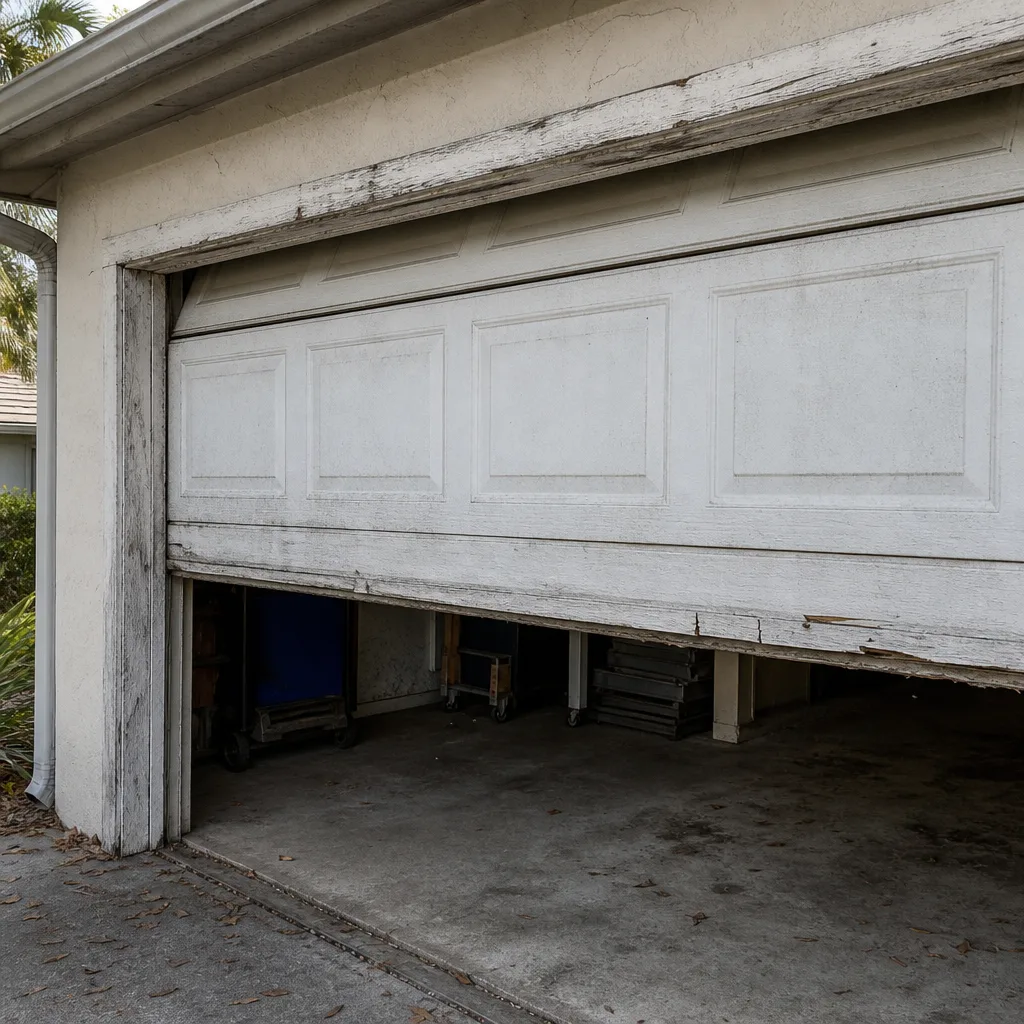 Before
 After
 Before
 After
 Before
 After