Last updated October 30, 2026
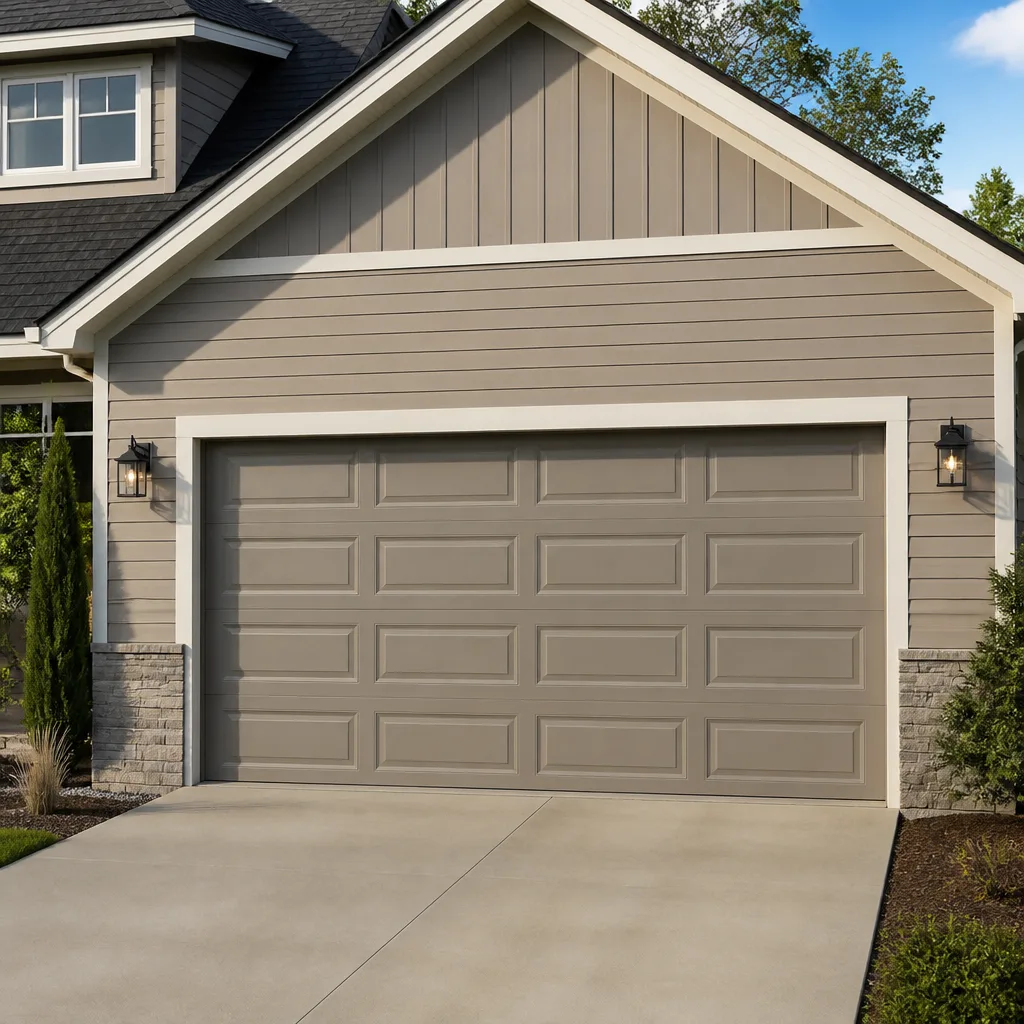 Raised-panel steel
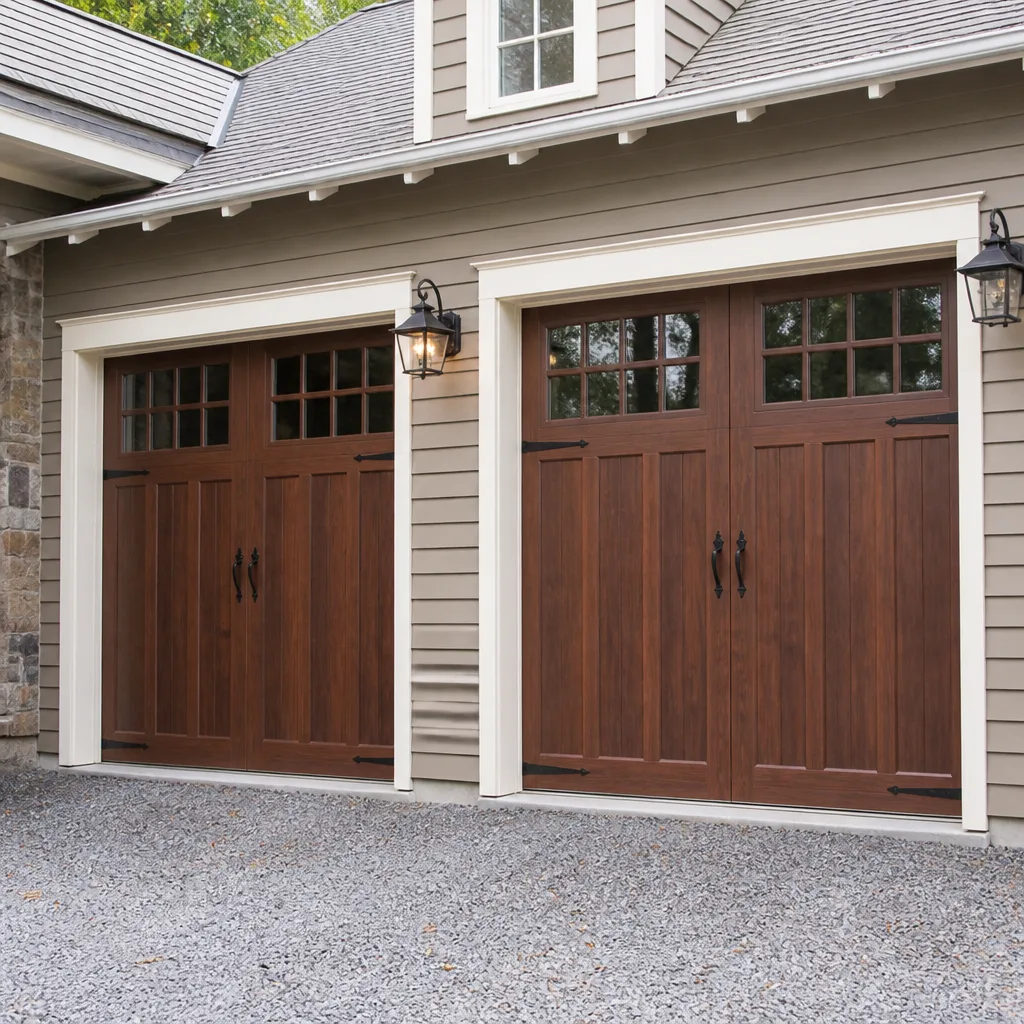 Carriage house
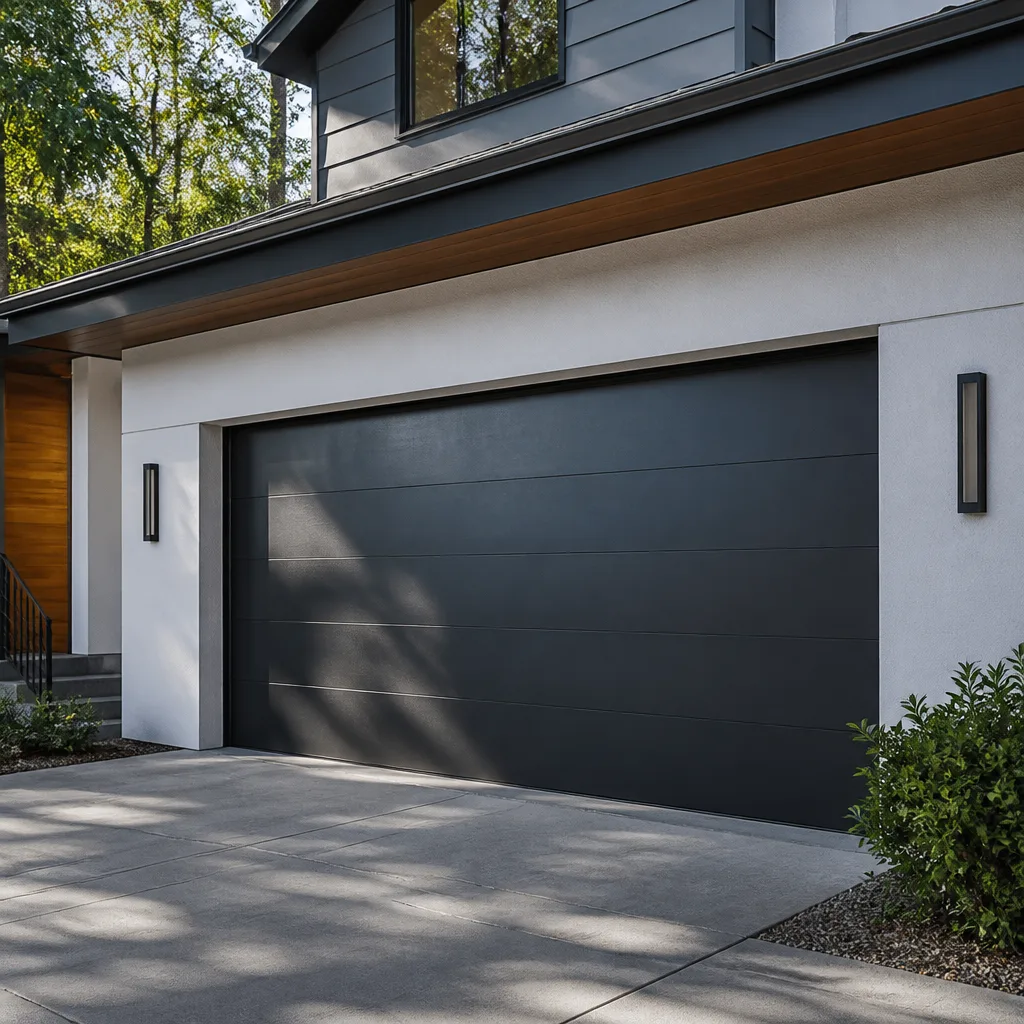 Modern flush
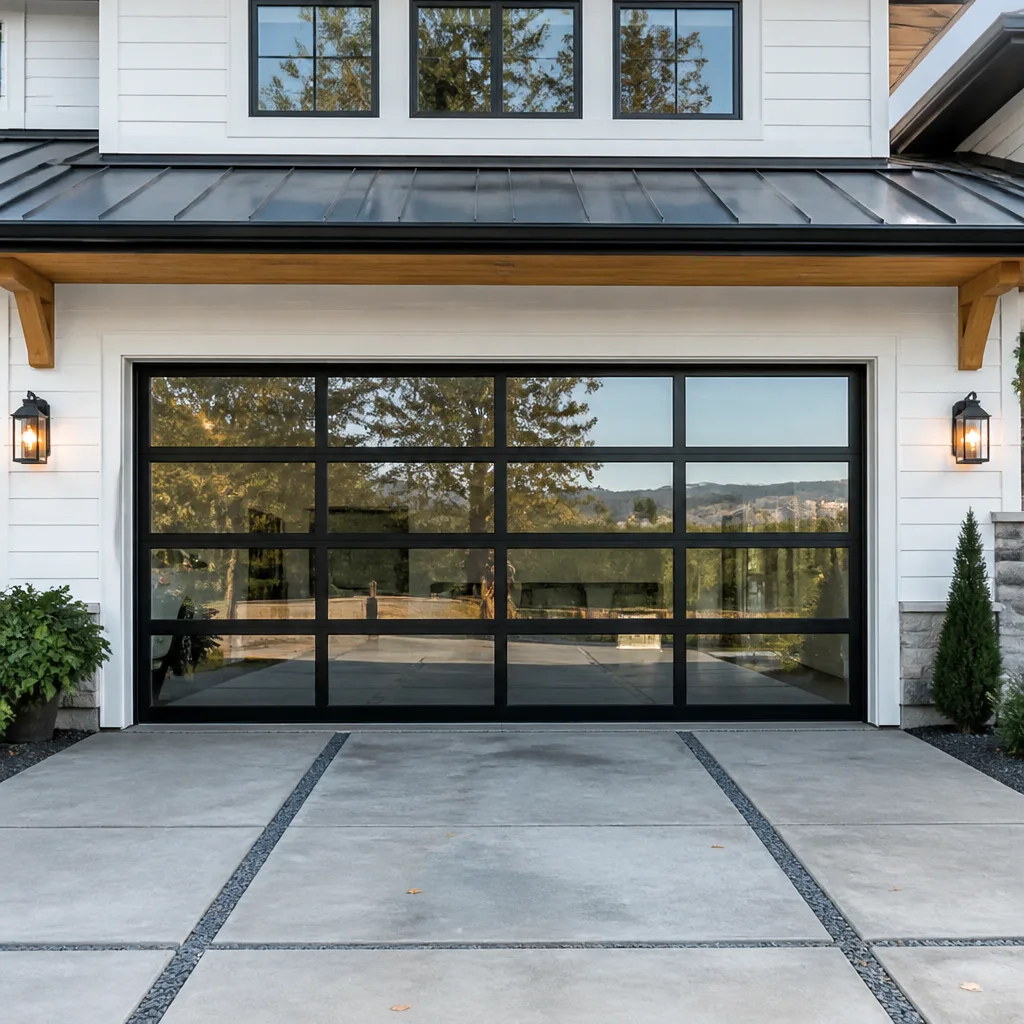 Full-view glass
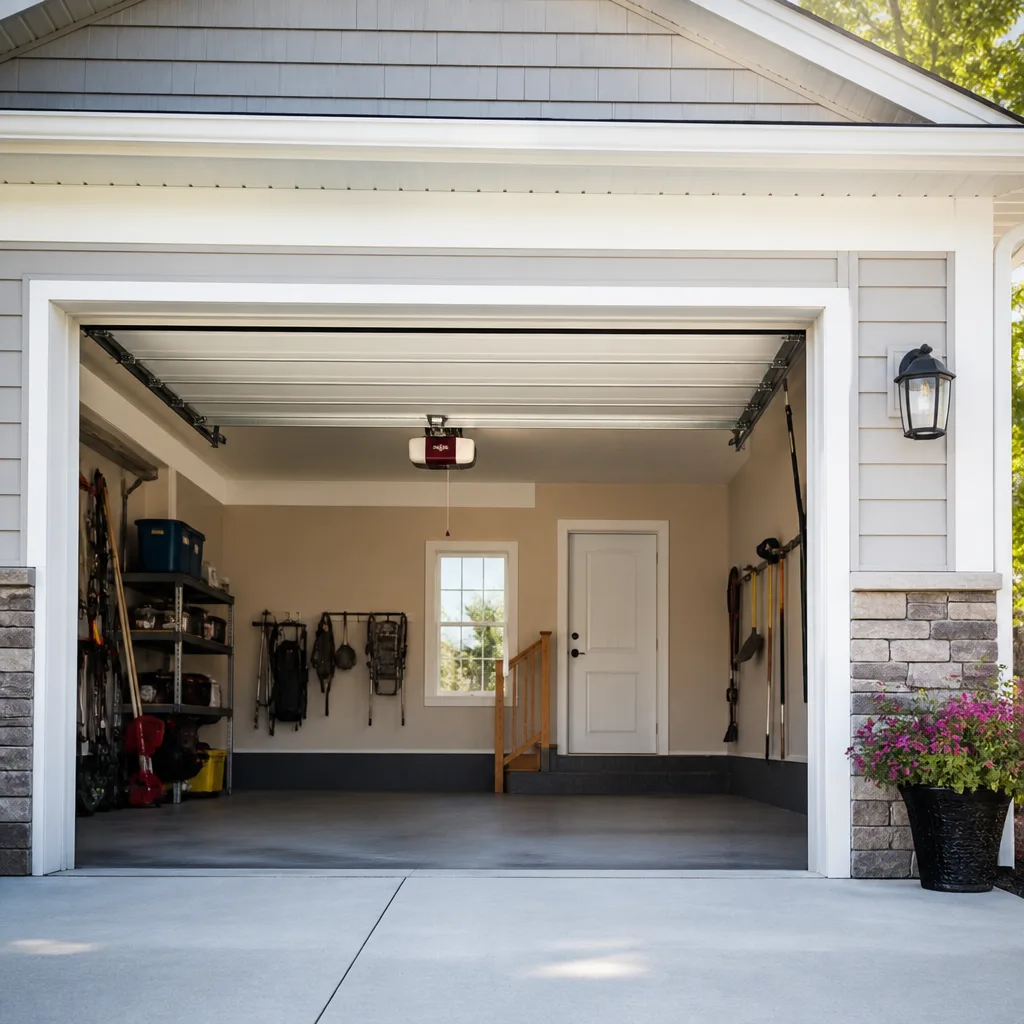 LiftMaster openers
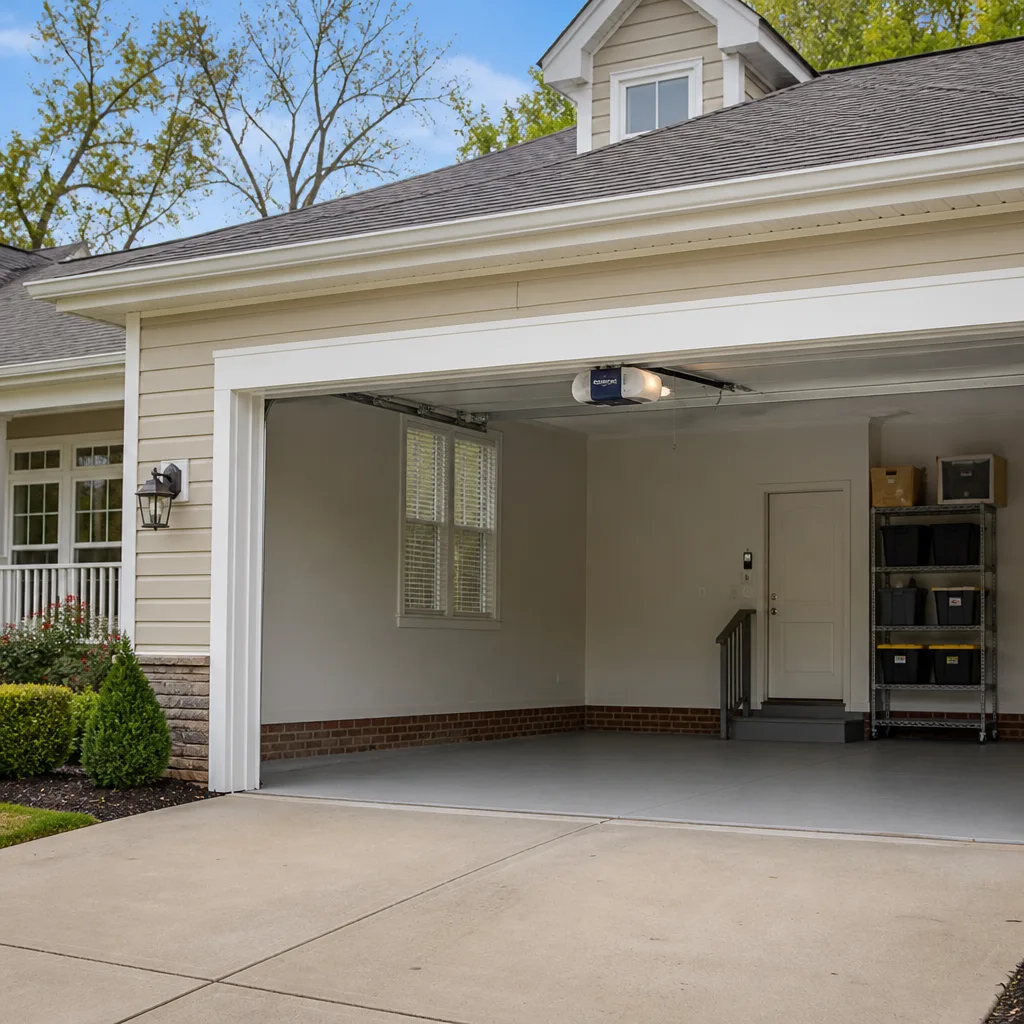 Chamberlain openers
Full 25-point door and opener safety check with every visit - springs, cables, rollers, tracks, and your LiftMaster or Chamberlain opener included
You get a price before we start. It does not change when the truck arrives.
Get your free estimateThe Complete Garage Door Repair Guide for Sarasota Homeowners
Most garage door repair guides are written for Ohio. They assume a door in Columbus and a door in Sarasota fail the same way. They don’t. The salt air rolling off the Gulf of Mexico corrodes garage door hardware in Sarasota up to three times faster than inland markets. Springs that last a decade in Atlanta might give out in five years here. Cables that look fine in Dayton are quietly rusting through in Gulf Gate. This guide maps the specific failure points Sarasota’s coastal climate creates, the repairs homeowners actually need as a result, and which brand of door you’re most likely to have on your house. For more guides & resources, see our blog.
Quick Answer
Our Garage Door Repair services in Sarasota are driven by salt-air corrosion, humidity, and hurricane-season wind stress. The most common repairs we see are torsion spring replacement, cable replacement, track realignment, and opener logic board failures from power surges. Most repairs fall in the $150 – $400 range, with spring replacement on the higher end and sensor realignment on the lower end. A Sarasota garage door needs inspection twice a year, not once, because of the coastal environment.
Styles & brands we work with
Table of Contents
- How Salt Air Corrodes Sarasota Garage Doors Faster
- Spring Fatigue in a Humid Climate: What Actually Happens
- Brand-Specific Repair Notes: Clopay, Wayne Dalton, Amarr, and LiftMaster
- DIY-Repairable in Florida vs. Work That Needs a Pro
- Hurricane-Season Readiness: Pre- and Post-Storm Checks
- Documenting Repairs for Insurance and Wind-Mitigation Credits
- Common Mistakes to Avoid
- When to Call a Professional
- Frequently Asked Questions
How Salt Air Corrodes Sarasota Garage Doors Faster
The chemistry is straightforward. Sarasota’s prevailing onshore winds carry microscopic salt particles inland for miles. Those particles settle on metal surfaces and, combined with humidity that regularly exceeds 80%, create a slow but relentless corrosion cycle. The worst-hit neighborhoods are the ones closest to the water: Siesta Key, Bird Key, Lido Shores, and the bayfront sections of Harbor Acres. But we’ve pulled rusted track brackets off doors as far east as Lake Sarasota and Palmer Ranch.
What corrodes first, in order:
- Bottom brackets and cable anchors. These sit six inches off the ground and catch splash-back whenever rain blows under the door. In Sarasota, they start showing rust within two to three years on unprotected steel.
- Track fasteners and lag bolts. The bolts holding your vertical track to the jamb are the quiet failures. They rust from the inside of the hole outward, so the track looks fine until it pulls away from the wall.
- Roller bearings. Salt air eats the lubricant, then the bearing races. A roller that seizes mid-cycle is a common cause of the door suddenly jumping off track.
- Torsion spring coils. More on this below, but salt pitting on spring wire is a primary cause of early fracture in Sarasota.
- Hinge pins. Cheap to replace, ignored until they bind and tear the section they’re attached to.
What you can do: rinse the lower hardware with fresh water every few months, especially during the dry season when salt accumulates without rain to wash it off. Wipe down the track with a dry cloth. Don’t use WD-40 on garage door hardware as a regular lubricant; it’s a solvent and strips away the grease that keeps bearings alive. Use a lithium-based spray on hinges and bearings, and a light coating of motor oil or spring-specific lube on the coil spring itself.
Our Garage Door Repair in Sarasota page covers the specific repair services we offer across the county if you want a professional assessment of how your door is holding up.
Spring Fatigue in a Humid Climate: What Actually Happens
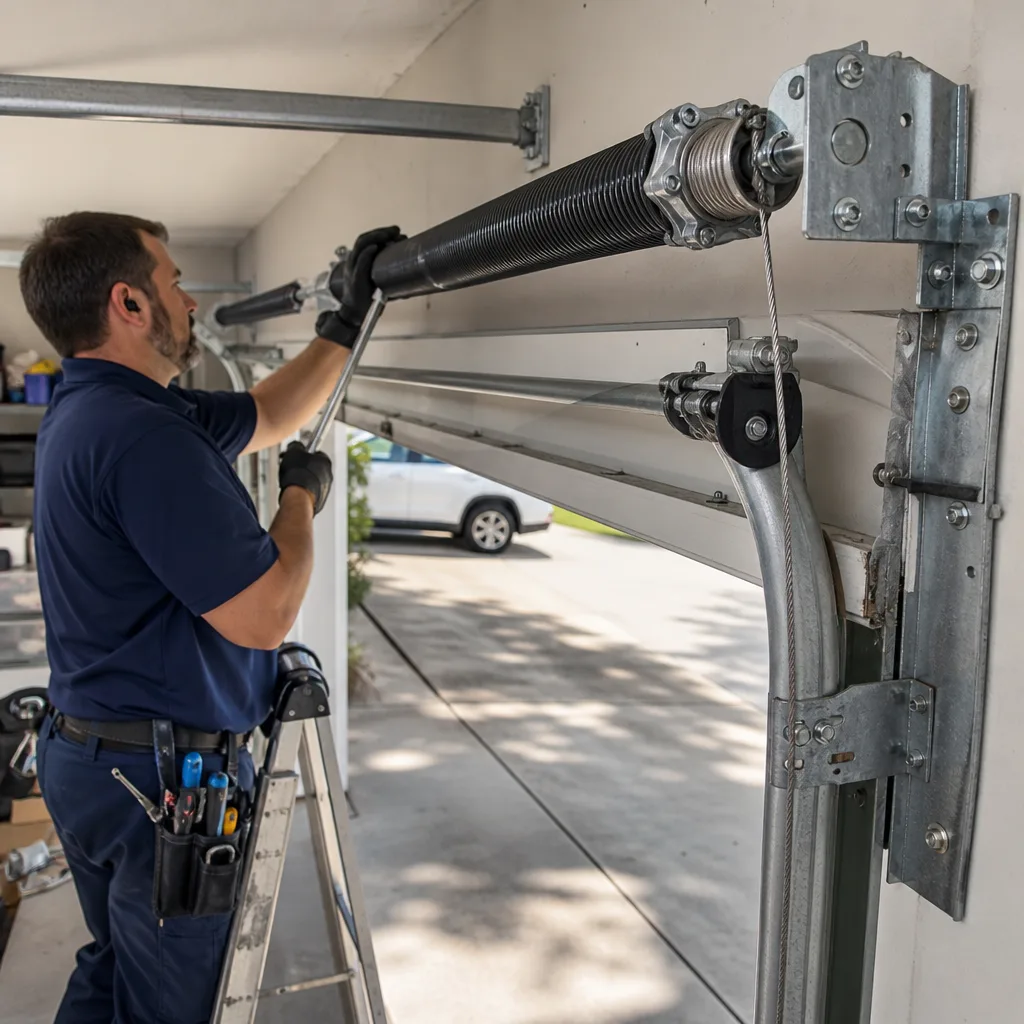
Garage door springs are rated in cycles, not years. A standard torsion spring is typically rated for 10,000 cycles, which translates to roughly seven to ten years of normal use in a temperate climate. In Sarasota, two factors cut that lifespan short. First, the constant humidity causes micro-pitting on the spring wire surface. Each tiny pit becomes a stress concentration point, and that’s exactly where the spring eventually fractures. Second, the thermal expansion and contraction from Sarasota’s hot days and warm nights causes the spring wire to flex microscopically with each temperature swing. That repeated flexing, combined with salt pitting, is why we regularly replace springs in Sarasota that were installed only four or five years earlier.
Symptoms of a failing spring before it breaks:
- The door opens slower than it used to, or hesitates halfway up
- You see a visible gap in one coil of the spring, about 1/8 inch wide
- The door feels heavier when you disconnect the opener and lift it manually
- You hear a loud bang from the garage in the middle of the night (that’s the spring letting go)
If you hear that bang, stop using the door. A broken spring leaves the full door weight on the opener, which was never designed to carry it. The opener will eventually strip its plastic gear or burn out the motor. Call us instead, and we’ll replace the spring before you’re paying for a spring and an opener. A spring replacement in Sarasota typically runs $180 to $340 depending on door weight and spring cycle rating, which is a small cost compared to the alternative damage.
Brand-Specific Repair Notes: Clopay, Wayne Dalton, Amarr, and LiftMaster
Clopay Doors
Clopay doors are common on Sarasota homes built after 2000, especially in the newer communities east of I-75. The panels hold up well to humidity, but the factory-installed bottom brackets are a recurring weak point in coastal environments. We replace them with marine-grade stainless brackets when they fail, which typically outlasts the rest of the door. Clopay’s standard rollers are also on the lighter side; upgrading to 13-ball nylon rollers reduces noise and extends life by several years in Sarasota conditions.
Wayne Dalton Doors
Wayne Dalton’s TorqueMaster spring system, which encloses the spring inside a steel tube, was popular on mid-2000s construction throughout Sarasota. We work on these regularly, and they present a specific challenge: the tube traps salt air and the spring corrodes from the inside out. You can’t see the corrosion until the spring snaps inside the tube. If you have a Wayne Dalton door from the 2000s, have it inspected even if it’s been trouble-free. The downside of the enclosed system is that it fails without the typical visible warnings.
Amarr Doors
Amarr’s steel doors are in many of Sarasota’s older one-story ranches and villas, particularly in the 1970s and 80s neighborhoods like Kensington Park and Sarasota Springs. The doors themselves are solid, often outlasting the hardware mounted to them. What we see most on Amarr doors in this climate is hinge failure: the steel hinge pins rust inside the zinc-plated brackets, the hinge binds, and the panel corner gets torn out. Replacing six hinges is a hundred-dollar fix. Replacing a panel is four hundred or more. Catch the hinges early.
LiftMaster Openers
LiftMaster is the most common opener brand we service in Sarasota, and most of the failures we see are electrical, not mechanical. Florida’s notorious summer lightning storms bring power surges that scramble logic boards. If your opener runs fine manually but won’t respond to remotes, or the lights flash but the motor doesn’t turn, you’re likely looking at a surge-damaged board. A whole-home surge suppressor doesn’t fully protect the opener, but a simple plug-in surge protector at the opener outlet is a cheap insurance policy. If you need a deeper dive on opener issues, our Garage Door Opener Repair in Sarasota page walks through the specific fixes we handle.
DIY-Repairable in Florida vs. Work That Needs a Pro
The same instinct that makes a homeowner tighten a loose fence gate can get someone badly hurt with a garage door; read our DIY vs Professional Garage Door: The Sarasota Homeowner’s Decision Guide to know where the line is. We’ll be blunt about where the line is.
Genuinely Safe to DIY
- Lubricating hinges, rollers, and tracks. Use lithium spray. Takes fifteen minutes. Closest thing to free maintenance that exists.
- Tightening visible bolts and screws. Track brackets, hinge screws, opener rail fasteners. If you can see it and reach it with a socket, tighten it.
- Cleaning the photo-eye sensors. A soft cloth and patience. If the sensor lenses are cloudy or dusty, the door won’t close. Wipe them clean before calling anyone.
- Testing the auto-reverse function. Place a 2×4 flat on the ground under the door and close it. The door should reverse within two seconds of touching the wood. If it doesn’t, call a pro immediately.
Stay Away From These
Spring replacement. Torsion springs are under tension in excess of 200 pounds even at rest. We’ve seen the aftermath of DIY attempts that ended in broken hands, lacerated forearms, and one concussion from a winding bar that flew across a garage. More quietly, an incorrectly wound spring makes the door unbalanced, which shortens the life of your opener. Leave this one to a trained technician.
Cable replacement. The cables attach to the bottom brackets under the same spring tension. When a cable snaps on a door that’s under load, it lashes like a steel whip. Even with the door fully up and the spring stretched, there’s residual force in the system. This is not a weekend project.
Track realignment or removal. If a track is visibly bent or pulled away from the wall, the door can come off the track entirely and fall. A falling sectional door is between 100 and 400 pounds depending on size and material. That’s an object you don’t want gravity to introduce to you.
Hurricane-Season Readiness: Pre- and Post-Storm Checks
From June 1 through November 30, every garage door in Sarasota is both a vulnerability and a defense. The garage door is the single largest opening in most homes, and a door that gets blown in during a named storm can cause a catastrophic interior pressure spike that lifts the roof. Building code in Florida requires wind-rated garage doors in new construction, but most of Sarasota’s housing stock predates those requirements. A non-rated door on a home built before 2002 is a genuine hurricane hazard.
Pre-storm inspection steps:
- Check all track brackets and fasteners. If any bolt has rusted loose, a sustained wind load will pull the track away from the framing. A garage door with a detached track is one strong gust from being a flying object.
- Test the door balance. Disconnect the opener (pull the red release handle) and lift the door halfway by hand. It should stay in place. If it drops or rises, the spring is under-tensioned or over-tensioned. An unbalanced door is more vulnerable in a storm.
- Look for panel gaps and missing weatherstrip. Wind-driven rain will find any opening. The gaps also let pressure build unevenly inside the door, which is what shatters panels.
- Secure the door with a storm kit if you have one. Post-installed vertical bracing bars add real rigidity. If you don’t have them, consider adding them; for most standard single doors the hardware runs $150 to $300 installed.
- Charge the opener’s backup battery. Power goes out in every serious storm in Sarasota. If you have a LiftMaster or Chamberlain with a battery backup, make sure it’s actually holding a charge before the storm arrives.
Post-storm checks:
- Run the door one full cycle and listen. New grinding, popping, or hesitation means something shifted during the wind event.
- Inspect the bottom seal for tears. High wind flings debris; a torn seal lets in not just water but also the vermin that get displaced in storms.
- Check the opener’s safety sensors. They may have shifted if the framing flexed. Misaligned sensors will make the door refuse to close.
- Look for rust bloom on any cable that got salt-water exposure. Storm surge reaches farther inland in Sarasota than most people think, especially near Phillippi Creek and the bayou systems.
If you’re already thinking about a full door replacement before the next season, our Garage Door Installation in Sarasota page has details on wind-rated doors and what the current code requires.
Documenting Repairs for Insurance and Wind-Mitigation Credits
This section gets skipped, and it’s the most valuable hundred dollars of paperwork you’ll ever do. Florida’s wind-mitigation inspection system gives you insurance premium credits for documented wind-resistant features on your home, and your garage door is specifically listed as a credit-eligible component. The credit requires a wind-rated door, yes, but it also accepts documentation showing that an existing non-rated door has been reinforced. Here’s what matters:
- Keep every repair invoice. Not just the big ones. A documented hinge replacement shows the door has been maintained, which matters when an adjuster looks at a storm damage claim.
- Request wind-rating documentation on any new door. The manufacturer provides a NOA (Notice of Acceptance) for wind-rated products. File it with your insurance paperwork. Without this document, you can’t claim the credit.
- Photograph everything before and after repairs. Adjusters want time-stamped evidence. A photo of a rusted cable that got replaced pre-storm is proof you weren’t filing a claim for pre-existing damage.
- Keep records of spring replacements. If a spring failure causes a door panel to get damaged, your insurance may cover the panel if you can show the spring was properly maintained and replaced on schedule.
- Request a wind-mitigation inspection after any door replacement. The credit can be substantial on Sarasota premiums. It’s a one-page form filed by a licensed inspector.
We provide itemized invoices for every repair we do in Sarasota, with specific parts and labor broken out. That level of detail is what adjusters and inspectors expect to see.
Common Mistakes to Avoid
- Ignoring a noisy door. A grinding or scraping sound means something is wearing out. In Sarasota’s salt air, the wear cycle is shorter than you expect. Six months of noise usually means the difference between a part replacement and a system replacement.
- Lubricating with WD-40. It’s a degreaser and solvent, not a long-term lubricant for garage door bearings. It strips the grease and leaves the metal more exposed to corrosion. Use lithium spray or a proper garage door lubricant.
- Overriding the safety sensors. If the door won’t close unless you hold the wall button down, something is wrong. The photo-eye sensors are a federal safety requirement. Bypassing them to make the door close is how children and pets get hurt.
- Replacing one spring instead of both. Door springs are replaced in pairs. They fatigue together. If one has broken, the other is a few hundred cycles behind. Replacing both costs more upfront but saves the second service call.
- Painting over rust. Slapping rust converter paint on a corroded bracket doesn’t replace the structural integrity the rust already ate. In most cases it hides the problem until the bracket fails completely.
- Assuming a wind-rated door means you’re done with maintenance. The wind rating certifies the door’s construction, not its operational health. A wind-rated door with a rusted track is still vulnerable in a storm.
- Hiring by price alone. A $79 spring replacement special in Sarasota uses the cheapest cycle-rated spring available. You’ll be replacing it again in two or three years. The part quality is what determines the lifespan.
When to Call a Professional
Call when the problem involves stored tension: springs, cables, or a door that’s off its track. Call when the door refuses to operate after a storm, because water intrusion or wind damage may have compromised the electrical system of the opener. Call when you’ve tried the simple fixes on the DIY list and the door still misbehaves, which usually means the issue is structural or in the opener’s logic board. Call when you’re unsure, because a diagnostic visit is cheaper than emergency surgery on a door that was limping along for months. We’ll tell you exactly what’s wrong and why, whether or not you choose to have us fix it. Copper Garage Door Repair offers free estimates in Sarasota. Call (866) 282-4861 and we’ll schedule a time that works.
Frequently Asked Questions
Garage door repair in Sarasota typically costs between $150 and $400 for common repairs like hinge replacement, sensor realignment, cable replacement, and spring replacement. A torsion spring replacement runs $180 to $340 for most residential doors. The price is quoted and agreed before any work starts, so there are no surprises on the invoice. Call (866) 282-4861 for an exact quote on your door.
We carry the most common repair parts on our trucks, so a single spring, hinge, cable, or sensor problem is usually a same-visit fix. If your door requires a specialized part that we don’t have on hand, we’ll give you a clear timeline for the follow-up. For an exact answer on your specific door, call (866) 282-4861.
The most common door brands we see on Sarasota homes are Clopay, Wayne Dalton, and Amarr, with LiftMaster and Craftsman openers on the majority of them. Older homes in west-of-Trail neighborhoods tend to have Amarr steel doors, while newer construction east of I-75 leans toward Clopay. We work on all of these brands, plus Raynor, Genie, and Chamberlain, which means we don’t have to refer you to another company when we identify the specific product on your ceiling.
The price you’re quoted before the work starts is the price you pay unless we discover a second issue and we stop to tell you about it first. If a spring is broken but the cable is also fraying, we’ll point it out, show you the damage, and give you the option to address it now or wait. We never add work to the invoice without consent.
We stock the highest-failure parts on every truck: springs of the most common sizes, cables, hinges, brackets, rollers, sensors, and opener gears. If a part is unusual, we’ll source it and return quickly. Our multi-brand training means we can swap in compatible hardware rather than waiting on a single-brand distributor. This is practical Copper Garage Door Repair capability built for the way Sarasota doors actually fail.
Twice a year, before hurricane season and after it ends. In Sarasota, the salt-air environment accelerates hardware wear to roughly double or triple the inland rate, so the standard annual inspection misses problems while they’re still small. A fifteen-minute visual inspection catches hinge wear, rust bloom, and spring fatigue early enough to keep the fix cheap. Our repair service includes a full-system assessment, not just the part that broke.
The Bottom Line
Your garage door in Sarasota is in a constant fight with the Gulf. Salt air eats the hardware, humidity fatigues the springs, and hurricane season stresses everything all at once. The standard maintenance timeline from generic guides is wrong for this climate, as we explain in The Complete Guide to Garage Door in Sarasota. Twice-yearly inspections are the minimum. Give your attention to the bottom brackets, the cables, the track fasteners, and the spring condition. If you’re not sure what you’re looking at, call us. We’ll inspect the whole system, tell you what’s wrong in plain language, and quote the repair before any work starts. That’s the job: fixed right, built to last.
Written by the team at Copper Garage Door Repair, serving Sarasota since 2013.
See the difference
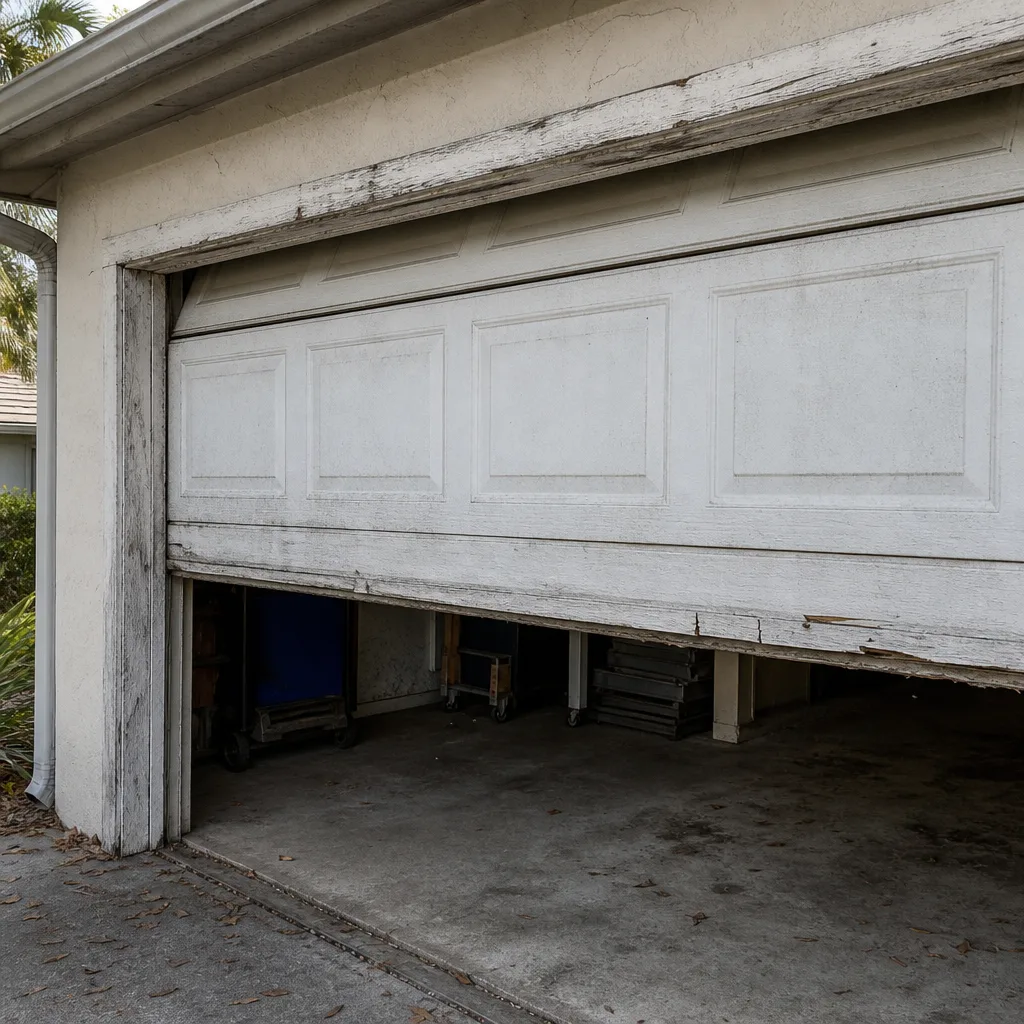 Before
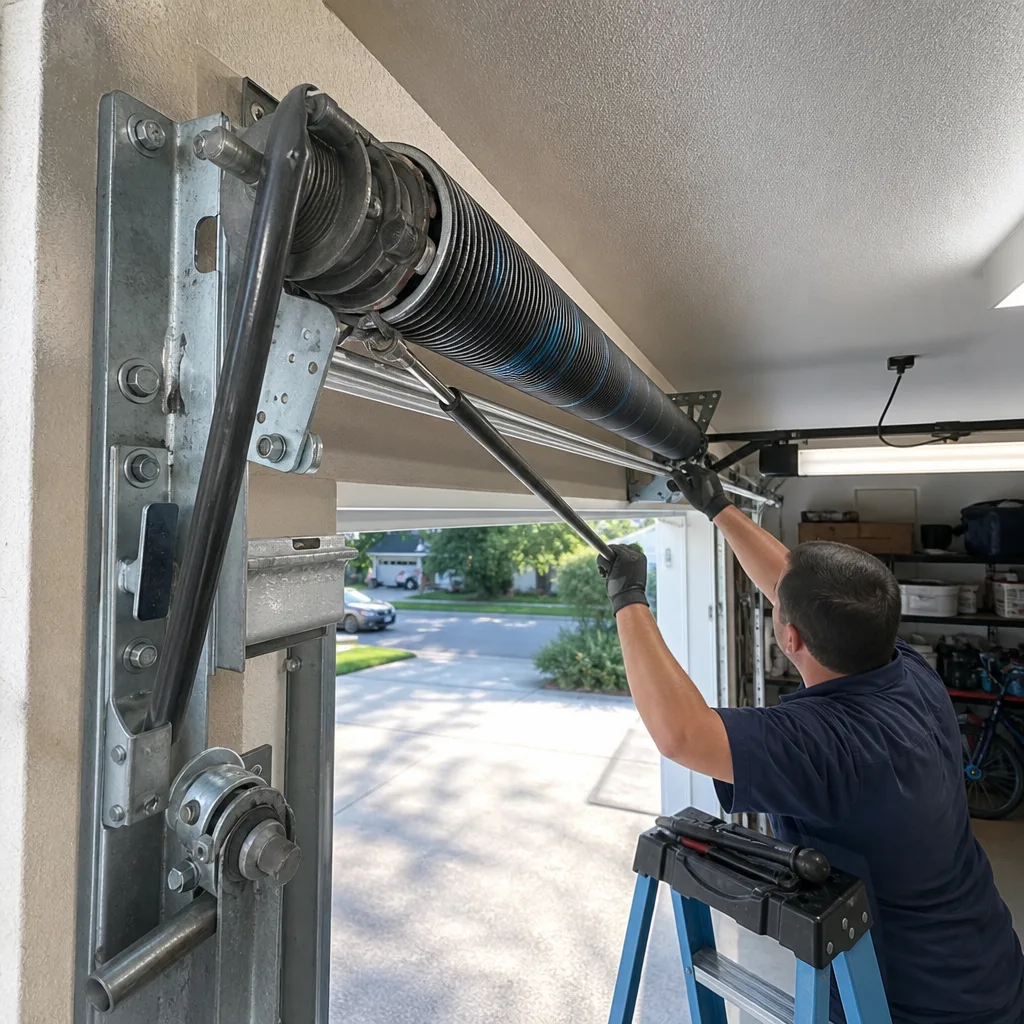 After
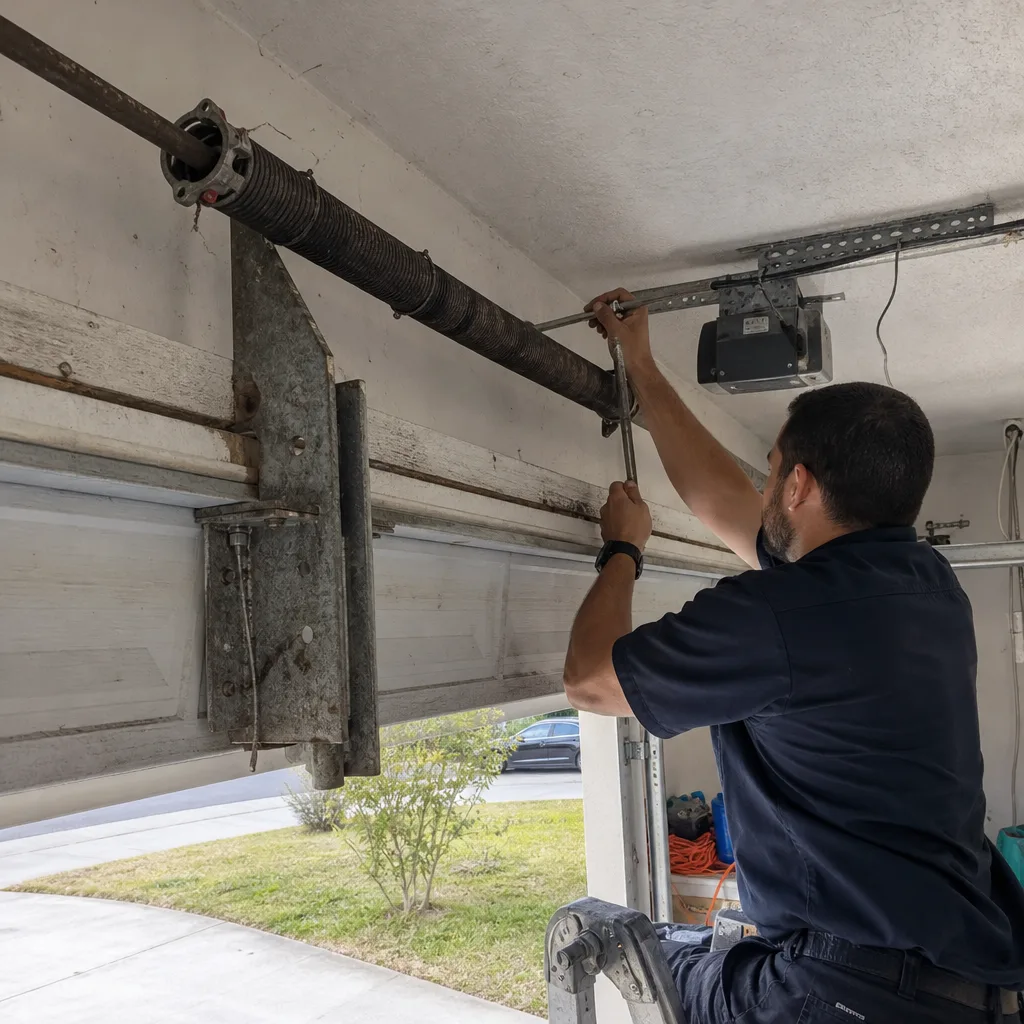 Before
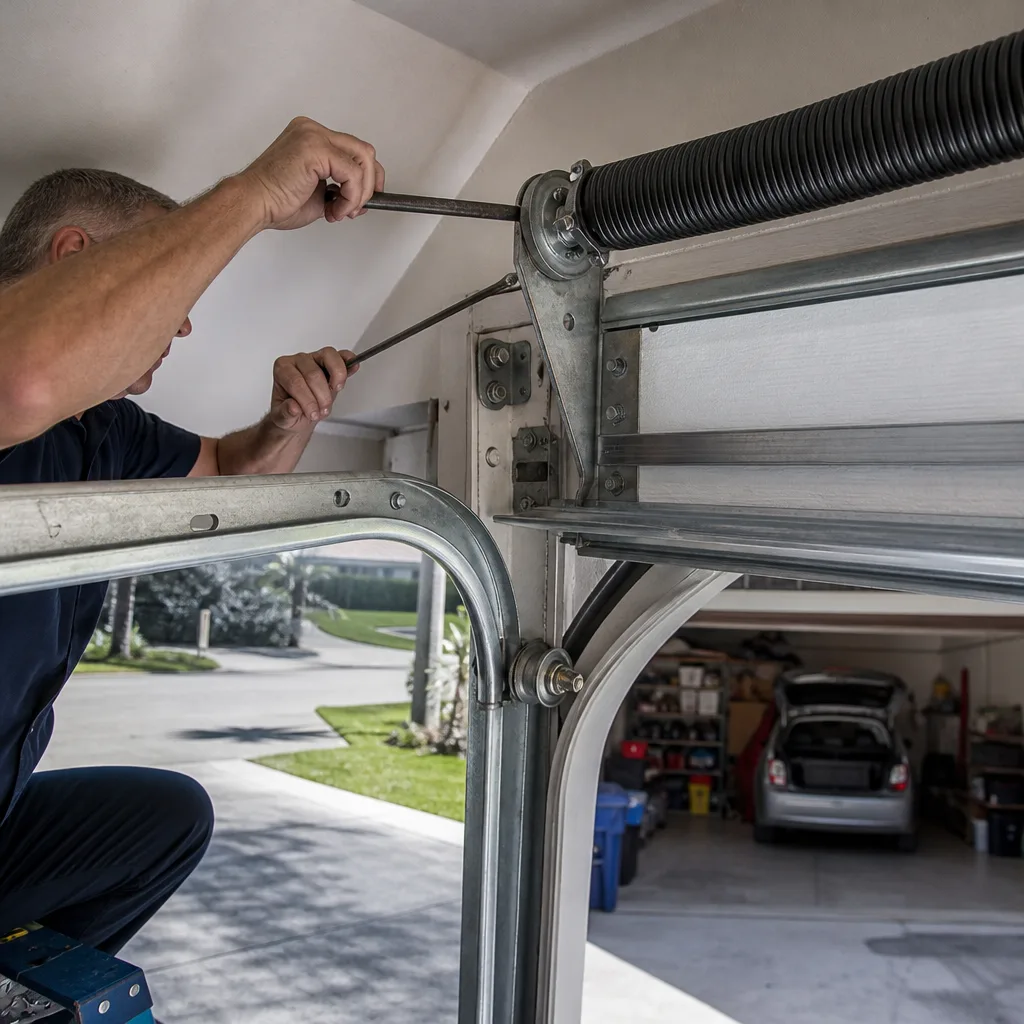 After
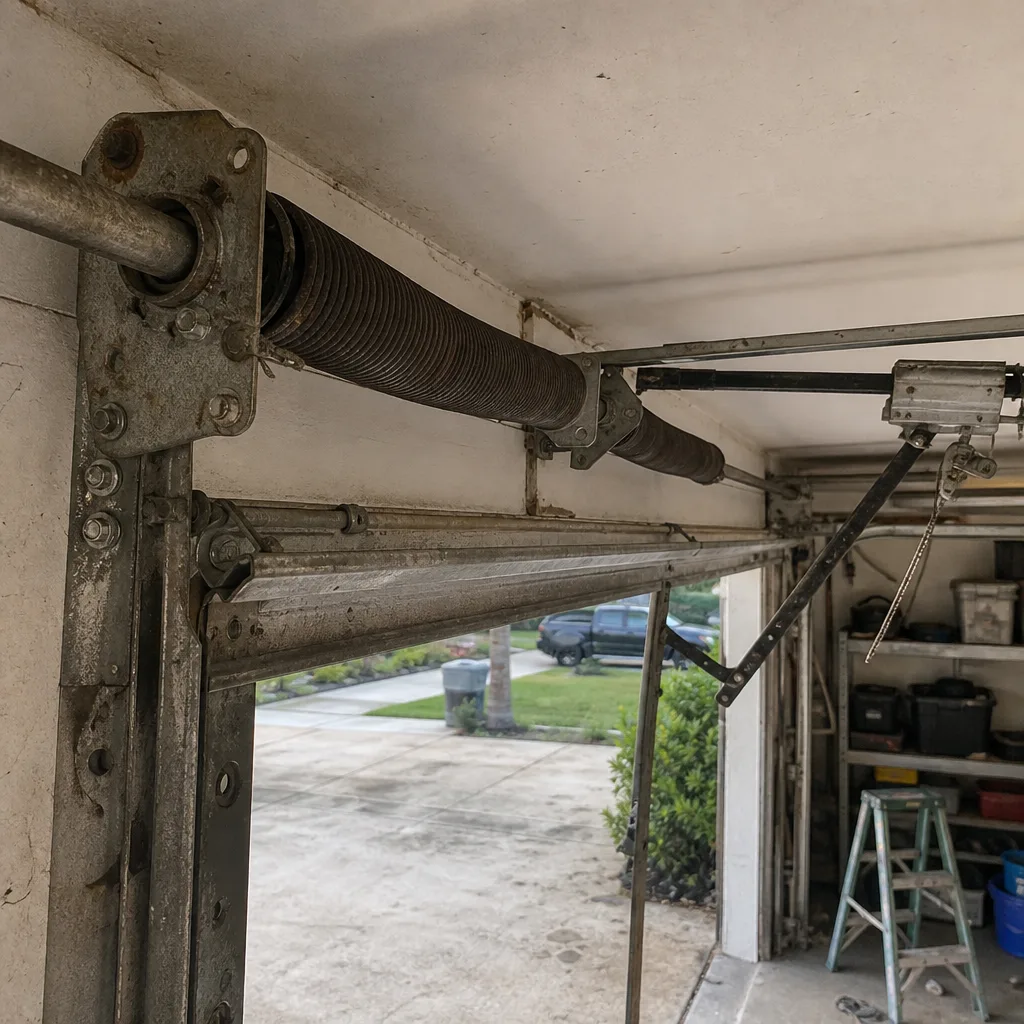 Before
 After